
Skincare
Hi-Fi Combines Best Of 60s And 90s Technology
Jun
Some audio projects are elegant because they look expensive. Others are elegant because they rescue a forgotten black box from the 1990s, add a glowing tube stage inspired by the 1960s, and somehow make the whole thing feel like it belongs beside both a vinyl collection and a stack of compact discs. That is the charm behind a hybrid hi-fi build that combines the best of 60s and 90s technology: vintage warmth, practical digital-era hardware, and just enough DIY spirit to make an oscilloscope blush.
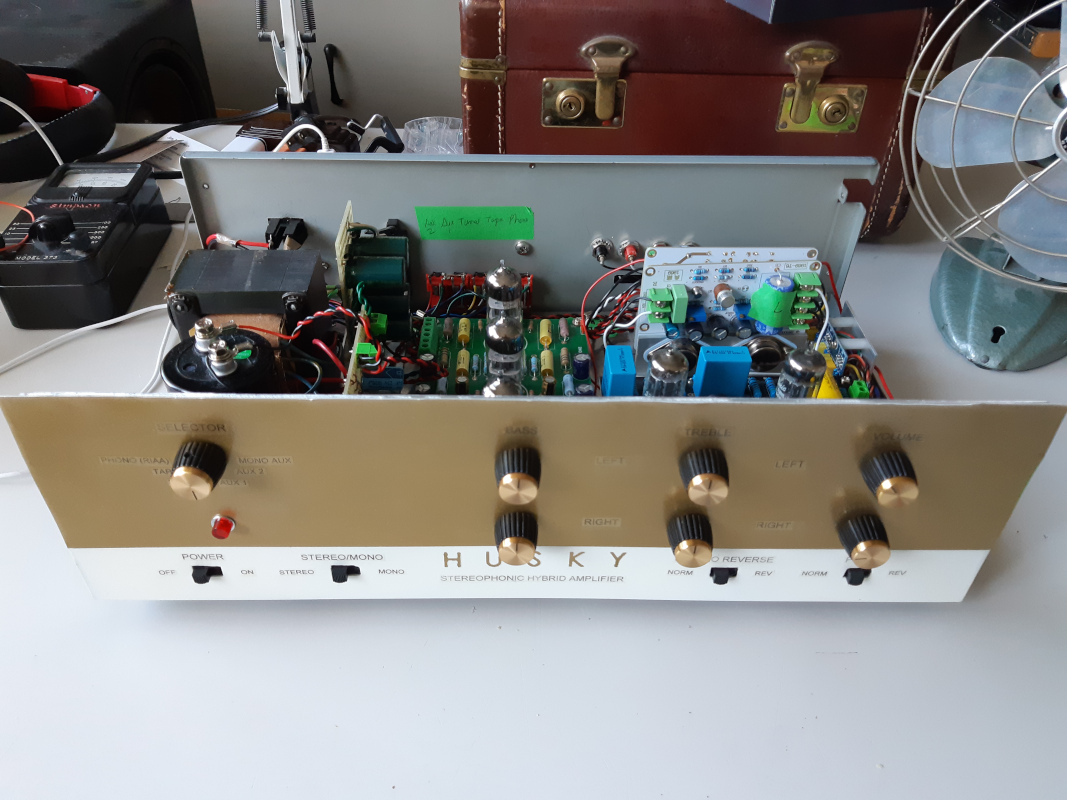
The idea is wonderfully simple. Take the soul of classic high-fidelity audiotube preamps, analog tone, phono capability, tactile controlsand place it inside the affordable, mass-market shell of a 1990s stereo component. The result is not a museum piece. It is a working audio amplifier with personality. It honors the age when hi-fi gear looked like laboratory equipment dressed for dinner, while borrowing the low-cost enclosures, modular circuits, and solid-state muscle that made 90s electronics so hackable.
In an era where music often lives inside a phone app and disappears when the Wi-Fi coughs, this kind of hi-fi project feels refreshingly physical. You can see it, hear it, repair it, and maybe even argue with it. That last part is important: no serious audio discussion is complete until someone insists that tubes are magic, someone else says “measurements,” and a third person quietly changes the record.
Why the 1960s Still Matter in Hi-Fi
The 1960s are often associated with the golden age of hi-fi because home stereo became more than a luxury. It became a culture. People were not merely playing music; they were building listening rooms, comparing cartridges, reading spec sheets, and proudly arranging amplifiers, tuners, and turntables like a shrine to sound.
Tube amplifiers were a major part of that identity. Vacuum tubes had been used in radio, recording, and amplification for decades, but by the 1950s and 60s they reached a kind of domestic glamour. A glowing tube amp did not just amplify music; it made the room feel as if something important was happening. Even today, many listeners describe tube gear as warm, spacious, smooth, or rich. Technically, that character can come from harmonic behavior, circuit design, output transformers, and interaction with speakers. Emotionally, it comes from watching little glass bottles glow while Miles Davis or The Beatles floats across the room.
The 60s also gave hi-fi its hands-on ritual. Records required cleaning. Turntables needed leveling. Cartridges had to be aligned. Preamps, power amps, and speakers worked as a chain, and every link mattered. That culture of care is one reason vintage audio still has such a loyal following. It makes listening feel intentional, not like background noise for folding laundry while a smart speaker spies on your grocery list.
What the 1990s Brought to the Party
If the 60s were about romance, the 90s were about affordability and convenience. Audio equipment from the decade often arrived as black plastic or black metal boxes, stacked neatly in entertainment centers next to CD players, cassette decks, graphic equalizers, and receivers with more buttons than some small aircraft.
Audiophiles sometimes tease 90s consumer audio for looking plain, and yes, many components had the visual warmth of a fax machine. But that same era produced useful hardware: solid-state power stages, low-cost circuit boards, compact modules, remote controls, digital inputs, CD playback, and plenty of sturdy enclosures waiting for a second life. For builders, a 90s audio box is not junk. It is a blank chassis with mounting points, ventilation, controls, and the faint smell of someone’s old dorm room.
The 1990s also represented the triumph of digital audio. Compact discs had moved from futuristic novelty to mainstream format, and CD players became central to home stereo systems. Digital-to-analog converters, better known as DACs, became essential because digital music must be converted into an analog signal before an amplifier can send it to speakers. That quiet little conversion process is one of the great unsung heroes of modern listening.
The Hybrid Hi-Fi Concept: Tube Soul, Solid-State Strength
The most interesting part of a 60s-meets-90s hi-fi build is the hybrid amplifier design. Instead of recreating a full tube amplifier from input to speaker output, the design can use a tube-based preamp paired with a solid-state power amplifier. This is not cheating. It is smart engineering with a vintage accent.
A preamp handles small signals, source selection, gain, and tone-shaping duties before the power stage takes over. Because the preamp sits early in the signal chain, its character can influence the overall sound. Many builders believe that much of the so-called “tube sound” comes from this stage, where tubes can add subtle harmonic texture without requiring the size, heat, weight, and complexity of a full tube power amplifier.
The solid-state power amplifier then does the heavy lifting. Transistors are efficient, reliable, compact, and capable of delivering clean power to speakers. They generally require less maintenance than tube output stages and do not ask the owner to treat replacement tubes like rare spices. The result is a practical compromise: the glow and flavor of tubes with the control and punch of solid-state amplification.
Why Reusing a 90s Enclosure Makes Sense
One clever detail in this kind of project is the reused 1990s audio enclosure. A mass-market stereo case may not look glamorous at first, but it solves several problems at once. It provides a ready-made shell, ventilation, space for connectors, and a layout that already belongs in a stereo rack. In DIY audio, a good case can be half the battle. The other half is avoiding the phrase “temporary wiring” for three years.
Replacing or modifying the front panel gives the project a custom identity. A metal faceplate, new controls, fresh labeling, and careful layout can transform a generic black box into something that looks deliberate. Better still, the contrast between modernized internals and retro design cues creates the exact personality the project needs. It is not pretending to be a factory-made 1964 amplifier. It is proudly saying, “I was born from leftovers, and I sound better than your Bluetooth pumpkin.”
Reusing an enclosure also supports a practical sustainability argument. Old electronics often end up abandoned even when their cases, transformers, switches, knobs, and hardware remain useful. Repurposing them keeps material out of the waste stream and gives hobbyists a cheaper path into serious audio experimentation.
Phono Input: The Vinyl Bridge Between Eras
A proper hi-fi build inspired by the 60s needs a phono stage. Turntables output a tiny signal from the cartridge, much lower than typical line-level sources. That signal also needs RIAA equalization, because vinyl records are cut with bass reduced and treble boosted; playback reverses that curve so the music sounds balanced. Without a phono preamp, a record can sound thin, quiet, and deeply confusedlike a rock band trapped inside a tin can.
Adding a phono amp makes the system friendly to vinyl lovers while keeping the design flexible. The amplifier can serve turntables, CD players, DACs, radio modules, and other sources. That is where the “best of both decades” concept becomes more than a slogan. It lets analog and digital sources share the same listening space without forcing the owner to choose a side in the eternal vinyl-versus-CD cafeteria fight.
Digital Audio and the 90s Advantage
The 1990s gave hi-fi users something the 60s could not: convenient, durable digital playback. Compact discs offered low surface noise, quick track access, and consistent playback quality. While vinyl has a tactile charm that CDs cannot copy, CD technology helped normalize the idea that clean, repeatable audio should be available to everyday listeners, not only to people who owned calibrated turntables and a brush collection.
A modern version of this hybrid hi-fi concept can go even further by adding a quality DAC, USB input, optical input, or Bluetooth receiver. The key is to preserve the amplifier’s analog character while making it usable with present-day sources. A phone, laptop, CD transport, or network streamer can feed digital music into a DAC, which then sends an analog signal into the preamp. The music may begin as data, but it still ends as moving air. That is the whole point.
The Radio Twist: More Than Standard AM/FM
Some hybrid builds go beyond normal home-audio features by adding a radio module capable of receiving amateur-radio bands such as 2 meters and 70 centimeters. In the United States, the 2-meter amateur band sits around 144 to 148 MHz, while the 70-centimeter band sits around 420 to 450 MHz. These bands are popular for local communication, repeaters, satellites, and technical experimentation.
For an audio project, a capable radio module can be more interesting than a basic AM/FM receiver. It introduces another layer of utility and nerd joy. One minute the amplifier is playing vinyl; the next it is monitoring local radio activity. Is that necessary for everyone? Absolutely not. Is it fun? Extremely. Hi-fi has always had room for people who ask, “What else can this box do?” and then answer themselves with a soldering iron.
Sound Quality: Warmth, Accuracy, and the Friendly Argument
Any article about tube audio must carefully walk through the audiophile minefield. Some listeners love tube warmth. Others prefer the accuracy and low distortion of solid-state equipment. Both camps can be right depending on priorities. High fidelity technically means faithful reproduction, but listening pleasure is personal. A system that measures beautifully can still leave someone cold, while a slightly colored system can make favorite records feel alive.
The smartest hybrid approach does not claim that tubes are fairy dust. Instead, it uses tubes where their character is desirable and solid-state circuitry where power, control, and reliability are needed. That balance gives the listener a system that feels vintage without becoming fussy. The goal is not to win a forum argument. The goal is to sit down, press play, and forget about the forum entirely.
Design Lessons From Combining Old and New
1. The Signal Chain Matters
A hi-fi system is only as good as the path from source to speaker. Turntable setup, phono preamp quality, DAC performance, preamp gain, power output, speaker matching, and room acoustics all influence the result. A beautiful tube stage cannot rescue a badly placed speaker shoved into a corner like it owes someone money.
2. Practicality Beats Purism
Full vintage authenticity sounds romantic until heat, hum, rare parts, and maintenance enter the chat. A hybrid amplifier respects the past while admitting that modern components exist for good reasons. Solid-state power, regulated supplies, and modular inputs make the system easier to live with.
3. Physical Controls Still Feel Great
Knobs, switches, meters, and real input selectors are part of the hi-fi experience. Touchscreens are useful, but no one has ever said, “I love the emotional feel of a firmware menu.” A custom faceplate and proper controls make the system feel like an instrument, not an appliance.
4. Reuse Can Be Beautiful
Repurposing an old 90s enclosure is more than budget hacking. It gives the project history. Scratches, screw holes, and old ventilation slots become part of the story. With thoughtful fabrication, a forgotten stereo component can become the foundation for something genuinely charming.
Why This Kind of Hi-Fi Still Feels Fresh
The best thing about a 60s-and-90s hybrid hi-fi system is that it refuses to be trapped in one era. It does not worship the past blindly, and it does not assume newer is automatically better. It borrows the emotional appeal of tube audio, the practicality of solid-state design, the convenience of digital sources, and the affordability of recycled hardware.
That makes it especially relevant today. Modern listeners often want flexibility. They may own vinyl, CDs, lossless files, streaming subscriptions, and a few mystery cables in a drawer that no one is brave enough to identify. A hybrid amplifier can welcome all of those sources while giving the system a distinctive personality.
It also reminds us that hi-fi is not only about luxury. Yes, high-end audio can become expensive enough to require either a trust fund or suspicious accounting. But some of the most satisfying systems are built from curiosity, patience, and smart compromises. A reused case, a tube preamp, a reliable solid-state amp, and a well-designed power supply can deliver real enjoyment without requiring a second mortgage.
Extra Experiences: Living With a 60s-and-90s Hi-Fi Mindset
Spending time with a system that mixes 60s and 90s technology changes the way you listen. At first, the attraction is visual. The glowing tubes pull your eyes in. The old enclosure gives the system a familiar shape. The switches and knobs invite you to touch them. It feels less like opening an app and more like starting a small machine with a purpose.
Then the listening ritual takes over. With vinyl, you become slower in the best possible way. You choose a record, remove it from the sleeve, clean it, place the stylus, and commit to a side. That commitment matters. You are less likely to skip songs after twelve seconds because the chorus did not immediately arrive carrying fireworks. The music earns more attention because the process asks for it.
With CDs or digital files, the experience becomes different but still satisfying. The 90s side of the system gives you convenience. You can play an album cleanly, jump tracks, or feed a DAC from a modern source. The tube preamp adds a sense of occasion, while the solid-state power stage keeps the bass controlled and the speakers moving confidently. It is like letting a vintage jazz club borrow the electrical system from a well-run office building.
One of the most enjoyable experiences is comparing sources. A favorite album on vinyl may sound textured and relaxed, with the soft mechanical presence that record fans love. The same album on CD may sound tighter, quieter, and more sharply defined. A streamed lossless version may sit somewhere else entirely depending on the DAC and mastering. The hybrid system does not force one winner. Instead, it turns comparison into part of the hobby.
Another lesson is that small setup choices matter. Speaker placement can change the system more dramatically than a boutique cable. A careful turntable setup can reduce distortion and improve tracking. A quiet power supply can lower noise. Good ventilation keeps tubes and solid-state components happier. These are not glamorous upgrades, but they are the audio equivalent of brushing your teeth: boring, useful, and strongly recommended.
There is also a social side. A hybrid hi-fi system becomes a conversation starter. People notice it. They ask why tubes glow, why a 90s case has a custom faceplate, why there is a phono input, or why anyone still owns CDs. That opens the door to explaining how audio technology evolved, why analog and digital both matter, and why “old” does not always mean obsolete. Sometimes the best technology is not the newest device. It is the combination that makes people care again.
Most importantly, this kind of system encourages experimentation without snobbery. You can enjoy tubes without claiming they break the laws of physics. You can appreciate digital audio without declaring vinyl dead for the four hundredth time. You can reuse old hardware without pretending every thrift-store receiver is a hidden masterpiece. The fun is in building, listening, adjusting, and learning.
That is the real beauty of hi-fi that combines the best of 60s and 90s technology. It is not nostalgia for nostalgia’s sake. It is a practical, musical, slightly nerdy reminder that great sound has always been a moving target. Sometimes it glows. Sometimes it uses a DAC. Sometimes it hides inside an old black box that everyone else forgot. And sometimes, when everything works, it makes you sit still for an entire albumwhich, in the age of infinite scrolling, is practically a miracle.
Conclusion
Hi-fi projects that blend 1960s tube character with 1990s solid-state practicality prove that audio innovation does not always require starting from scratch. The warm personality of a tube preamp, the dependability of transistor power, the flexibility of digital sources, and the affordability of repurposed enclosures can work together beautifully. This is not just retro styling. It is a smart design philosophy: keep what feels human, upgrade what improves performance, and never underestimate the value of a good old box.
For music lovers, builders, and curious listeners, a 60s-and-90s hybrid hi-fi amplifier offers something rare: a system with history, utility, and charm. It can spin vinyl, welcome digital audio, power real speakers, and look wonderfully unlike the disposable gadgets of today. In other words, it does what great hi-fi has always done. It turns electricity into emotion, then dares you not to play one more album.
Note: This article is written for clean web publishing in standard American English, with factual audio history and technical concepts synthesized into original wording.

