
Skincare
Fan Who “Attacked” Ariana Grande At Premiere Outs Himself Online And Is Met With Swift Backlash
Jun
Red carpets are supposed to be glamorous little obstacle courses of camera flashes, designer gowns, polite waves, and celebrities pretending they can hear interview questions over 200 photographers yelling their names. They are not supposed to become a live-action security drill. Yet that is exactly what happened when Ariana Grande was rushed by a fan during the Wicked: For Good premiere in Singapore, turning a carefully polished movie event into a viral lesson on boundaries, celebrity safety, and why “I did it for content” is not the legal defense some people seem to think it is.
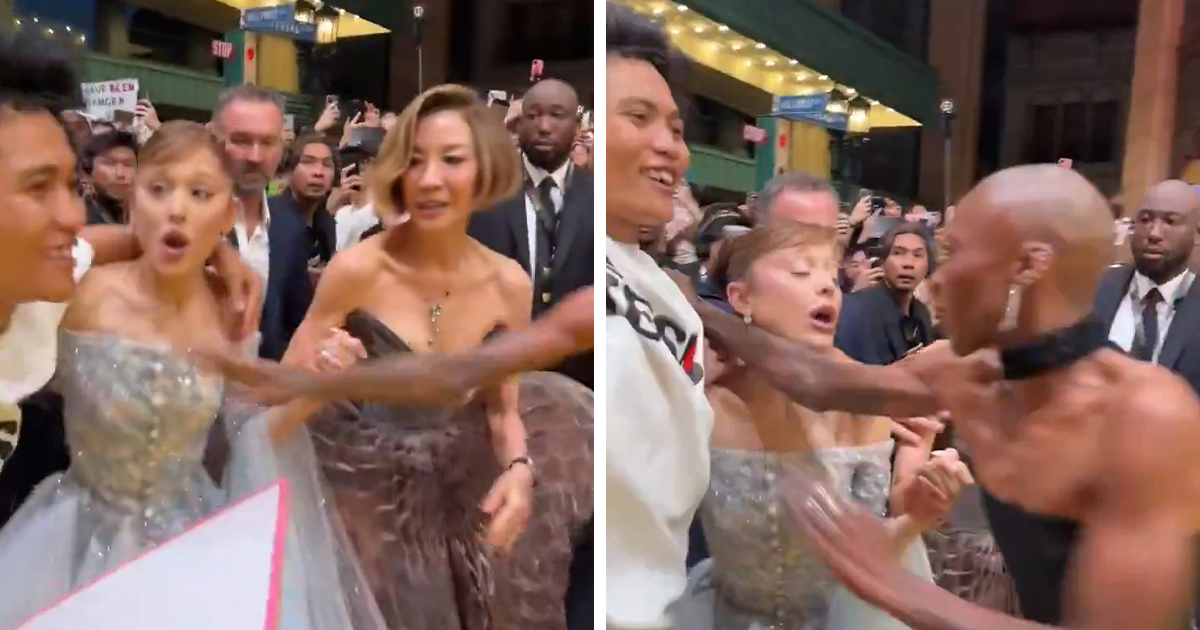
The incident quickly spread across social media after videos showed a man jumping onto the yellow carpet and grabbing at Grande as she walked with her Wicked co-stars. Cynthia Erivo immediately stepped in, Michelle Yeoh helped comfort Grande, and security removed the man from the scene. Soon after, the alleged intruder effectively identified himself online, posting about the encounter and treating it like a personal victory lap. The internet, rarely a place of calm group meditation, responded with swift backlash.
The man was later identified in multiple reports as Johnson Wen, an Australian social media figure also known online as “Pyjama Man.” He was charged in Singapore, sentenced to nine days in jail after pleading guilty to being a public nuisance, deported, and barred from re-entering the country. In other words, the viral moment came with a receipt, and Singapore made sure it was printed in bold.
What Happened At The Ariana Grande Premiere?
The incident took place on November 13, 2025, at the Asia-Pacific premiere of Wicked: For Good at Universal Studios Singapore. Grande, who plays Glinda in the film series, was walking the yellow carpet alongside cast members including Cynthia Erivo and Michelle Yeoh when the man breached the barricade and rushed toward her.
Videos of the moment show the intruder moving quickly into Grande’s space and making physical contact before Erivo reacted. The scene lasted only seconds, but those seconds were enough to change the tone of the event. What had been a sparkling promotional stop for one of the year’s biggest movie musicals suddenly became a conversation about security, entitlement, and how online attention can reward behavior that would be unacceptable in any normal public setting.
Grande appeared visibly shaken in footage from the premiere. That matters. Celebrities may be public figures, but they are not public property. A red carpet is not a free-for-all, a movie premiere is not a petting zoo, and being famous does not mean someone has agreed to be grabbed by a stranger because that stranger wants a viral clip.
Who Is Johnson Wen, Also Known As “Pyjama Man”?
Johnson Wen was reported to be a 26-year-old Australian man who had previously gained attention for crashing high-profile events. His online persona, “Pyjama Man,” has been associated with disruptive stunts at concerts and sporting events. In this case, the stunt involved Ariana Grande, one of the most recognizable performers in the world, at a heavily publicized international premiere.
After the Singapore incident, Wen posted online in a way that many viewers interpreted as self-identification and bragging. Instead of reading the room, he seemed to decorate the room with neon arrows pointing at himself. That decision intensified criticism because it suggested the incident was not an embarrassing mistake, but part of a pattern: invade a space, create chaos, post the footage, collect attention.
That pattern is exactly why the backlash was so intense. Fans were not merely upset that Grande had been startled. They were angry that a person appeared to treat physical access to a celebrity as a prize, then attempted to turn the whole thing into content. The public response was not “wow, what a fan.” It was more like “sir, this is a premiere, not a loophole in human decency.”
Cynthia Erivo’s Protective Response Won Praise
One of the defining images from the incident was Cynthia Erivo moving instantly to protect Grande. Erivo, who plays Elphaba opposite Grande’s Glinda, stepped toward the man and helped separate him from her co-star before security fully intervened. Michelle Yeoh was also seen supporting Grande in the aftermath.
Fans praised Erivo for reacting quickly and instinctively. The moment also reinforced what many viewers had already noticed during the Wicked press tour: Grande and Erivo’s friendship appears deeply genuine. Their emotional interviews, affectionate red-carpet moments, and public support for each other had already become part of the movie’s promotional story. This incident made that bond look less like a studio-friendly talking point and more like a real-world reflex.
Erivo later spoke about her instinct to protect her friend, emphasizing that her first concern was Grande’s safety. That response resonated because it cut through the noise. At its core, the situation was not about fandom, jokes, or viral fame. It was about a person being unexpectedly grabbed in a public space and another person immediately stepping in to help.
Why The Internet Backlash Was So Fast
The backlash came quickly because the incident touched several cultural nerves at once. First, there is growing frustration with “content culture,” where some people treat public disruption as a career strategy. Second, there is heightened concern about celebrity safety, especially at events where fans, press, influencers, and security lines all collide. Third, Grande’s fans are deeply protective of her, especially given her history of dealing with public trauma and intense scrutiny.
Social media users condemned the act as dangerous, disrespectful, and selfish. Many argued that it should not be softened as a harmless fan moment. A fan asks for an autograph. A fan cheers from behind the barricade. A fan wears pink, sings “Popular,” and maybe cries tastefully into a themed tote bag. A person who jumps a barrier and grabs someone is doing something else entirely.
That distinction is important for SEO readers and real humans alike: the Ariana Grande fan incident was not controversial because people dislike enthusiastic fans. It became controversial because the behavior crossed a basic physical boundary. The backlash was not about being anti-fandom. It was about being pro-consent, pro-safety, and pro-not-turning-famous-women-into-photo-props.
The Legal Consequences In Singapore
Singapore authorities treated the incident seriously. Wen was charged with being a public nuisance and later sentenced to nine days in jail after pleading guilty. Reports also stated that he was deported to Australia after serving his sentence and barred from re-entering Singapore.
For anyone keeping score at home, that is a very expensive way to get a bad Instagram caption. The legal result sent a clear message: public stunts that interfere with safety and order can carry real consequences. Online clout may feel weightless, but court records are not.
The sentence also sparked broader discussion about whether penalties for disruptive fan behavior should be stricter, especially when the person involved has a history of similar incidents. Many commenters argued that repeat event crashers rely on the attention cycle: disruption, outrage, headlines, followers, repeat. Legal consequences interrupt that cycle by making the stunt less like a prank and more like what it actually is: a public safety problem.
Celebrity Boundaries Are Not Optional
The Ariana Grande premiere incident is part of a bigger conversation about the relationship between celebrities and fans. Modern fandom is more intimate than ever. Stars post behind-the-scenes moments, livestream from bedrooms, share personal thoughts, and interact directly with followers. That closeness can be fun and meaningful, but it can also blur lines for people who mistake access to content for access to the person.
Grande’s public image has always encouraged warmth. She waves, smiles, jokes, and often expresses gratitude toward fans. But kindness is not an invitation to invade someone’s space. A celebrity can appreciate supporters and still deserve a protected physical boundary. Those ideas are not in conflict.
The problem with stunts like this is that they punish everyone. The celebrity feels unsafe. Security teams tighten access. Fans who follow the rules get fewer spontaneous moments. Public events become more restricted, less relaxed, and more suspicious. One person chasing a viral high can make the experience worse for thousands of respectful fans.
Why “Outing Himself Online” Made Things Worse
Had the intruder disappeared quietly after the incident, the story still would have made headlines. But the decision to post about it online added fuel to the outrage. By appearing to celebrate the encounter, Wen made the act look intentional, attention-seeking, and unremorseful.
That is why the phrase “outs himself online” became central to the story. It was not simply that internet detectives identified him. It was that his own social media behavior appeared to connect him to the incident and frame it as content. In the court of public opinion, that is like showing up to your own roast holding a microphone and a PowerPoint presentation titled “Why Everyone Should Be Mad At Me.”
Online audiences may enjoy chaos, but they also have limits. A silly meme? Fine. A harmless red-carpet fashion debate? Absolutely. A stranger physically rushing a performer and posting it as a trophy? That crosses from internet nonsense into real-world risk.
The Role Of Security At Red Carpet Events
Red carpets are deceptively complicated. They look glamorous on camera, but behind the scenes they are carefully managed environments with crowd control, press zones, celebrity routes, barricades, handlers, security staff, and emergency plans. The goal is to create the illusion of effortless sparkle while preventing exactly the kind of breach that happened in Singapore.
When someone gets through, the public naturally asks how it happened. Was the barricade too easy to cross? Were security staff positioned correctly? Did the presence of cameras and fans create blind spots? These questions matter because premieres are not private dinner parties. They are high-density public events with valuable talent, excited crowds, and unpredictable behavior.
Still, security is not magic. A determined person can move quickly, especially in a crowded environment. That is why the response after a breach is just as important as prevention. In this case, Erivo’s immediate action and the eventual security intervention prevented the situation from escalating further. But the moment still served as a warning for future celebrity events: viral culture has made some people more willing to cross lines for attention.
What This Says About Modern Fandom
Most fans are respectful. They buy tickets, stream songs, make edits, defend their favorites online, and occasionally use more exclamation points than grammar teachers would recommend. That kind of fandom can be joyful and creative. The problem is not passion; the problem is entitlement.
Entitlement appears when someone believes their admiration gives them special rights. It whispers, “I deserve a hug.” It argues, “She should be grateful.” It insists, “This is my once-in-a-lifetime moment.” But another person’s body is not a souvenir, and a celebrity’s schedule is not a scavenger hunt.
The Ariana Grande fan backlash shows that many online communities understand this. The loud response was not just outrage for outrage’s sake. It was a public rejection of a certain type of behavior: the kind that treats boundaries as obstacles and attention as the only scoreboard.
Experiences And Lessons Related To The Ariana Grande Premiere Incident
Anyone who has attended a concert, premiere, convention, or major fan event knows the atmosphere can feel electric. You wait for hours, your phone battery enters survival mode, your feet file a formal complaint, and then suddenly the celebrity appears. People scream, cameras rise, and for a few seconds everyone feels close to someone they usually only see through a screen.
That closeness is powerful, but it also requires self-control. The best fan experiences happen when excitement and respect exist together. A wave from behind a barricade can feel amazing. A signed poster can become a treasured memory. A brief interaction can make someone’s entire year. But those moments only work when the person being admired feels safe enough to participate.
Think about school events, sports games, or local performances. If a student actor finishes a play and someone from the audience rushes the stage to grab them, nobody calls that “enthusiasm.” People call security, teachers, parents, or whoever has the walkie-talkie and the serious shoes. The same principle applies to celebrities. Fame changes the scale, not the rule.
Many fans have stories of meeting artists in healthy, respectful ways. They waited in designated lines. They followed staff instructions. They accepted that “no photos” meant no photos. They said thank you and moved on. Those interactions may sound less dramatic than a viral stunt, but they are far more meaningful because they preserve trust. When celebrities trust fans, they are more likely to stop, smile, sign, talk, and share moments naturally.
The opposite kind of experience damages that trust. When one person breaks a boundary, everyone else feels the consequences. Security becomes stricter. Barricades move farther away. Meet-and-greets become more controlled. Stars become more guarded. The fans who behaved properly lose access because someone else wanted to become the main character for thirty seconds.
The Ariana Grande premiere incident is also a reminder that online platforms can reward the wrong things. A shocking clip spreads faster than a respectful interaction. A disruptive stunt can earn millions of views before consequences catch up. But attention is not the same as admiration. Many people watched the video not because they approved, but because they were alarmed. Going viral for making people angry is like winning a trophy made entirely of side-eye.
For fans, the better goal is simple: be remembered for kindness, not chaos. Cheer loudly. Make the sign. Wear the themed outfit. Cry when the orchestra hits the first note if you must. But stay behind the barrier. Listen to staff. Respect personal space. Let the celebrity decide whether an interaction happens. That is not boring; that is basic respect wearing a friendship bracelet.
For event organizers, the lesson is equally clear. Red carpets need security planning that accounts not only for traditional risks but also for internet-driven behavior. Some people are no longer trying to sneak backstage for a private autograph; they are trying to create a public spectacle. That means security teams must watch for pattern-based threats, known event crashers, and individuals who may see disruption as personal branding.
In the end, the story of the fan who “attacked” Ariana Grande at the premiere is not really about one viral clip. It is about the line between admiration and invasion. It is about how quickly the internet can reject behavior that crosses that line. And it is about a simple truth that should not require a court sentence to understand: no amount of fandom gives anyone permission to grab another person.
Conclusion
The Ariana Grande premiere incident became a global talking point because it combined celebrity culture, social media clout, public safety, and fan boundaries in one unsettling moment. Johnson Wen’s decision to rush the Wicked: For Good yellow carpet, then appear to identify himself online, turned a movie celebration into a cautionary tale. The backlash was swift because the public increasingly understands that “fan behavior” has limits, and those limits begin long before physical contact.
Cynthia Erivo’s protective reaction earned praise, Grande’s fans rallied around her, and Singapore’s legal response showed that disruptive stunts can bring real consequences. The larger lesson is not complicated: admiration should never become entitlement. The best fans help create safe, joyful spaces. The worst ones make everyone else stand farther behind the barricade.
Note: This article is a fully rewritten, original SEO-style analysis based on publicly reported information about the Ariana Grande Wicked: For Good premiere incident and its aftermath.

