
Beauty Unlocked
10 Reasons Lincoln Was Secretly A Terrible President
Aug
Note: This article uses a deliberately provocative title to explore the controversial side of Abraham Lincoln’s presidency. It does not defend slavery, the Confederacy, or secession. Instead, it examines why even a widely admired president can deserve serious criticism when viewed through civil liberties, racial justice, wartime power, and constitutional precedent.
Introduction: The Marble Man Had Mud on His Boots
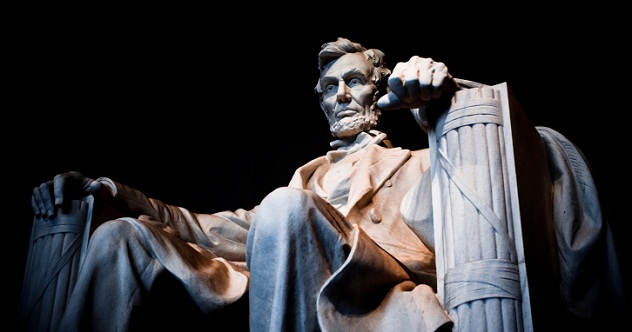
Abraham Lincoln usually enters American memory wearing a stovepipe hat, delivering noble speeches, freeing enslaved people, and looking as if he personally invented moral seriousness. He is carved into a mountain, seated in a temple-like memorial, and quoted by everyone from school principals to politicians who have not read past the first sentence.
But history is rarely that tidy. Lincoln was not a cartoon villain, and calling him “secretly a terrible president” is intentionally spicy. Still, beneath the heroic image sits a record full of hard compromises, constitutional gambles, racial blind spots, censorship, mass death, and executive-power precedents that continue to echo in American politics.
So, was Lincoln secretly terrible? The better answer is this: Lincoln was a great president in outcome, but a deeply troubling president in method. He saved the Union and helped destroy slavery, yet he also bent civil liberties, tolerated harsh wartime policies, and often acted from political necessity before moral urgency. That does not erase his achievements. It makes the story more honestand a lot less suitable for a motivational poster.
1. He Suspended Habeas Corpus and Tested the Constitution Like a Stress Ball
One of the most serious criticisms of Abraham Lincoln’s presidency is his suspension of habeas corpus, the legal protection that allows detained people to challenge imprisonment before a court. During the Civil War, Lincoln argued that rebellion required emergency measures. His famous question was essentially: should every law collapse just to preserve one legal protection?
That sounds practical in a national emergency, but it also opens a giant trapdoor under civil liberty. If a president can suspend core rights because the country is in danger, the next question becomes: who decides how dangerous the danger is? Spoiler alert: presidents are not always shy about answering, “Me.”
Lincoln’s defenders argue that the Union faced armed rebellion and possible collapse. That is true. His critics argue that the Constitution gives the power to suspend habeas corpus to Congress, not the president acting alone. That is also a serious argument. Even if Lincoln was responding to an extraordinary crisis, his decision helped normalize the idea that presidents may stretch constitutional limits during emergencies.
2. His Administration Suppressed Newspapers
Lincoln is remembered as a defender of democracy, but his administration did not always treat the press like a sacred institution. During the Civil War, opposition newspapers faced military interference, mailing restrictions, office seizures, and arrests of editors in certain cases.
The administration believed some publications encouraged rebellion, spread false information, or undermined the war effort. In wartime, misinformation can kill. But shutting down newspapers is still a terrifying tool. A government that decides which criticism is patriotic and which criticism is dangerous can quickly become the referee, the player, and the guy selling overpriced popcorn.
One famous 1864 incident involved New York newspapers that published a fake presidential proclamation. The government responded by arresting editors and seizing newspaper offices. Even if the false proclamation was reckless, the episode shows how quickly wartime power can move from “protect the public” to “silence the public.”
3. He Allowed Military Arrests of Civilians
Lincoln’s presidency blurred the line between military necessity and civilian freedom. Thousands of civilians were arrested during the Civil War for alleged disloyalty, sabotage, draft resistance, or support for the Confederacy. Some arrests occurred in border states where Union control was fragile and Confederate sympathy was real.
Again, the context matters. The country was not having a polite disagreement over zoning laws. It was fighting a massive civil war. Railroads, telegraphs, supply lines, and state governments could determine survival. Lincoln feared that slow legal procedures could allow rebellion to spread.
But from a civil liberties perspective, this is exactly where danger begins. When government can imprison civilians without ordinary court protections, political dissent may be mistaken for treason, and unpopular opinions may become legal liabilities. Lincoln’s wartime arrests created a troubling example of how quickly democratic norms can shrink when leaders claim the nation is at risk.
4. His First Priority Was Saving the Union, Not Ending Slavery
Lincoln opposed the expansion of slavery and eventually became central to emancipation. That should not be minimized. But it is also historically accurate that his early presidential priority was preserving the Union, not immediately abolishing slavery everywhere.
In his public statements, Lincoln made clear that his official duty was to save the Union. If ending slavery helped save the Union, he would do it. If delaying action helped save the Union, he was prepared to delay. To modern readers, that can feel painfully cold. Imagine being enslaved and hearing that your freedom is being weighed like a chess move. Not exactly a Hallmark moment.
Lincoln’s defenders say he had to keep border states loyal, manage Northern racism, and avoid losing the war before abolition became politically possible. That argument has weight. But the criticism remains: Lincoln’s moral leadership on slavery was often cautious, strategic, and late compared with abolitionists, enslaved people who fled to Union lines, and Black activists who demanded freedom more urgently.
5. He Supported Black Colonization Far Too Long
One of the least flattering parts of Lincoln’s record is his support, especially before 1863, for colonization: the idea that freed Black Americans might leave the United States and settle elsewhere, such as Central America, the Caribbean, or Africa.
This idea was not unique to Lincoln, but it was deeply flawed. It treated Black Americansmany of whose families had lived in America for generationsas a “problem” to be relocated rather than citizens entitled to equal rights. Lincoln later moved away from colonization efforts, but the fact that he entertained and promoted them at all is a major stain on his legacy.
Colonization reveals a Lincoln who could oppose slavery while still struggling to imagine a truly multiracial democracy. In plain English: he could see that bondage was wrong before he fully accepted that equality had to be national, permanent, and here.
6. The Emancipation Proclamation Was Powerful but Limited
The Emancipation Proclamation was one of the most important documents in American history. It changed the meaning of the Civil War, weakened the Confederacy, and opened the door for Black men to serve in the Union Army. It deserves its place in history.
But it was also limited. It applied to enslaved people in areas under rebellion, not to loyal border states where slavery still existed. It did not instantly free all enslaved people. It was a wartime measure based on military authority, not a universal human-rights decree that immediately ended slavery everywhere in the country.
That does not make it meaningless. It makes it more complicated. Lincoln used the tools he believed were legally and politically available. Still, critics can fairly argue that the proclamation’s limitations show how slowly federal power moved when Black freedom depended on white political calculation.
7. His Role in the Dakota 38 Execution Is Deeply Troubling
In 1862, after the U.S.-Dakota War in Minnesota, hundreds of Dakota men were tried by military commission. The trials were rushed, often deeply flawed, and took place amid extreme anger and calls for vengeance. Lincoln reviewed the cases and commuted many death sentences, but he still approved the execution of 38 Dakota men in Mankato, Minnesotathe largest mass execution in U.S. history.
Supporters of Lincoln note that he reduced the number of executions from the much larger total originally recommended. That matters. But the final result remains horrifying: 38 men hanged after a process that does not meet modern standards of justice.
This episode is often pushed to the footnotes of Lincoln’s legacy, probably because it does not fit neatly beside the Gettysburg Address. But any honest assessment of Lincoln must include Native American history, wartime punishment, broken treaties, frontier violence, and the federal government’s brutal relationship with Indigenous peoples.
8. The Draft System Fueled Class Anger
The Union draft became one of the most explosive domestic issues of Lincoln’s presidency. The 1863 conscription law allowed drafted men to avoid service by paying a commutation fee or hiring a substitute. To many working-class Americans, this looked like a rich man’s escape hatch built into a poor man’s war.
The anger helped fuel the New York City Draft Riots in 1863, which became a deadly eruption of class resentment, racism, and anti-war fury. Black New Yorkers were attacked, homes and institutions were targeted, and federal troops were eventually used to restore order.
Lincoln did not personally invent every unfairness of the draft system, and the Union desperately needed soldiers. But under his presidency, military manpower policy exposed a brutal truth: sacrifice in wartime is often distributed unevenly. The powerful give speeches. The poor give bodies. History books then give everyone a paragraph.
9. The Human Cost of the War Was Catastrophic
The Civil War was caused primarily by slavery and secession, not by Lincoln waking up one morning and saying, “You know what this country needs? Four years of carnage.” The Confederacy fired on Fort Sumter. Southern states left the Union to protect slavery. Those facts matter.
Even so, Lincoln’s decision to fight for reunion meant accepting a staggering human cost. More than 600,000 Americans died in the Civil War, and total casualties were far higher. Families were shattered, cities were burned, farms were destroyed, and an entire generation lived under the shadow of mass death.
Was there a better alternative? Maybe not. Letting the Confederacy survive would have preserved a slaveholding republic and fractured the United States. But moral necessity does not erase horror. A president can be right about the goal and still preside over consequences so terrible that criticism is not only fairit is required.
10. He Strengthened the Federal Government in Ways Americans Still Debate
Lincoln’s presidency transformed the United States. The federal government became more powerful, more financially sophisticated, and more involved in national life. The administration supported paper currency, national banking reforms, war financing, tariffs, land-grant colleges, and railroad expansion.
Many of those changes helped modernize the country. But they also marked a shift toward a stronger central state. To some Americans, that was progress. To others, it was the beginning of a federal government with muscles large enough to make the Constitution sweat through its waistcoat.
The criticism here is not that every Lincoln-era reform was bad. The criticism is that crisis allowed Washington to expand rapidly, and later presidents learned the lesson. War can become the great accelerator of government power. Lincoln did not create every future abuse of executive authority, but he left behind precedents that later leaders could admire, stretch, and occasionally weaponize.
So, Was Lincoln Actually a Terrible President?
No honest historian should reduce Lincoln to either saint or monster. The “terrible president” argument works best as a challenge to lazy hero worship. Lincoln was brilliant, politically patient, morally evolving, and essential to the defeat of the Confederacy. He also made decisions that violated civil liberties, reflected racial prejudice, caused suffering, or expanded executive power in dangerous ways.
The real Lincoln is more interesting than the marble Lincoln. He was not a flawless liberator floating above politics. He was a wartime president making brutal choices in a collapsing republic. Sometimes he rose to the moment. Sometimes he compromised with injustice. Sometimes he protected democracy by bending democratic rules, which is a bit like saving your house from fire by flooding the basement and then calling it interior design.
Judging Lincoln seriously means holding two truths at once: he helped end American slavery, and he did not always act from pure moral clarity. He preserved constitutional government, and he strained constitutional limits. He spoke beautifully about equality, and he struggled with what equality should mean in practice.
Experience: Reading Lincoln After the Myth Wears Off
The first time many Americans meet Abraham Lincoln, he is less a president than a school-friendly statue. He is the tall man with the beard, the kind eyes, and the tragic ending. Children learn that he freed the slaves, saved the Union, and wrote speeches that sound like they were carved directly into thunder. That version is simple, comforting, and very convenient for multiple-choice tests.
But reading Lincoln as an adult is a different experience. The halo gets dimmer, but the person becomes more real. You notice the political delays. You notice the legal risks. You notice that emancipation was not a single magical moment but a pressured, contested, incomplete process pushed by enslaved people, abolitionists, Black soldiers, Radical Republicans, military necessity, and Lincoln’s own changing views.
That experience can feel uncomfortable. It is tempting to protect the childhood version of Lincoln because heroes are easier to store than complicated people. A hero fits neatly on a poster. A complicated person demands shelf space, footnotes, and emotional maturity. Very rude of history, honestly.
When people first learn about Lincoln’s suspension of habeas corpus or the suppression of newspapers, they often react in one of two ways. Some rush to defend him: “It was war! He had no choice!” Others swing hard in the opposite direction: “Everything I learned was propaganda!” Both reactions are understandable, but neither is enough. The better experience is to sit with the tension. Emergencies do create real dangers. Leaders do sometimes need speed. But rights are most vulnerable precisely when fear is loudest.
The same thing happens with Lincoln and race. Many readers are shocked to discover his support for colonization or his cautious approach to emancipation. That shock is useful. It reminds us that moral progress is often pushed by people outside the official spotlight. Lincoln mattered enormously, but he was not the only engine of freedom. Enslaved people who escaped, resisted, informed Union forces, joined the Army, and forced the nation to confront slavery were not background characters in Lincoln’s movie. They were authors of history.
Studying Lincoln this way also changes how we evaluate modern presidents. It teaches us to be suspicious of emergency powers, even when we like the leader using them. It teaches us that inspiring speeches do not cancel harmful policies. It teaches us that political courage often arrives late, wearing muddy boots, after activists have already kicked open the door.
Most of all, the experience of re-reading Lincoln teaches humility. A president can be necessary without being innocent. A leader can move history forward while leaving damage behind. A nation can celebrate victory and still owe truth to those who suffered under the policies that victory required or excused.
So the point of calling Lincoln “secretly a terrible president” is not to replace one cartoon with another. It is to make room for a better question: what do we do when our greatest leaders were also deeply flawed? The answer is not to smash every statue or polish every statue. The answer is to read harder, argue honestly, and stop asking history to behave like a public relations department.
Conclusion: The Great President Who Still Deserves a Side-Eye
Abraham Lincoln remains one of the most important presidents in American history. Without his leadership, the Union might have collapsed, slavery might have survived longer, and the United States might have become a permanently divided continent of rival republics. That is the case for Lincoln’s greatness, and it is strong.
But greatness is not the same as innocence. Lincoln suspended civil liberties, tolerated press suppression, supported colonization, moved cautiously on emancipation, approved the Dakota 38 executions, oversaw an unequal draft, and helped expand federal power in ways Americans still debate. These are not tiny footnotes. They are central to understanding the cost of his presidency.
The honest Lincoln is neither the saint of marble nor the villain of clickbait. He is something more useful: a reminder that democracy can be saved by flawed people, that justice often arrives through pressure rather than purity, and that even beloved leaders should be examined with a flashlight, not a fog machine.

