
Skincare
TikTokers List Red Flags That Show This $35 Target Crochet Sweater Is Horrifyingly Unethical
Aug
A colorful crochet cardigan, a $35 price tag, and an army of fiber artists with calculators: that was all TikTok needed to turn an ordinary Target shopping find into a full-scale debate about fast fashion, handmade labor, and the real cost of cheap clothing.
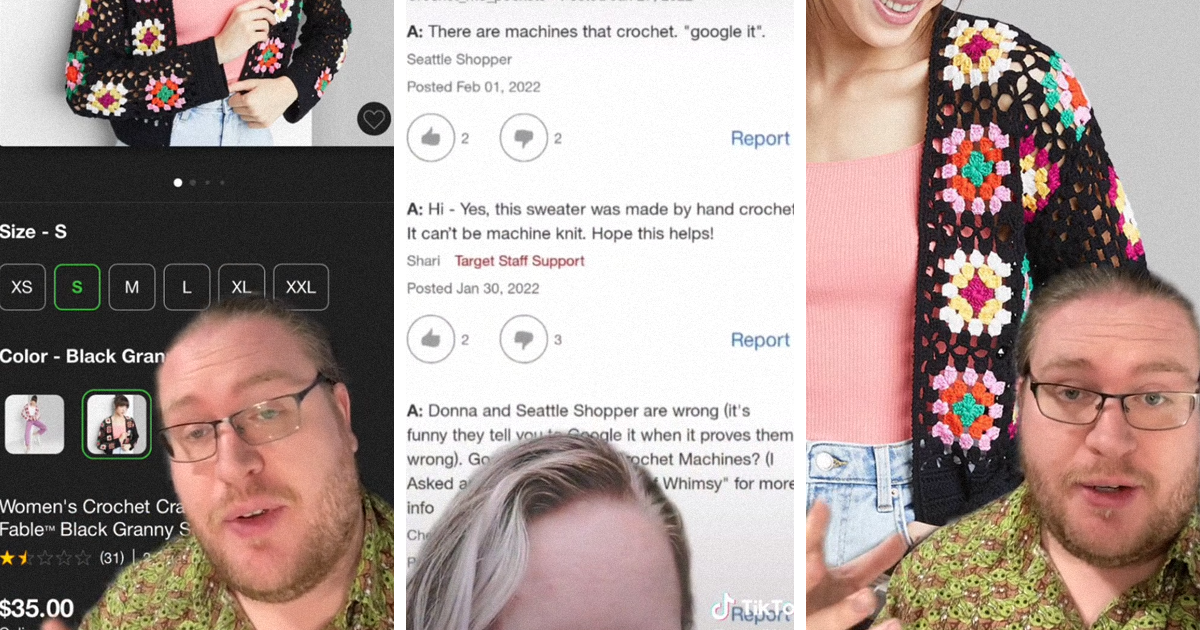
The controversy began in February 2022, when crafters examined Target’s Women’s Crochet Crafted Cardigan from the retailer’s Wild Fable brand. The floral, granny-square-style sweater looked cheerful enough. Then experienced crocheters started estimating how many hours it would take to make. Suddenly, the cardigan seemed less like an innocent bargain and more like a labor-economics mystery wearing cute little flowers.
TikTok creators argued that the garment appeared to require extensive handwork and could not realistically be produced, transported, marketed, and sold for $35 while also paying everyone fairly. Target responded that the sweater was produced at a facility operating according to the company’s ethical standards and applicable wage requirements. No public investigation established the precise amount earned by the people who made it, so the viral accusations should be understood as serious concerns rather than a proven finding of misconduct.
Research support:
Why Did a $35 Target Crochet Sweater Cause Such Outrage?
Most shoppers are accustomed to seeing sweaters priced between $20 and $50 at big-box stores. Without knowledge of textile construction, $35 may seem perfectly normal. For people who crochet, however, the price immediately looked suspicious.
Crochet is built one loop at a time with a hook. Knitting, by comparison, keeps multiple loops active on needles and has long been adaptable to industrial machinery. Modern machines can produce openwork knits that retailers describe as “crochet,” “crochet-look,” or “crochet-inspired.” Genuine granny-square crochet is a different creature.
The Target cardigan featured numerous floral squares, color changes, connecting seams, cuffs, borders, and yarn ends that had to be secured. Textile professionals who reviewed photographs of the garment said the looping appeared consistent with hand crochet. Target customer support also reportedly described the sweater as handmade in an answer on the original product page.
That distinction matters. A machine-made sweater can be produced rapidly after a skilled technician programs and prepares the equipment. A genuinely hand-crocheted sweater requires someone to perform thousands of repetitive movements. A machine may help with cuffs, edging, assembly, or other components, but the central decorative work can still demand many hours of human labor.
The Labor Math Behind the Viral Red Flags
How Long Would the Sweater Take to Crochet?
One TikTok creator with several years of crochet experience estimated that producing the cardigan would require approximately 17.7 hours, even after allowing for machine-assisted finishing. Other artisan estimates placed the total closer to 24 hours.
Those numbers were not factory time studies, and a specialized production team might work faster by dividing the cardigan into stages. One worker could make centers, another could add outer rounds, and another could join the pieces. Repetition can improve speed. Even so, dividing the work among several people does not eliminate the labor. It merely distributes those hours across more hands.
Suppose the cardigan required 18 hours of manual work. Dividing the $35 retail price by 18 produces about $1.94 per hour. That calculation is already alarming, but it is also overly generous because the worker does not receive the entire retail price.
The $35 must cover yarn, buttons, labels, packaging, factory expenses, quality control, administration, transportation, import costs, warehousing, photography, marketing, store operations, potential returns, and the retailer’s margin. The supplier’s price would therefore be substantially below $35, and only part of that supplier payment would be available for direct labor.
This does not reveal the actual wage paid for this specific garment. It does explain why crafters considered the price a legitimate red flag. There were simply too many people, materials, and expenses trying to squeeze into one very small cardigan-shaped budget.
Legal Minimum Wage Is Not Always a Living Wage
Target’s vendor standards require suppliers to comply with applicable wage laws, limit working hours, prohibit forced and underage labor, and maintain safe workplaces. The company also says covered manufacturing locations are subject to approved audit programs and may face corrective action or removal when serious violations are identified.
Those policies are meaningful, but “compliant with local wage requirements” does not automatically mean workers earn enough for safe housing, nutritious food, health care, transportation, education, and savings. Legal minimum wages in garment-producing regions may fall below independently calculated living-wage levels.
International labor research has also found that a brand’s purchasing decisions can affect factory conditions. When buyers demand extremely low prices or compressed deadlines, suppliers may struggle to raise pay or control overtime. A code of conduct tells factories what standards to meet; responsible purchasing practices help give them the money and time to meet those standards.
Research support:
Seven Red Flags TikTok Crafters Saw in the Target Cardigan
1. The Sweater Appeared to Be Genuinely Hand-Crocheted
A cheap open-knit sweater is not necessarily suspicious because industrial knitting machines can produce lace-like fabric quickly. The concern increased when textile professionals identified structures that appeared to be hand crocheted and Target support reportedly confirmed handmade production.
2. The Design Included Dozens of Detailed Components
A granny square is not magically completed when its final stitch is made. Each color change may create loose ends that must be secured. The squares must remain consistent in size, be arranged correctly, joined into panels, shaped into a garment, and inspected. It is closer to assembling a tiny yarn mosaic than pressing a “make cardigan” button.
3. The Retail Price Had to Cover Much More Than Labor
Calculations that divide $35 by the estimated production time actually overstate the possible hourly compensation. Retail price is the last number in a long commercial chain, not a direct payment handed to the maker with a grateful handshake and a cookie.
4. Product-Specific Supply-Chain Information Was Limited
Target publishes supplier policies, sourcing information, audit procedures, and factory lists. Yet shoppers evaluating one particular cardigan generally cannot see a detailed breakdown showing its factory, production time, piece rate, average worker earnings, subcontracting arrangements, or labor share of the price.
Company-wide transparency is useful, but product-level traceability would allow consumers to evaluate claims with far greater confidence. “Trust our system” is less persuasive than “Here is where this item was made, how workers were paid, and how we verified it.”
5. Piece-Rate Work Can Hide Extremely Low Hourly Earnings
Some garment workers are paid by the piece rather than by the hour. Piece rates are not automatically abusive, and productive workers may prefer them in certain settings. Problems arise when the rate is so low that workers must work excessive hours to earn the legal minimum or when unpaid time spent correcting mistakes, preparing materials, or finishing garments is ignored.
Home-based production creates another visibility problem. Work can occur beyond the main factory floor, making hours, safety, and pay more difficult to monitor. The U.S. Department of Labor warns that even domestic piece-rate garment workers must still receive at least the applicable minimum wage for every hour worked.
Research support:
6. Ultra-Low Prices Change What Shoppers Think Craft Should Cost
An independent crocheter might reasonably charge hundreds of dollars for a cardigan after accounting for materials, design, labor, taxes, selling fees, and business expenses. When a large retailer offers a similar-looking item for $35, shoppers may conclude that the artisan is charging too much.
In reality, the artisan may simply be revealing the cost that mass production usually conceals. Cheap handmade-looking fashion can train consumers to undervalue skill, especially forms of labor traditionally associated with women and domestic craft.
7. Cheap Trend Pieces Can Encourage Disposable Shopping
A low price reduces the financial pressure to maintain, repair, or repeatedly wear a garment. When an item pills, stretches, loses a button, or falls out of style, replacing it may seem easier than fixing it.
That cycle has environmental consequences. The Environmental Protection Agency estimated that U.S. landfills received 11.3 million tons of municipal textile waste in 2018. One controversial cardigan did not create that mountain, of course, but the buy-wear-discard model helped bring the dump truck.
Research support:
Was the Target Crochet Sweater Proven to Be Unethical?
No publicly available evidence from the viral debate proved that a particular worker was illegally underpaid, coerced, or exposed to unsafe conditions while making this cardigan. The TikTok calculations were estimates based on visible construction, retail price, and personal crochet speed.
Target stated that the sweater was made at a location operating in accordance with its ethical standards and wage requirements. Its sourcing program includes factory disclosure, third-party audits, worker-treatment reviews, payroll checks, grievance channels, and consequences for serious violations.
It would therefore be inaccurate to present the viral argument as a final verdict issued after a complete supply-chain investigation. Price alone cannot prove exploitation. A retailer may accept a smaller margin, use inexpensive bulk yarn, negotiate low shipping costs, divide production efficiently, or sell a product as a traffic-building item.
However, the absence of public proof does not make the concerns silly. The extraordinary gap between a handmade item’s apparent labor requirements and its retail price created reasonable questions that a general corporate policy could not fully answer. The strongest conclusion is not “TikTok definitely proved a crime.” It is “TikTok identified a transparency problem worth examining.”
Research support:
What Ethical Fashion Shoppers Can Ask Before Buying Crochet
Consumers do not need a textile engineering degree or an evidence board covered in red string. A few practical questions can reveal a surprising amount:
- Is the garment genuinely hand crocheted or merely crochet-look knit?
- Does the brand identify the country and facility where it was produced?
- Does it disclose worker-wage information rather than only promising “fair” treatment?
- Are supplier lists, audit methods, and corrective actions publicly available?
- Does the construction look durable enough for frequent wear?
- Would a secondhand, repaired, rented, or locally made alternative meet the same need?
Certifications can provide useful evidence, but no label is a magic ethical shield. Audits may miss unauthorized subcontracting, coached interviews, inaccurate time records, or problems that occur between inspections. Better accountability combines independent verification, worker representation, effective complaint systems, responsible purchasing contracts, and public reporting.
Five Hundred Words of Real-World Experience: What This Debate Teaches Shoppers and Crafters
The First Crochet Project Changes How You See Clothing
A common experience among new crocheters begins with cheerful optimism. They buy yarn, watch a ten-minute tutorial, and assume a scarf will be ready by dinner. Three evenings later, the scarf is the approximate size and emotional stability of a potholder.
That experience is educational. Once someone has counted stitches, restarted a crooked row, untangled yarn, corrected tension, and woven in loose ends, handmade clothing stops looking simple. A cardigan becomes a collection of hundreds of small decisions performed with physical concentration. The hands may cramp. Shoulders tighten. Mistakes require undoing completed work.
This is why experienced crafters reacted so quickly to the Target sweater. They were not merely comparing prices. They were mentally replaying the work: start the center, change the color, complete the outer rounds, repeat the square dozens of times, join everything, shape the sleeves, finish the borders, secure the ends, and inspect the result. Their reaction came from embodied knowledge.
The Independent Seller Faces an Awkward Pricing Conversation
Many crochet sellers encounter the same painful exchange. A customer admires a handmade sweater and asks for the price. The maker calculates $40 for yarn, 25 hours of labor, platform fees, taxes, packaging, and shipping. Even at a modest hourly rate, the final number may exceed $300.
The customer then compares that price with a $35 mass-market cardigan and assumes the artisan is being unreasonable. The artisan is not necessarily charging a luxury markup. They may barely be paying themselves what another skilled professional would earn in two or three workdays.
Low mass-market prices therefore affect people far beyond the factory. They influence the perceived value of craft everywhere. A handmade sweater starts to look “overpriced” only because consumers have been trained to treat the true labor cost as abnormal.
The Bargain That Barely Leaves the Closet
Another familiar experience begins with excitement in the store. A trendy sweater costs less than dinner for two. It looks charming under flattering lights and creates the tiny burst of triumph known as “I found a deal.”
Then reality arrives. The sweater matches only one outfit, snags easily, feels uncomfortable after an hour, or loses its shape in the wash. Because it was inexpensive, repairing it feels inconvenient. After several months, it enters a donation bag, where its future becomes uncertain.
The ethical issue is not that every inexpensive garment is poorly made or that lower-income shoppers should feel guilty. Affordable clothing is necessary. The lesson is that a low purchase price does not guarantee good value. Cost per wear often matters more. A $120 cardigan worn 120 times costs one dollar per wear; a $35 cardigan worn twice costs $17.50 per wear and takes up closet space like a tiny floral squatter.
A More Realistic Approach to Ethical Shopping
Ethical shopping is often presented as a purity test in which consumers must research every thread or live forever in one responsibly sourced burlap tunic. That is neither practical nor fair.
A better experience starts with slowing the purchase down. Check the fiber content and seams. Ask whether the garment fills a real wardrobe gap. Look for it secondhand. Consider whether an existing sweater could be repaired, altered, or styled differently. When purchasing new, favor pieces likely to survive repeated wear.
Shoppers can also contact brands with specific questions about product origins, wages, subcontracting, and verification. One email may not rebuild the apparel industry, but repeated consumer pressure helps show that transparency influences purchasing decisions.
Most importantly, responsibility should not be dumped entirely into the shopping cart. Brands control pricing, supplier contracts, production deadlines, and disclosure. Governments establish labor protections and enforcement systems. Consumers can make thoughtful choices, but companies and regulators possess greater power to create structural change.
Conclusion: The Sweater Was Cheap, but the Questions Were Valuable
The $35 Target crochet sweater became controversial because crafters could see something ordinary shoppers might miss: an enormous amount of skilled human work hidden inside an ordinary retail price.
TikTok did not establish the exact wage paid to the cardigan’s makers, and Target maintained that the item complied with its ethical and wage standards. Still, the debate exposed a larger weakness in fast fashion. Consumers are often given a price, a fiber label, and a country of origin, but not enough information to understand how workers were compensated or how purchasing decisions affected them.
The most useful response is not automatic outrage at every affordable sweater. It is informed curiosity. Who made it? Was the design truly handmade? How long did it take? What did the supplier receive? Were workers paid only the legal minimum or something closer to a living wage? Can the company demonstrate its answer?
A bargain is not automatically unethical, and an expensive garment is not automatically virtuous. Yet when a labor-intensive handmade product costs less than the yarn many hobbyists would need to reproduce it, skepticism is reasonable. Sometimes a red flag is not proof of wrongdoing. It is an invitation to look behind the price tagand perhaps discover that the tag has been doing a suspicious amount of hiding.
Editorial note: This article analyzes concerns raised during the 2022 viral debate. Public reporting did not establish the actual compensation received by individual workers who produced the cardigan. Target stated that the product was made in accordance with its ethical standards and applicable wage requirements.

