
Makeup
Keep Gutters Uncluttered
Aug
Gutters are not the glamorous part of a home. Nobody invites friends over to admire a beautifully flowing downspout. Yet these narrow channels perform one ping, and foundation.
When gutters fill with leaves, pine needles, seed pods, roof granules, and the occasional mystery tennis ball, water stops following the planned route. It spills over the edge, works behind fascia boards, splashes against siding, and gathers near the foundation. A small pile of wet leaves can eventually create a repair bill with an alarming number of zeros.
The good news is that keeping gutters uncluttered does not require advanced construction skills. It requires a sensible schedule, a few basic tools, careful ladder practices, and an understanding of where the water should go after it leaves the roof.
Why Uncluttered Gutters Matter
A gutter system is essentially a traffic-control network for rainwater. The roof collects water, the gutters guide it toward outlet openings, and the downspouts carry it toward a safe discharge point. When one part becomes blocked, the resulting water backup can affect several areas of the home.
They Help Protect the Roof and Fascia
Water trapped in clogged gutters can soak the lower edge of the roof and the wooden fascia behind the gutter. Over time, repeated wetting may contribute to peeling paint, decay, loose fasteners, and damaged roof components. Debris also adds weight, especially when it becomes saturated, and that weight can cause gutters to sag or pull away from the house. ater Away From the Foundation
Overflow often lands directly beside the house. If the soil cannot drain quickly, water may collect near basement walls, crawl spaces, or concrete slabs. University of Minnesota Extension notes that many basement moisture problems can be improved by properly managing roof runoff with functional gutters, downspouts, extensions, and suitable grading. < Damage to Siding and Landscaping
A steady waterfall pouring over one section of gutter can stain siding, splash soil onto walls, erode mulch, flatten flowers, and carve channels through planting beds. The gutter may appear to be merely “a little full,” while the hydrangeas below feel as though they have been placed beneath a fire hose.
They Can Reduce Standing-Water Problems
Clogged roof gutters may hold pockets of stagnant water. The Centers for Disease Control and Prevention identifies roof gutters as an often-overlooked water source that can support mosquito production. Keeping the channels and outlets open allows water to drain instead of lingering between storms. e Wildfire Readiness
Dry leaves and pine needles collected along a roof edge can become combustible material. The National Fire Protection Association and the U.S. Fire Administration advise removing dead leaves, needles, and other debris from roofs and gutters, particularly in communities exposed to wildfire embers. tion>
Warning Signs of Clogged or Failing Gutters
You do not always need to climb a ladder to discover a problem. In fact, some of the clearest warning signs can be spotted from the ground.
- Water spills over the gutter during rain. This commonly indicates accumulated debris, a blocked outlet, an undersized downspout, or poor gutter pitch.
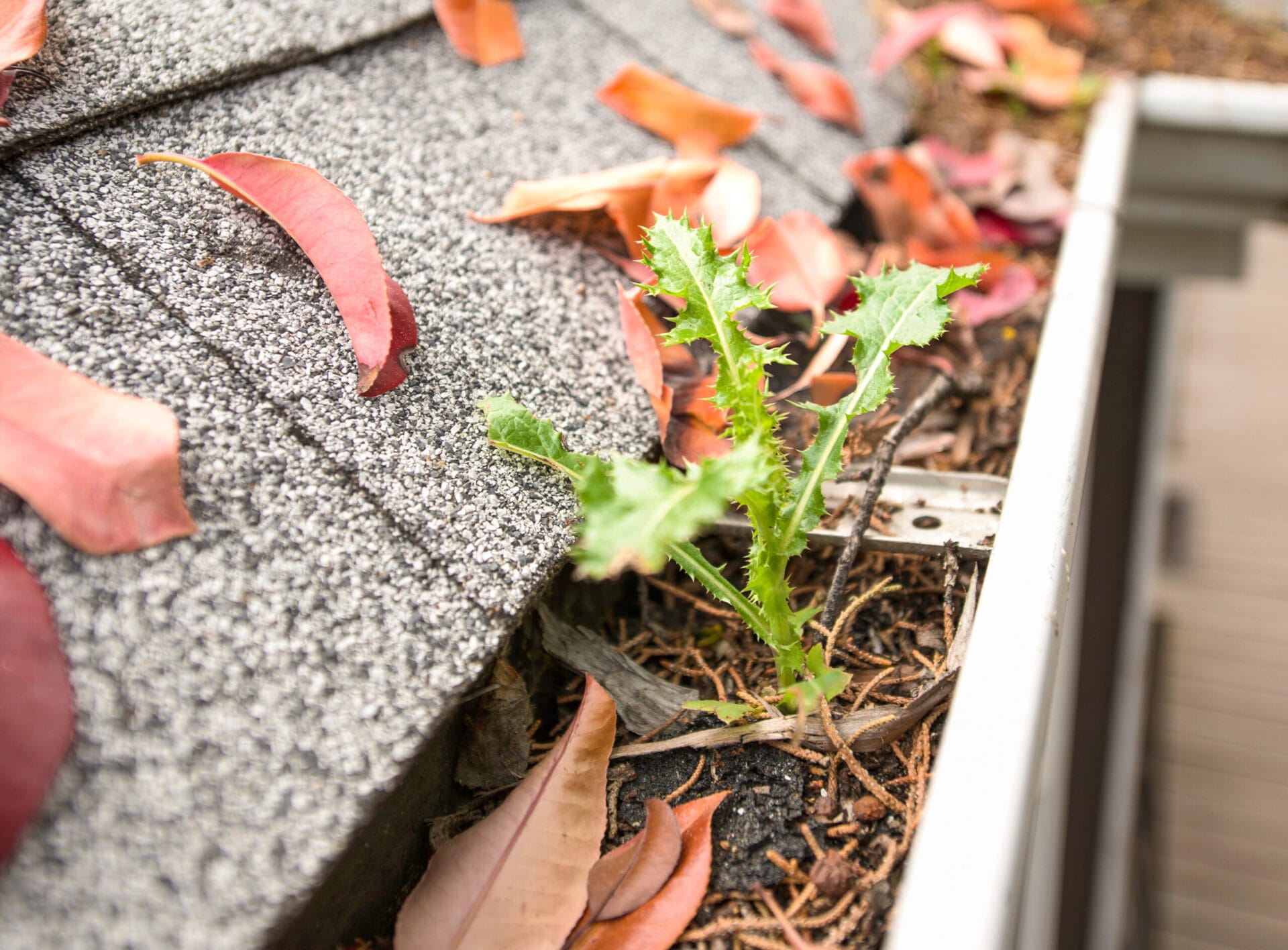
- Plants are growing in the gutter. A miniature rooftop garden may look charming, but it confirms that soil-like organic matter and moisture have been sitting there far too long.
- The gutter sags between hangers. Wet debris, standing water, loose hardware, or inadequate support may be pulling it downward.
- Water exits from seams or behind the gutter. Look for separated joints, failed sealant, corrosion, or water passing between the roof edge and gutter.
- Exterior walls have dirty streaks. Repeated overflow often leaves visible stains below the roofline.
- Puddles form near the foundation. The downspout may be blocked, disconnected, too short, or pointed toward the house.
- There is little or no flow from a downspout. If rain is falling heavily but the outlet merely dribbles, something upstream is probably obstructed.
One of the best inspections occurs during a moderate rainstorm. Stay safely on the ground and observe where water overflows, drips, pools, or exits. State Farm recommends watching gutters during sustained rain because overflow can reveal a clogged downspout and show where water is reaching the foundation. tion>
How Often Should You Clean Gutters?
For many homes, spring and fall are practical starting points. Spring cleaning removes winter debris, blossoms, and seed pods. Fall cleaning clears leaves before colder weather arrives. Both This Old House and State Farm recommend cleaning gutters at least twice per year, with more frequent attention for homes surrounded by trees. -a-year schedule is not perfect for every property. Your ideal routine depends on the type and number of nearby trees, local rainfall, roof shape, wind exposure, wildfire conditions, and whether gutter guards are installed.
Consider More Frequent Inspections When:
- Pine trees drop needles near the roof.
- Oak, maple, or other deciduous trees overhang the house.
- The roof has valleys that concentrate debris in one area.
- Birds or small animals regularly explore the roofline.
- Your area experiences frequent thunderstorms or high winds.
- Wildfire season makes dry roof debris especially hazardous.
- A previous gutter clog has caused leaks or foundation moisture.
Check the system after severe storms even if the regular cleaning date is months away. Wind can deposit twigs and leaves overnight, while hail or falling branches may loosen hangers and dent gutter sections.
Gather the Right Gutter-Cleaning Tools
A simple gutter-cleaning kit prevents repeated trips up and down the ladder. Useful items include:
- Heavy-duty waterproof work gloves
- Safety glasses
- A sturdy, correctly sized ladder
- A plastic gutter scoop or small hand trowel
- A bucket with a handle or a ground tarp
- A garden hose with a spray nozzle
- A plumber’s snake for stubborn downspout clogs
- A cordless drill or screwdriver for loose hardware
- Gutter-safe sealant for minor seam leaks
Use plastic tools around painted or coated gutters when possible. A sharp metal trowel can scratch the finish or puncture thin material, transforming a cleaning project into an unexpected gutter-repair workshop.
Put Ladder Safety Before Gutter Cleaning
No clean gutter is worth a fall. The U.S. Consumer Product Safety Commission advises placing ladder feet on solid, level ground, keeping ladders away from power lines, and having another adult present as a spotter when performing work such as gutter cleaning. er while climbing, maintain three points of contact, and keep your body centered between the side rails. Do not lean sideways to reach “just one more handful.” That handful has been waiting in the gutter for weeks; it can wait while you reposition the ladder.
Never set a ladder on loose stones, wet soil, stacked lumber, boxes, or improvised platforms. Avoid working during rain, strong wind, extreme heat, or icy conditions. Aluminum ladders conduct electricity, so overhead service lines require particular caution.
For a multistory home, steep terrain, complex roof, or gutter located near electrical equipment, hiring a professional is generally the safer choice. Ground-based cleaning attachments may also be useful for some one-story homes.
How to Keep Gutters Uncluttered Step by Step
1. Inspect the System From the Ground
Walk around the house before setting up equipment. Look for sagging sections, loose downspouts, visible nests, damaged seams, rust, peeling paint, and areas where landscaping makes ladder placement difficult.
2. Remove Large Debris First
Starting near a downspout outlet, scoop out leaves, twigs, roof granules, and decomposed material. Place the debris in a bucket or drop it onto a tarp. Avoid tossing handfuls blindly into shrubs, onto people, or into the neighbor’s yard unless you are actively trying to make neighborhood meetings more exciting.
3. Work in Short Sections
Move the ladder rather than stretching. Clean one manageable section at a time and pay special attention to inside corners, roof valleys, and outlet openings, where debris commonly accumulates.
4. Flush the Gutter With Water
After removing solid material, use a garden hose to rinse fine sediment toward the downspout. Flushing helps reveal leaks and shows whether the gutter has enough slope to drain. Water that remains in a long puddle may indicate a low spot, sagging section, or incorrect pitch. State Farm recommends rinsing after debris removal both to clear the channel and to check for leakage. e Downspout
If water backs up, remove the hose and inspect the outlet. A clog near the top can often be removed by hand. For deeper obstructions, feed a plumber’s snake through the downspout or disconnect an accessible lower section. Avoid forcing high water pressure into a tightly sealed blockage because joints can separate.
6. Inspect Fasteners and Seams
Tighten loose hangers and downspout straps. Replace missing screws with compatible exterior fasteners. Small leaking seams may be cleaned, dried, and resealed with a product suitable for the gutter material. Extensive corrosion, cracks, or repeated separation may require professional repair or replacement.
7. Confirm the Final Discharge Point
Water should leave the downspout and continue away from the building. Extensions, splash blocks, underground drains, rain barrels, or properly located landscaped areas can help manage the discharge. Oregon State University Extension recommends keeping gutters free of debris and ensuring that downspouts carry water away from the house.
Do Not Forget Downspout Maintenance
A spotless gutter connected to a clogged downspout is like a clear highway ending at a brick wall. Leaves often collect at the outlet, but clogs may also form at elbows, crushed sections, underground connections, or the bottom opening.
Test each downspout independently with a hose. Water should enter freely and exit promptly. If it emerges slowly, check the elbows first. These bends are popular gathering places for compacted leaves and twigs.
Make sure the outlet is not buried in mulch, blocked by ice, squeezed behind a shrub, or aimed toward a walkway. In cold climates, discharge across driveways and sidewalks may freeze and create a slipping hazard. Downspout extensions should remain connected and positioned where runoff can safely drain without flowing back toward the foundation.
The Environmental Protection Agency also suggests redirecting suitable downspouts toward lawns, gardens, rain barrels, or other areas where water can soak into the soil, provided the location and local rules make that approach appropriate. tion>
Are Gutter Guards Worth Installing?
Gutter guards can reduce the amount of large debris entering the channel, but they do not create a maintenance-free system. Leaves may collect on top, pine needles can pass through openings, and fine roof sediment can settle below the guard.
Screen, mesh, foam, brush, and surface-tension products perform differently depending on roof design and local debris. A product that handles broad maple leaves may struggle with fine needles or spring seed clusters.
Before installing a guard, consider:
- The dominant tree species around the house
- Roof slope and roofing material
- Local rainfall intensity
- Whether the guard can be removed for cleaning
- Whether installation affects the roof warranty
- The availability of replacement parts
- The cost compared with periodic professional cleaning
Even guarded gutters should be inspected. This Old House notes that systems beneath trees still require periodic attention and that pine needles are especially likely to cause trouble. tion>
Create a Simple Seasonal Gutter Routine
Spring
Remove winter debris, inspect for freeze damage, confirm that downspouts remain attached, and flush the system before spring storms. Look for bird nests before disturbing any material and follow local wildlife rules.
Summer
Watch the gutters during thunderstorms. Trim branches that rub against the roof or drop debris directly into the channel. In wildfire-prone areas, remove dry leaves and needles promptly.
Fall
Clean after the majority of leaves have dropped, but do not wait until snow or freezing rain is expected. Homes beneath heavy tree cover may require several shorter cleanings rather than one enormous, swamp-flavored finale.
Winter
Inspect from the ground for icicles, separated joints, and ice buildup. Gutters do not cause every ice dam; attic heat loss, ventilation, insulation, snow conditions, and roof design also play major roles. The University of Minnesota Extension explains that ice dams form when melting roof snow refreezes near colder roof edges, potentially trapping water behind the ice. tion>
When to Call a Gutter Professional
Professional help is a sensible investment when safe access is difficult or the problem extends beyond routine debris removal. Consider calling a qualified contractor when:
- The home has two or more stories.
- The roofline is steep, high, or difficult to access.
- Gutters are pulling away from rotten fascia.
- Sections remain full of standing water after cleaning.
- Underground drains repeatedly back up.
- There is extensive corrosion or widespread leakage.
- Overflow continues despite open gutters and downspouts.
- You are uncomfortable using a ladder.
Persistent overflow may mean the system is too small for the roof area or local rainfall. It can also indicate too few downspouts, poor pitch, an installation problem, or a roof valley delivering more water than one section can manage.
Conclusion: A Small Task With a Big Payoff
To keep gutters uncluttered, focus on consistency rather than heroic last-minute cleaning. Inspect the system at least twice a year, check it after major storms, clear downspouts, tighten loose hardware, and verify that runoff travels away from the house.
Clean gutters help protect the roof edge, siding, landscaping, basement, crawl space, and foundation. They can also reduce standing-water habitats and remove combustible debris from the roofline. That is an impressive résumé for a feature most homeowners barely notice until it starts pouring water over the front door.
A recurring reminder on the calendar can turn gutter maintenance into an ordinary home-care habit instead of an emergency performed while thunderclouds gather overhead.
Real-World Experiences From Keeping Gutters Clear
The first lesson many homeowners learn is that gutter problems rarely announce themselves politely. They tend to appear during the heaviest storm of the season, usually when everyone is indoors, dinner is on the table, and nobody wants to put on rain boots.
One common experience begins with a mysterious dripping sound near a window. The roof appears fine, yet water is sliding down the siding. The actual cause may be a compacted handful of leaves blocking an outlet several feet away. Once the clog is removed, the “roof leak” disappears. That moment teaches an important diagnostic rule: follow the path of the water before assuming the most expensive component has failed.
Another memorable lesson involves gutter weight. Dry leaves seem harmless, but after several storms they become a dense layer of organic sludge. A gutter that looked only half full may begin to sag because the debris is holding water. Cleaning it restores drainage, but the section may still require new hangers because repeated loading has weakened the fasteners. The experience makes future inspections easier: a slight dip in the gutter line is no longer dismissed as cosmetic.
Homeowners also discover that downspouts deserve equal attention. It is deeply satisfying to scoop every visible leaf from a gutter, turn on the hose, and expect a triumphant rush of water. It is less satisfying when the water rises toward your gloves because an elbow is packed with twigs. Clearing that hidden blockage provides instant proof that visible cleanliness is not the same as complete drainage.
Seasonal timing becomes more intuitive after a year or two. Cleaning too early in fall means doing the same job again after the next windy weekend. Waiting too long can leave frozen debris trapped beneath snow. The practical compromise is to remove heavy accumulations during leaf fall and perform a final inspection after most nearby trees are bare.
Gutter guards generate their own education. They can reduce large clogs, but they still collect leaves on top and sediment underneath. A homeowner who purchased guards expecting permanent freedom from maintenance may initially feel betrayed. After adjusting expectations, the guards become useful for what they actually do: reduce debris volume and make cleaning easier, not abolish cleaning forever.
The most valuable experience is learning personal limits. A one-story ranch on level ground may be manageable with the right equipment and a spotter. A tall house built on a slope is an entirely different assignment. Hiring a professional is not admitting defeat; it is recognizing that saving a service fee is not worth risking a serious fall.
Finally, regular gutter care changes how people observe their homes. They begin noticing roof granules in the channel, loose flashing, peeling fascia paint, damaged shingles, branches touching the roof, and water collecting beside the foundation. Cleaning gutters becomes more than removing leaves. It becomes a brief but useful inspection of the entire roof-drainage system.
The job may remain muddy, inconvenient, and remarkably skilled at producing unpleasant surprises. Still, completing it before the rain arrives creates a quiet kind of satisfaction. When the next storm comes and water moves smoothly through the downspouts, the absence of drama is the reward.

