
Hair Care
Woman Refuses To Chip In For Babysitting Because She Doesn’t Even Have Kids, Asks If She’s A Jerk
Aug
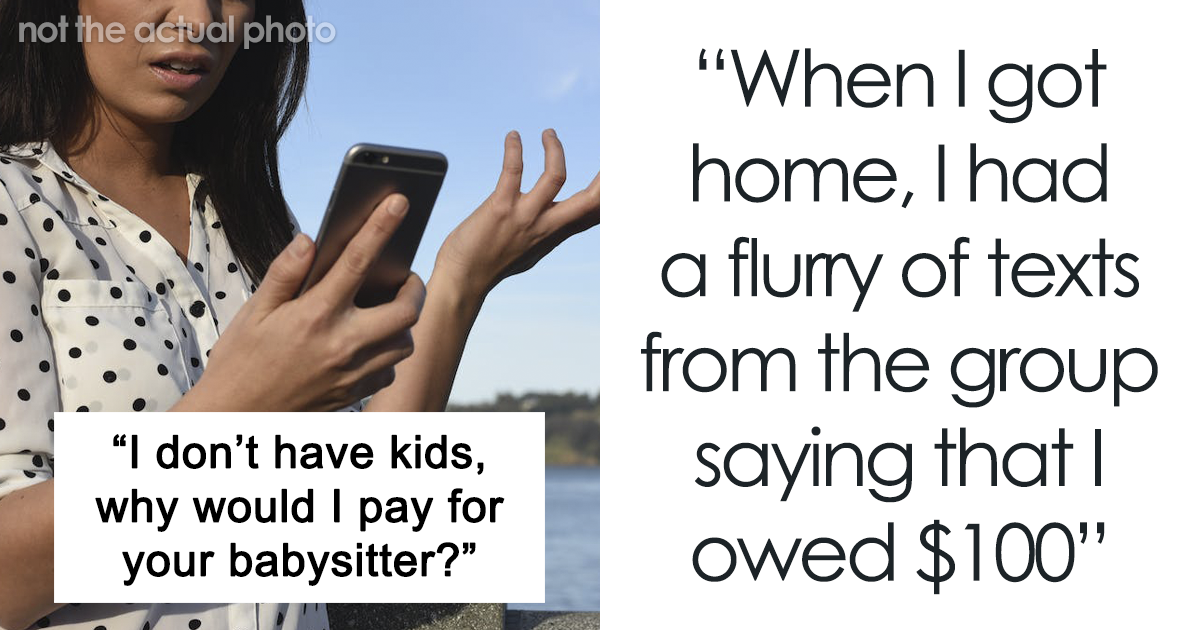
Splitting a dinner bill among friends is usually simpleuntil somebody quietly adds four children, one babysitter, and a surprise $100 charge. That is how one woman ended up in a dispute that sounds like a sitcom plot but raises a real question: when parents need childcare to attend a social event, should their child-free friends help pay for it?
Here, the moral mystery is not especially mysterious. The woman did not hire the sitter, did not have a child receiving care, and was never told that the group’s payment arrangement had changed. Her refusal was less “anti-parent” and more “I do not recognize this invoice.”
What Happened at the Monthly Dinner?
The woman had been friends with four other women since high school. They met for dinner about once a month and used a rotating system in which one person paid for the table each time. Because everyone generally ordered a similar meal and drink, the tradition had worked without much drama.
The other four friends each had one child. Recently, they began hiring one babysitter to watch all four children for $100 over roughly two to three hours. Their husbands also planned a night out at the same time, allowing both groups of parents to use the same childcare arrangement.
When the child-free woman’s turn came, she paid for dinner as usual and went home. She then received several messages saying she also owed the sitter’s full $100 fee. Her friends argued that everyone benefited from having a kid-free evening. She replied with the obvious question: what “share” could she owe when none of the children were hers?
The original Reddit discussion and later media coverage largely supported her, especially after she clarified that no one had discussed the new expense with her beforehand.
Why Her Refusal Was Reasonable
The Expense Belonged to the People Using the Service
Everyone has personal costs connected to a night out. One friend may pay for parking, another for a rideshare, and someone else for a dog walker or a new shirt purchased during a moment of retail optimism. Those expenses help individuals attend, but they do not automatically become group debts.
Babysitting works the same way unless the group agrees otherwise. The four families needed care because they were responsible for children during dinner. The fifth friend did not create that need, choose the sitter, negotiate the price, or receive care for a dependent.
Childcare is important, and caregivers deserve fair pay. Neither point means a person without children must fund childcare for four separate households.
The Rules Changed Without Her Consent
The established custom covered dinner. The parents later attached a second expense to the rotation and apparently discussed it among themselves, but not with the one member who had no child involved.
Even if a five-way rotation looked convenient on paper, convenience is not consent. Shared costs should be explained before anyone is expected to pay. Etiquette and relationship guidance on money consistently emphasize advance planning, clear expectations, and direct conversations rather than surprise charges.
“You Get Our Kid-Free Company” Is Not a Pricing Plan
The friends’ strangest argument was that the woman benefited from spending time with them without their children. That turns friendship into a premium subscription: pay $100 to unlock Adult Conversation Mode.
The benefit was mutual. Her friends also enjoyed her company, and she had already paid for everyone’s meal. Unless she had demanded an adults-only evening and promised to cover the cost required to make it happen, there was no sound reason to charge her for access to the group.
Compassion means making plans that account for different lives. It does not mean assigning one person the private expenses of four families.
The Parents’ Problem Was Real
Although the surprise invoice was unreasonable, the childcare burden behind it was not imaginary. Care in the United States can consume a major part of a family budget. Recent estimates put typical babysitting rates near $20 an hour for one child, with higher prices in many cities. Broader annual childcare expenses often reach five figures per child, while federal resources acknowledge that care can compete with housing and other major household costs.
Against that backdrop, $100 for four children over several hours may have seemed efficient to the parents. Hiring one sitter, coordinating schedules, and dividing the cost among four couples was sensible. The sitter was doing real work and deserved proper compensation.
The mistake was treating the child-free friend as another parent in the pool. Financial pressure can explain why someone wants help; it cannot manufacture another person’s obligation.
The Bigger Friendship Tension
Parenthood changes schedules, priorities, energy, and disposable income. Friendships that once ran on spontaneous plans may suddenly require calendars, backup caregivers, snack bags, and airport-level coordination.
Adults without children may feel expected to be endlessly flexible because others assume they have fewer responsibilities. Parents may feel abandoned when old friends stop making plans they can realistically attend. Both feelings can exist at once.
Pew Research Center has found that most older adults without children do not report a negative effect on relationships with friends who are parents, though a meaningful share say those friendships can be harder to maintain. Different life paths do not automatically end friendships, but they demand more deliberate communication.
This group was not fighting only about $100. They were deciding whether the one member with a different family structure would be respected or folded into the majority’s system without being asked.
Where Were the Fathers?
Many readers asked why the fathers were not watching the children. The woman explained that the husbands scheduled their own night out at the same time so both groups could use the sitter.
That detail weakens the demand further. The service benefited eight parents across four households. The obvious division was $25 per couple, or $12.50 per parent. Charging the child-free friend the entire $100 during her dinner rotation would subsidize both the women’s dinner and the men’s outing. That is not splitting a bill; it is accidentally sponsoring a tiny festival.
When Sharing Babysitting Costs Could Be Fair
A larger group can reasonably share childcare expenses when the arrangement is disclosed and everyone agrees. Examples include:
- A host provides care: A wedding or reunion organizer may pay for onsite childcare to create an adults-only event.
- Everyone brings children: Several families can jointly hire caregivers and divide the fee by household, child, or hour.
- Friends offer a gift: A group may cover a sitter for a birthday, emergency, medical appointment, or special celebration.
- A shared fund is voluntary: Friends may create a standing budget for group expenses if every member understands the rules.
None of those conditions appeared here. The parents arranged the service, their children used it, and the new charge was introduced only after dinner.
Was She a Jerk?
No. Refusing to pay did not make her a jerk. She would have been wrong if she had agreed beforehand and backed out after the babysitter worked. She also might have seemed inconsiderate if she constantly demanded child-free events while rejecting every compromise. Based on the account, she did neither.
The parents were free to ask whether she wanted to contribute. They were not entitled to assume consent, call the fee her “share,” and pressure her after she had already covered the restaurant bill.
How the Group Could Repair the Rift
A friendship that has lasted since high school does not need to end over one badly handled expense. The group can recover by separating two questions: Is childcare valuable? Yes. Did this friend authorize the charge? No.
She could respond:
“I value our dinners and want to keep seeing everyone. I am happy to continue taking my turn paying for the meal, but I will not join the babysitting rotation because I do not have a child receiving care. I wish the change had been discussed before it was treated as an obligation.”
The four families can then divide the sitter’s fee. The group could also stop rotating restaurant bills, meet at a parent’s home occasionally, schedule lunches, include the children at some events, or choose less expensive outings.
Healthy boundaries are not punishments. They clarify what a person can offer without building resentment. Friendship guidance repeatedly identifies reciprocity, respect, and direct communication as foundations of strong relationships.
Lessons About Parenting, Money, and Fairness
Fair Does Not Always Mean Equal
A five-way split would be mathematically equal but practically unfair because only four households used the service. Fairness often means assigning costs according to participation.
Child-Free Does Not Mean Responsibility-Free
A person without children may have debt, health expenses, aging relatives, pets, demanding work, or private goals. Their money is not unassigned merely because it is not being spent on diapers.
Support Should Be Requested, Not Imposed
Parents deserve social support, and affordable childcare is a legitimate public concern. Still, there is a difference between building policies that support families and sending one friend a surprise bill. Generosity works best when requested respectfully and offered freely.
Experiences That Mirror This Babysitting Dispute
Conflicts like this rarely begin with someone deliberately violating a boundary. They usually start with an assumption that feels efficient to one side and invisible to the other.
The Vacation Rental
Imagine three couples with children and one single friend renting a beach house. The parents choose a larger property with extra bedrooms, a fenced yard, and a game room. Dividing the total equally by adult looks simple, but the solo traveler may reasonably object if the children occupy several rooms and family-friendly features increased the price.
The answer is not to accuse the friend of disliking children. The group should discuss costs before booking. They might divide the price by bedroom, ask families to cover an additional share, or agree that the larger property benefits everyone. Almost any system can work when it is explicit; almost any system can cause resentment when it is assumed.
The Adults-Only Wedding
Now imagine a couple hosting an adults-only wedding and arranging professional care nearby. The hosts may decide that childcare is part of creating the event they want. They could cover it, charge participating families a clearly disclosed fee, or subsidize part of the service.
What would make little sense is billing guests without children because they also enjoy a quieter reception. They benefit from the atmosphere, but they do not use the childcare.
The Friend Who Always Travels
A child-free friend may repeatedly cross town because parents prefer gatherings at home. They bring food, work around nap schedules, and accept early endings. Over time, they may feel that flexibility moves in only one direction.
The parents may not be selfish; meeting at home may genuinely be easier. Still, recognition matters. A sincere thank-you, an occasional trip to the other friend’s neighborhood, or permission to decline without guilt can prevent frustration from becoming a permanent feature of the friendship.
The Emergency Exception
An emergency changes the emotional calculation. Friends may gladly help pay for childcare during a hospitalization, funeral, urgent job interview, or family crisis even when they have no children. That contribution is an act of care, not a compulsory membership fee.
The dinner case was different. The woman was not refusing aid during a crisis. She was declining to finance a recurring leisure expense chosen by four households.
What These Situations Teach
Across vacations, weddings, routine gatherings, and emergencies, the same practical rules apply: identify who requested the service, determine who uses it, discuss the cost before committing, and leave room for voluntary generosity.
Friendships can survive different incomes, family structures, and life stages when people remain curious about one another’s circumstances. They weaken when the majority treats its preferences as the default and labels disagreement selfish.
Conclusion
The woman was justified in refusing the babysitting charge. Her friends’ need for care was understandable, and the sitter deserved fair payment, but neither fact transferred the parents’ bill to someone with no child in the arrangement.
The clean solution is for the four families to split the fee and keep childcare separate from the dinner rotation. More importantly, the friends should replace assumptions with a real conversation. Friendship should provide companionship, not surprise invoicesand nobody should need the premium plan just to eat pasta with people they have known since high school.
Note: This article analyzes a publicly shared social dilemma and draws on broader U.S. research about childcare costs, adults without children, financial boundaries, and friendship etiquette. Names and identifying details are omitted.

