
Hair Care
This Artist Shows How Pop Culture Icons Would Look In Real Life, And It Will Give You Nightmares
Aug
Pop culture icons are supposed to be comforting. SpongeBob is supposed to be cheerful. Homer Simpson is supposed to be goofy. Ronald McDonald is supposed to make fries feel slightly more magical than potatoes have any right to be. But then an artist like Wil Hughes comes along, opens a 3D sculpting program, adds realistic skin, strange proportions, intense facial expressions, and suddenly your childhood memories are standing in the corner of the room asking why you still sleep with the hallway light on.
That is the strange power behind Hughes’ viral digital art. The Australian 3D artist became widely known online for reimagining familiar pop culture characters as if they existed in the real worldnot as polished movie mascots, but as unsettling, hyper-realistic creatures with the same exaggerated features that made them funny in cartoons. The result is funny, fascinating, and deeply uncomfortable all at once. It is the kind of artwork you look at for two seconds, scroll away from, then immediately scroll back to because apparently your brain enjoys emotional chaos.
His work fits perfectly into the internet’s love of “cursed images,” horror fan art, realistic cartoon characters, and the uncanny valleythat weird mental neighborhood where something looks almost human, but not quite human enough to let your nervous system relax. Hughes takes characters we already know, such as Homer Simpson, SpongeBob SquarePants, Peter Griffin, Pickle Rick, Mr. Krabs, Plankton, Ronald McDonald, and other pop culture icons, then rebuilds them with texture, anatomy, lighting, and expression. The joke is simple: what if the cartoons we loved were real? The answer is even simpler: we would move.
Who Is Wil Hughes?
Wil Hughes is a digital artist and 3D modeler associated with the world of character sculpting, animation, and pop culture reinterpretation. He has been featured across art, design, entertainment, and internet culture sites for his eerie versions of famous cartoon and entertainment characters. His portfolio includes recognizable figures from animated television, fast-food branding, adult animation, video games, and meme culture.
What makes Hughes’ work stand out is not merely that he makes characters “scary.” Plenty of artists can throw shadows on a clown and call it a day. Hughes is more surgical than that. He identifies the exact feature that makes a character instantly recognizablethe round eyes, the drooping face, the oversized mouth, the tiny body, the permanently exhausted stareand then translates that feature into realistic 3D form. The familiar design remains, but the emotional effect changes completely.
That is why his Homer Simpson does not just look like a random bald man. He still feels like Homer: the round head, the heavy upper lip, the blank-but-somehow-opinionated stare, the “I heard there were donuts” energy. But in a real-world texture, that design suddenly becomes less sitcom dad and more person you would avoid making eye contact with at a gas station at 1:13 a.m.
Why Realistic Cartoon Characters Look So Creepy
The reason Hughes’ artwork hits so hard is tied to a concept called the uncanny valley. When something looks clearly fake, we accept it. A cartoon sponge flipping burgers under the sea? Sure. A yellow family with four fingers and permanent overbites? Fine. A talking dog with martini-dry sarcasm? Why not? Animation gives us permission to believe impossible things because it never pretends to follow real-world biology.
But when an artist drags those impossible designs into a realistic visual language, the rules change. Suddenly, the body needs skin texture. The eyes need moisture. The mouth needs depth. The nose, teeth, wrinkles, pores, and expression all have to exist in a way our brains can process. And when a cartoon’s exaggerated design is too faithfully preserved, the result becomes wonderfully wrong.
That is the secret sauce of Wil Hughes’ realistic pop culture icons. He does not completely redesign them into normal humans. He keeps the cartoon logic alive and forces it to wear realistic clothing, realistic light, and realistic surfaces. That combination creates a visual contradiction. The viewer recognizes the character instantly, but the brain also says, “Absolutely not. This should not be standing upright.”
The Art Style: Hyper-Realistic, Funny, and Deeply Unsettling
Hughes’ style is often described as hyper-realistic 3D art, but “realistic” here does not mean “normal.” It means the characters are rendered with enough detail to feel physically present. The skin may look textured. The eyes may catch light. The facial structure may appear sculpted. The lighting makes them feel like studio portraits from a universe where cartoons escaped and nobody signed the proper safety paperwork.
In many of his works, Hughes exaggerates emotion. A cartoon character who is cheerful in the original may become intense, tired, strange, or vaguely threatening in the 3D version. That emotional shift is what makes the images memorable. They are not just “what SpongeBob would look like in real life.” They are what SpongeBob might look like after discovering taxes, rent, and the comment section.
The humor matters, too. These creations are not pure horror. They are more like visual pranks with excellent technical skill. You laugh because the idea is absurd, then you feel uncomfortable because the execution is too convincing. It is internet art at its best: instantly shareable, technically impressive, and just cursed enough to ruin a perfectly good lunch break.
Famous Pop Culture Icons Reimagined in Real Life
Homer Simpson
Homer Simpson is one of the best examples of why realistic cartoon characters can feel so strange. In animation, Homer’s round head, bulging eyes, and soft facial structure are funny. They support slapstick comedy and emotional simplicity. In 3D realism, those same traits become unsettling because they no longer belong to a flat yellow cartoon dad. They belong to a creature who looks like he has seen the inside of every donut shop in Springfield and maybe a few dimensions beyond it.
What makes Hughes’ Homer effective is the balance between recognition and distortion. You know exactly who it is. The silhouette is there. The expression is there. The “D’oh!” energy is absolutely still in the building. Yet the real-world texture makes the character feel too close, as if the TV screen has become a door and Homer forgot to knock.
SpongeBob SquarePants
SpongeBob is built from cheerful nonsense: square body, big eyes, tiny limbs, nautical optimism, and the emotional stamina of a motivational poster with legs. In a cartoon, that is adorable. In a realistic 3D interpretation, the idea of a living sponge-person becomes harder to process. Hughes’ version leans into that tension. The character remains recognizable, but the realistic treatment makes Bikini Bottom feel less like a children’s cartoon and more like a place a documentary crew would enter with flashlights and regret.
This is why SpongeBob is such a popular subject for realistic fan art. The original design is so simple and iconic that any added realism instantly creates contrast. The more texture you add, the weirder he gets. The more human-like emotion you add, the less ready anyone is to hear him laugh.
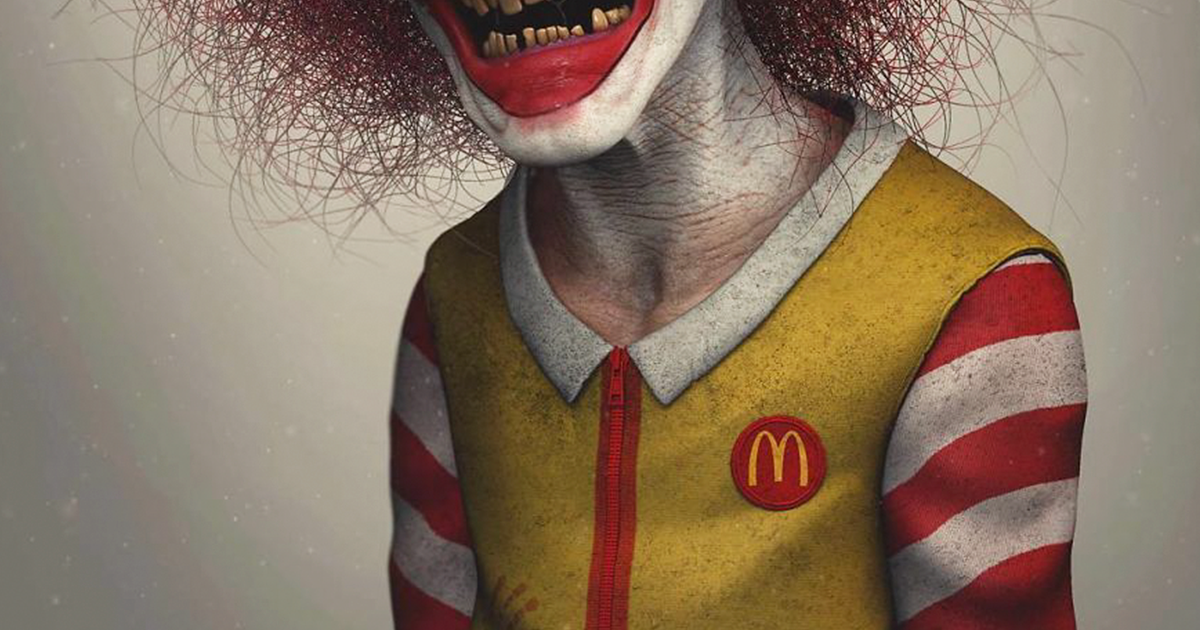
Ronald McDonald
Ronald McDonald already lives dangerously close to the uncanny valley. Clowns are supposed to be funny, but pop culture has trained many people to treat them with suspicion. Hughes’ interpretation works because it does not need to invent the creepiness from scratch. The bright colors, wide smile, theatrical makeup, and mascot energy are already intense. The realistic version simply turns up the volume.
The result is a pop culture icon that feels familiar but no longer comforting. It raises a funny question: were we ever fully relaxed around Ronald McDonald, or did we just accept the fries as emotional compensation?
Peter Griffin
Peter Griffin from “Family Guy” is another ideal candidate for realistic 3D horror-comedy. His cartoon design is intentionally simple: round face, tiny eyes, heavy jawline, and a body shape built for physical comedy. In Hughes’ hands, those traits become more intense. The realistic version feels like the cartoon’s loud personality has been compressed into a face that should not exist outside animation.
Again, the power lies in the translation. Hughes does not need to change the character beyond recognition. He simply asks: what if those shapes had weight, texture, and dimension? The answer is funny, but it also makes you want to close your laptop gently, as though sudden movement might wake it.
Pickle Rick and Other Adult Animation Icons
Characters from adult animation and meme culture also fit Hughes’ style because they already carry a layer of absurdity. Pickle Rick, for example, is ridiculous by design. The entire joke is that a brilliant scientist turns himself into a pickle. But when that concept is rebuilt in realistic 3D, the absurdity becomes physical. It is no longer just a joke in a cartoon universe; it becomes an object with texture, expression, and strange emotional presence.
This is why Hughes’ portfolio has traveled so well online. His work speaks the language of memes, nostalgia, animation, and horror at the same time. It gives viewers the pleasure of recognition and the shock of reinterpretation in one quick visual hit.
Why the Internet Loves Nightmare Versions of Childhood Characters
There is something oddly satisfying about seeing childhood characters reimagined in a darker or more realistic way. It does not necessarily mean people want their childhoods “ruined.” More often, they enjoy seeing familiar media through a new creative lens. The contrast creates surprise, and surprise is one of the internet’s favorite currencies.
Nostalgia also plays a major role. Pop culture icons are emotional shortcuts. A viewer sees Homer Simpson, SpongeBob, Mr. Krabs, or Ronald McDonald and instantly brings years of memories to the image. Hughes uses that existing emotional connection as the starting point. He does not have to introduce the character; the audience already knows them. That allows the artwork to move straight into transformation.
The best viral art often works this way. It takes something people recognize and changes the context. A sweet character becomes eerie. A funny mascot becomes intense. A simple cartoon becomes anatomically questionable. The audience reacts because the art interrupts a familiar pattern. It says, “You know this character,” and then immediately adds, “but you have never met them like this.”
The Skill Behind the Scares
It is easy to focus on the nightmare fuel and miss the craftsmanship. But Hughes’ work depends on strong technical foundations. A convincing 3D character requires sculpting ability, knowledge of form, attention to texture, lighting, rendering, and a clear sense of visual storytelling. Even when the final image is funny or disturbing, the process behind it is serious.
Digital sculpting programs allow artists to build characters almost like clay, shaping forms, exaggerating features, and refining details. Rendering tools then bring those sculptures into a believable visual environment with realistic lighting and surfaces. A weak version of this idea would simply paste cartoon features onto a human face. Hughes’ work succeeds because it feels intentionally designed, not randomly distorted.
That is also why his images are so shareable. They work instantly at thumbnail size, but they also reward close attention. The viewer can laugh at the overall concept, then notice the details: the expression, the posture, the way the character’s original design has been translated into a physical form. It is the difference between a quick meme and a piece of digital art that keeps circulating years after it first appears.
Pop Culture, Horror, and the Joy of Being Slightly Disturbed
Hughes’ art sits at the intersection of pop culture and horror, but it is not horror in the traditional sense. There are no complicated plots, haunted houses, or dramatic villains. Instead, the fear comes from recognition. The viewer is scared because the image is almost something safe. Almost SpongeBob. Almost Homer. Almost a friendly mascot. Almost normal.
That “almost” is powerful. It creates tension without needing anything extreme. The artwork stays playful enough for entertainment coverage but eerie enough to feel unforgettable. It is a visual jump scare without the jump. You are not shocked by movement; you are shocked by the realization that a familiar cartoon design becomes deeply strange when treated as a living form.
In a way, this kind of art proves how brilliant original cartoon design really is. Animated characters are not meant to survive full realism. Their shapes work because they belong to stylized worlds. SpongeBob belongs in Bikini Bottom. Homer belongs in Springfield. Peter Griffin belongs in Quahog. When pulled into our world, they become visual tourists without passports.
Why These Images Stick in Your Mind
Some art is beautiful. Some art is thought-provoking. Some art makes you whisper, “Why would someone do this?” and then send it to five friends. Hughes’ realistic pop culture icons live proudly in that third category. They are memorable because they generate an immediate reaction. You do not need an art degree to understand the concept. You only need to know the character and possess a basic survival instinct.
Another reason the images stick is that they create emotional conflict. You may love the original character, but the realistic version makes you uncomfortable. You may laugh at the absurdity, but you also feel the need to look away. That mix of humor and unease is powerful because it keeps the viewer engaged longer than a straightforward scary image would.
In SEO terms, this is exactly why topics like “realistic cartoon characters,” “creepy pop culture icons,” “characters in real life,” and “uncanny valley art” perform well online. They promise transformation, surprise, and emotional reaction. People click because they want to see how far the artist went. Then they stay because the answer is usually: much farther than expected.
Experiences Related to Seeing Pop Culture Icons Reimagined in Real Life
The first experience many viewers have with Wil Hughes’ work is not fear in the classic horror-movie sense. It is more like emotional confusion wearing clown shoes. You recognize the character immediately, which gives you a tiny hit of nostalgia. Then your brain notices the realistic textures, the intense expression, and the strange physical details, and suddenly the nostalgia starts backing slowly toward the exit.
That reaction is part of the fun. Seeing a realistic version of a cartoon character can feel like discovering a secret version of a childhood memory. The character has not been erased; it has been translated into another visual language. Sometimes that translation is hilarious. Sometimes it is uncomfortable. Sometimes it is both, which is why people keep sharing these images in group chats with captions like, “Sorry, but you need to see this.”
For fans of animation, the experience can also be surprisingly educational. Hughes’ work makes you notice how much stylization protects animated characters from reality. A giant head looks cute in a cartoon because the world around it follows the same rules. Four fingers, huge eyes, strange mouths, and impossible body shapes feel normal when everything is drawn with the same logic. But realism is less forgiving. Once a character has real texture and dimensional lighting, every exaggerated feature becomes more intense.
There is also a strong “campfire story” quality to this kind of art. People gather around the image digitally, react together, joke about it, and compare which character is the most unsettling. One person might say Homer is the worst. Another might vote for SpongeBob. Someone else may insist Ronald McDonald was already suspicious and this just confirms the evidence. The artwork becomes a shared experience, not just a picture.
Personally, the most interesting part of this trend is how it changes the way we think about character design. A good cartoon character is not realistic; it is readable. The design communicates personality in seconds. Homer is simple, lazy, lovable, and chaotic. SpongeBob is energetic, square, bright, and optimistic. Peter Griffin is loud and physically comedic. Hughes preserves that readability while changing the surface language. That is why the images work. They are not random monsters wearing famous names. They are recognizable icons pushed through a realism filter until the familiar becomes strange.
This kind of art also reminds viewers that pop culture is flexible. Characters do not live in only one format. They can be animated, sculpted, parodied, painted, memed, cosplayed, redesigned, and reinterpreted. Some versions are sweet. Some are stylish. Some look like they should come with a warning label and a night-light. Hughes’ versions fall into that last category, and honestly, the internet is better for it.
The experience is a little like riding a haunted-house attraction built out of Saturday morning cartoons. You enter because you know the characters. You stay because the craftsmanship is impressive. You leave slightly concerned, but also entertained. And later, when someone asks whether art can still surprise people in an age of endless scrolling, you can point to a realistic SpongeBob and say, “Unfortunately, yes.”
Conclusion
Wil Hughes’ realistic pop culture icons are more than creepy internet images. They are clever exercises in digital sculpting, nostalgia, humor, and the uncanny valley. By taking familiar characters and giving them realistic form, Hughes shows how thin the line can be between lovable design and nightmare fuel. The characters remain recognizable, but they no longer feel safely trapped inside the screen.
That is why the work continues to fascinate viewers. It is funny enough to share, skilled enough to admire, and unsettling enough to remember right before falling asleep. Pop culture icons are powerful because they feel familiar. Hughes’ art proves they become even more powerful when that familiarity is twisted just enough to make us laugh, cringe, and check the hallway twice.
Note: This article is an original, web-ready synthesis based on publicly available coverage of Wil Hughes’ digital art, 3D character portfolios, artist features, and broader reporting on realistic pop culture reimagining, uncanny valley design, and viral internet art trends.

