
Beauty Unlocked
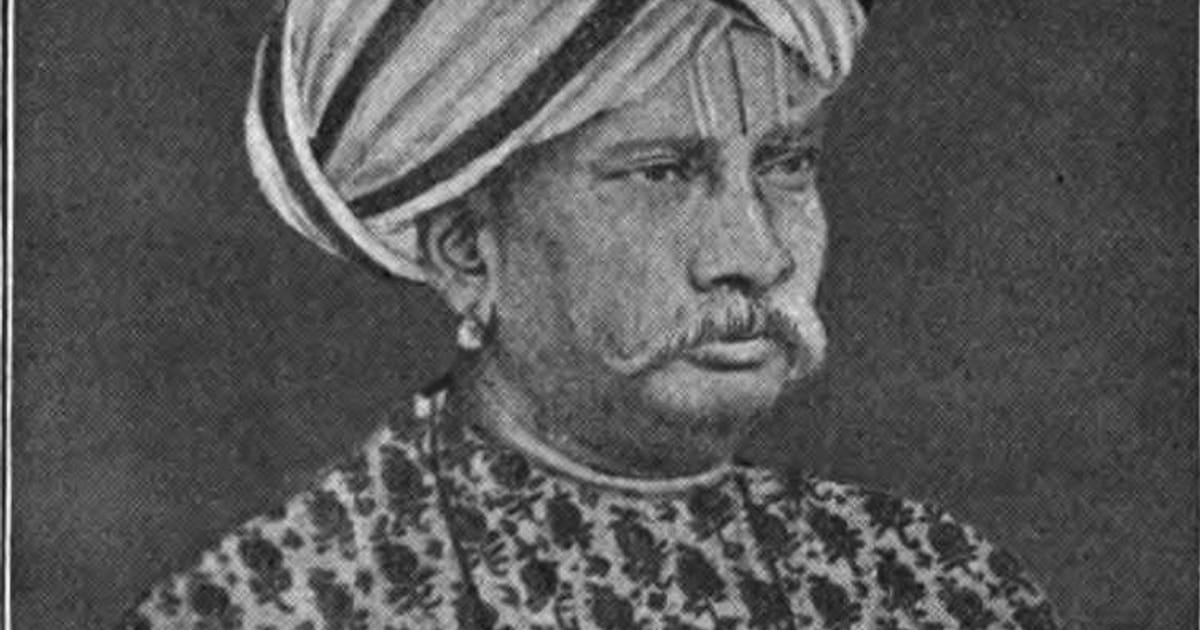
A. Subbarayalu Reddiar Rankings And Opinions
Aug
Some political careers are Netflix seasons. A. Subbarayalu Reddiar’s time at the top was more like a pilot episode:
short, historically important, and easy to skip if you’re bingeing louder characters later in the story.
But if you care about how modern Tamil Nadu–era politics took shapeespecially the early, messy experiment of
provincial self-government under British rulehis name matters.
This article breaks down who Subbarayalu Reddiar was, why his premiership still shows up in textbooks and debates,
andbecause the title promised itwhere he “ranks” depending on what you think leadership is supposed to do:
make big policy, hold coalitions together, symbolize change, or simply be the first person to sit in a brand-new chair
without breaking it.
Who Was A. Subbarayalu Reddiar?
Diwan Bahadur Agaram Subbarayalu Reddiar (often written as A. Subbarayalu Reddiar) was a lawyer and landlord from
the Madras Presidency (in today’s Tamil Nadu region). He was active in district-level public lifethink boards,
local administration, and the early version of “public service that involves a lot of minutes and committee meetings.”
Those local institutions mattered: they were where future provincial leaders learned how to govern before “governing”
was even fully on the menu.
Politically, he moved through the currents of the timefirst aligning with the Indian National Congress, then later
joining the Justice Party (the South Indian Liberal Federation), a major force in the non-Brahmin movement and
early provincial politics. That shift is a big part of why his legacy is discussed in the same breath as
representation, access, and the long argument over who gets to speak for “the public.”
The Historical Moment That Created His Job
Subbarayalu Reddiar didn’t become a leader in a normal systemhe became a leader in a new experiment.
After the Government of India Act of 1919 (built on the Montagu–Chelmsford recommendations), provinces like Madras
began operating under dyarchy: a split government where some subjects were “transferred” to elected
Indian ministers while others stayed “reserved” under the governor and executive council. In plain English:
you could be “in charge,” but not of everything that actually felt like being in charge.
The first big Madras election under this setup happened in 1920. With the Indian National Congress boycotting
elections during the Non-Cooperation movement, the Justice Party won decisively and formed the first ministry.
Subbarayalu Reddiar became the inaugural First Minister (often compared to a premier/chief minister role for that era),
taking on major portfolios in a system designed to keep the steering wheel partly locked.
Why He’s Often Remembered… and Also Often Forgotten
Here’s the paradox: Subbarayalu Reddiar is famous for being first, but not famous for being long.
His tenure was brief and ended due to health issues. In politics, “first” gets you a footnote; “long enough to do
three controversial reforms and survive two cabinet spats” gets you the chapter title.
Also, the dyarchy structure makes it harder to measure “impact” in the way modern readers expect.
When power is split, victories can look like compromises and compromises can look like “nothing happened,” even when
the bigger shift is institutional: provincial governance is now publicly contested, ministerial responsibility is now a
concept people can argue about, and elections begin shaping legitimacy.
How We’re Defining “Rankings” Without Turning History Into a Beauty Pageant
Rankings are opinions with a spreadsheet costume. So let’s be honest about the criteria.
For Subbarayalu Reddiar, the fairest “ranking” isn’t “Was he the greatest?” but:
Where does he land depending on what you value?
Our Five Ranking Categories
- Symbolic Firstness: Did the person mark a turning point?
- Administrative Credibility: Could they run a government, not just a speech?
- Policy Footprint: Did measurable reforms attach to their name?
- Coalition & Movement Impact: Did they strengthen a political project bigger than themselves?
- Public Memory: Are they remembered beyond exam answers and trivia nights?
A. Subbarayalu Reddiar Rankings: The Scorecard
| Category | Score (1–10) | Why This Score |
|---|---|---|
| Symbolic Firstness | 9 |
Being the inaugural First Minister of Madras under dyarchy is historically loud, even if the tenure was quiet. “First” becomes a reference point for everything that follows. |
| Administrative Credibility | 7 |
His background in law and district governance fits the era’s “administrator-politician” model. He represented a transition from local boards to provincial responsibility. |
| Policy Footprint | 5 |
The short tenure and the dyarchy limits make it difficult to attach major long-run reforms specifically to him. Early Justice Party policies often get credited more strongly to successors with longer runs. |
| Coalition & Movement Impact | 6 |
He helped normalize the Justice Party’s role as a governing party in the province, but the movement’s signature policy identity sharpened over subsequent years. |
| Public Memory | 4 |
Outside political history readers, his name is less “icon” and more “important checkpoint.” He’s remembered, but not widely mythologized. |
Overall ranking takeaway: If your scoring system rewards historic turning points, he ranks high.
If your scoring system rewards dramatic, long-term policy legacy, he ranks mid-packnot because he lacked ability,
but because the clock (and his health) didn’t give him enough minutes to run the full playbook.
Opinions You’ll Hear About Subbarayalu Reddiar (And What They Reveal)
Opinion #1: “He’s the prototypemore important than people realize.”
This view focuses on institutions. The first ministry sets habits: cabinet structure, portfolio expectations,
how ministers interact with the governor, what “responsibility” looks like under dyarchy, and how a party behaves
when it isn’t just criticizing but actually governing. In this reading, his legacy is not a single lawit’s
the precedent of provincial power being exercised by elected Indians in a visible way.
Opinion #2: “His tenure was too short to matter.”
The “impact maximizers” say history should reward outcomes: what changed, what lasted, what can be traced from
decision to result. Under that metric, a short tenure becomes a structural disadvantage. This opinion often comes
from readers who treat early provincial politics like a scoreboard instead of a system being assembled in real time.
Opinion #3: “He’s a symbol of the Justice Party’s transition from protest to power.”
Here, Subbarayalu Reddiar is less the headline and more the bridge. The Justice Party rose in a context of debates
about representation, access to education and jobs, and who dominated public institutions. Once in power, it had to
prove it could govern and not just argue. Being the first leader in that transition makes him historically significant,
even if later leaders became more visible.
Opinion #4: “Dyarchy made real leadership impossible anyway.”
This opinion doesn’t blame the person; it blames the architecture. Under dyarchy, “transferred” subjects could be run
by ministers, but “reserved” subjectsoften the heavier leversremained under colonial control. So the fairest judgment,
in this view, is that early premiers should be ranked like captains steering in a storm while someone else holds the
anchor chain.
So What Did He Actually Do As First Minister?
The most reliable summary is also the least dramatic: he led the first Justice Party ministry in Madras under dyarchy,
held key portfolios (including education and public works), and served during the opening phase of the new legislative
erawhen the council’s sessions, ceremonial openings, and administrative procedures were still settling into place.
The “specific example” that captures the moment best is the opening of the first sitting of the new legislative council
in early 1921, a ceremony involving the Duke of Connaught and the colonial leadership. It’s the kind of event that looks
ceremonial in a photo but politically meaningful in context: it represented the new constitutional experiment being
performed in public.
Leadership Lessons From a Short Premiership
-
Being first means being tested by the system, not just the opposition.
New institutions expose cracks fastrules, roles, and expectations get negotiated in real time. -
Local governance experience is underrated.
District boards and municipal politics teach budgeting, negotiation, and administrative patience (the unglamorous superpowers). -
Short tenures still matter when they set norms.
“What’s normal” in a new legislature often becomes stickyeven when the people change. -
In split-power systems, clarity beats charisma.
When authority is divided, leaders who communicate what they can and can’t do tend to age better in history. -
Movements need governors as much as they need critics.
Getting into office is one skill; keeping legitimacy while governing is another. -
Health and capacity are political variables.
History often reduces this to a footnote, but governance runs on human limits.
If You’re Researching A. Subbarayalu Reddiar, Here’s the Smart Way
Because his tenure is brief, the best research strategy is “wide context, careful attribution.”
Instead of hunting for one famous speech, look for:
- 1920 election material and early council proceedings (who supported whom, what the ministry announced early on)
- Portfolios and administrative records related to education and public works under the early dyarchy period
- Scholarly histories of Madras politics (to see how historians position him inside the broader Justice Party story)
- Contemporary press reports and ceremonial accounts (to capture what the new legislature looked like on the ground)
The goal is not to inflate a short tenure into a long one. It’s to understand why “first” is a political category
that mattersespecially in constitutional transitions.
FAQ: Quick Answers People Search For
Was A. Subbarayalu Reddiar the first Chief Minister of Tamil Nadu?
Not in the modern sense. He was the first First Minister (premier-style role) of the Madras Presidency under dyarchy.
Tamil Nadu as a state and the modern chief minister system came later.
Why did the Justice Party win so big in 1920?
A major factor was the Congress boycott during the Non-Cooperation movement, which reduced competition in many seats.
That created space for the Justice Party to form the first ministry.
What is dyarchy and why does it matter to his legacy?
Dyarchy split provincial powers between elected ministers and colonial executive control. It shaped what early premiers
could realistically accomplishand how historians should judge them.
Experiences Related to “A. Subbarayalu Reddiar Rankings And Opinions” (Extended)
If you ask ten people how they “experience” Subbarayalu Reddiar today, you’ll get ten different answersand that’s
exactly the point. His legacy doesn’t usually arrive as a viral quote or a statue selfie. It arrives as a breadcrumb:
a line in a syllabus, a name on a list of premiers, a footnote in a book about the Justice Party, or a question that
starts with, “Who was the first…?”
One common experience is the exam-prep encounter. Students meet him the way people meet obscure planets:
briefly, under pressure, and right before they forget again. In that moment, “ranking” becomes practical. He ranks high
because he’s firstfirst minister, first dyarchy-era leadership, first chapter of a new legislative era. The opinion
formed is simple: “Important because first.” It’s not wrong; it’s just incomplete.
Another experience shows up in archive-driven research. When you read older histories of South Indian
politics, especially work that follows district boards, local elites, and the slow build of provincial institutions,
you realize how much early governance was about infrastructure, committees, and reputation. The experience isn’t glamorous.
It’s the realization that politics isn’t only rallies and revolutionsit’s also budgets, roads, schools, and the
administrative muscle needed to turn a party into a government. In that world, Subbarayalu Reddiar feels less like a
trivia answer and more like a transitional figure: someone whose credibility helped the first ministry look like a
government, not a protest group wearing official badges.
A third experience is place-based. When people visit spaces tied to the Madras legislative storylike
Fort St. George and the broader colonial-era administrative geography of Chennaithey experience the “institutional weight”
of the era. Standing near those buildings makes dyarchy feel less theoretical. You can almost hear the tension between
elected aspirations and colonial control. In that setting, opinions change: the short tenure feels less like personal
failure and more like a leadership moment inside a constrained constitutional box.
Then there’s the movement-history experience, especially among readers interested in the non-Brahmin
movement and the Justice Party’s transformation. Here, “ranking” becomes ideological: he ranks as an early governing face
of a party that argued the province’s institutions needed broader representation. The opinion often becomes nuanced:
“Not the loudest reformer, but a key bridge from protest to administration.”
Finally, there’s the experience of modern political comparison. People inevitably ask: what would a
short-tenure leader look like today? Would they be dismissed as “interim,” or remembered as “the person who set the rules”?
That thought experiment is surprisingly useful. It forces you to rank leadership in more than one way: legacy isn’t only
about how long you servedit’s also about what changed in the political imagination while you served. Subbarayalu Reddiar’s
most enduring “experience” might be this: he reminds us that history is built not only by the longest chapters, but also
by the first pages.

