
Makeup
How to Identify the Denier of Hosiery: 3 Steps
Aug
Hosiery shopping would be easier if every pair announced, “I am 20 denier, pleasantly sheer, and terrified of Velcro.” Instead, labels disappear and mystery tights multiply in drawers.
You can usually identify the approximate denier of hosiery in three steps: check product information, evaluate opacity under controlled conditions, and compare the fabric with known reference pairs. The important word is approximate, because denier measures yarn rather than the darkness of a finished garment.
What Does Denier Mean in Hosiery?
Denier is a unit of linear density. In textile terms, a yarn measuring 9,000 meters and weighing 20 grams is 20 denier; a yarn of the same length weighing 80 grams is 80 denier. Therefore, a larger denier number generally indicates a heavier, more substantial yarn.
In everyday hosiery language, denier helps shoppers predict sheerness, coverage, warmth, and durability. Low-denier pantyhose usually look transparent and delicate. Higher-denier tights generally look darker, feel thicker, and allow less skin to show through.
Research basis:
Denier and opacity are related but not identical. Yarn composition, knit construction, color, finish, garment size, and stretch also affect the result. One brand’s 40-denier tights may therefore look nearly opaque while another pair at the same stated denier remains translucent.
Research basis:
A Practical Denier Range Guide
Brands do not use perfectly universal category boundaries, but the following ranges are useful for identification:
- 5–10 denier: ultra-sheer and barely visible.
- 10–20 denier: classic sheer pantyhose.
- 20–30 denier: sheer with light coverage.
- 30–40 denier: semi-sheer to semi-opaque.
- 40–60 denier: medium, often semi-opaque coverage.
- 70–100 denier: opaque with little skin visibility.
- 120 denier and above: heavy opaque or thermal hosiery.
Use these ranges as neighborhoods, not exact addresses. Dark colors usually look more covering, while microfiber and specialty yarns can change softness and appearance.
Research basis:
Step 1: Check the Label, Package, and Product Record
The most accurate method is also the least glamorous: inspect every piece of product information you can find.
Look for “DEN,” “D,” or “Denier Appearance”
Inspect the insert, waistband tag, receipt, and order history. The number may appear as “20 denier,” “20 DEN,” or “20D.” “40 denier appearance” may describe the visual effect rather than the exact yarn measurement.
Check whether the figure applies to the leg or the whole product. Control tops and reinforced toes can feel or look denser than the main leg fabric.
Research basis:
Search the Style Number
If the package is gone but a style code or brand remains, search the manufacturer or retailer listing. Product pages often state denier, fiber content, finish, care, and coverage. Match several details rather than trusting a similar-looking photo.
Research basis:
Record the Result Before the Evidence Vanishes Again
Once you identify the pair, attach a small paper tag, place it in a labeled storage bag, or save a note on your phone. A simple entry such as “black matte tights, 60D, control top” can prevent the same hosiery detective story next winter.
Step 2: Test Opacity in Consistent Light
When no label survives, opacity becomes your best clue. Keep lighting and stretch consistent; otherwise, you are practicing textile astrology.
Use a White Card and Printed Text
Slide a white card with bold black text inside one leg. Stretch the hosiery to roughly its worn width, then observe how clearly the card and lettering remain visible.
- Crisp text with only a faint tint suggests roughly 5–15 denier.
- Visible but softened text suggests about 15–30 denier.
- Hard-to-read text with some white showing suggests about 30–50 denier.
- A strongly obscured card suggests 60–100 denier or higher.
This is a visual estimate, not a laboratory result. Reliability improves when every pair is tested at the same stretch, distance, and light level.
Check the Knee, Calf, and Thigh While Worn
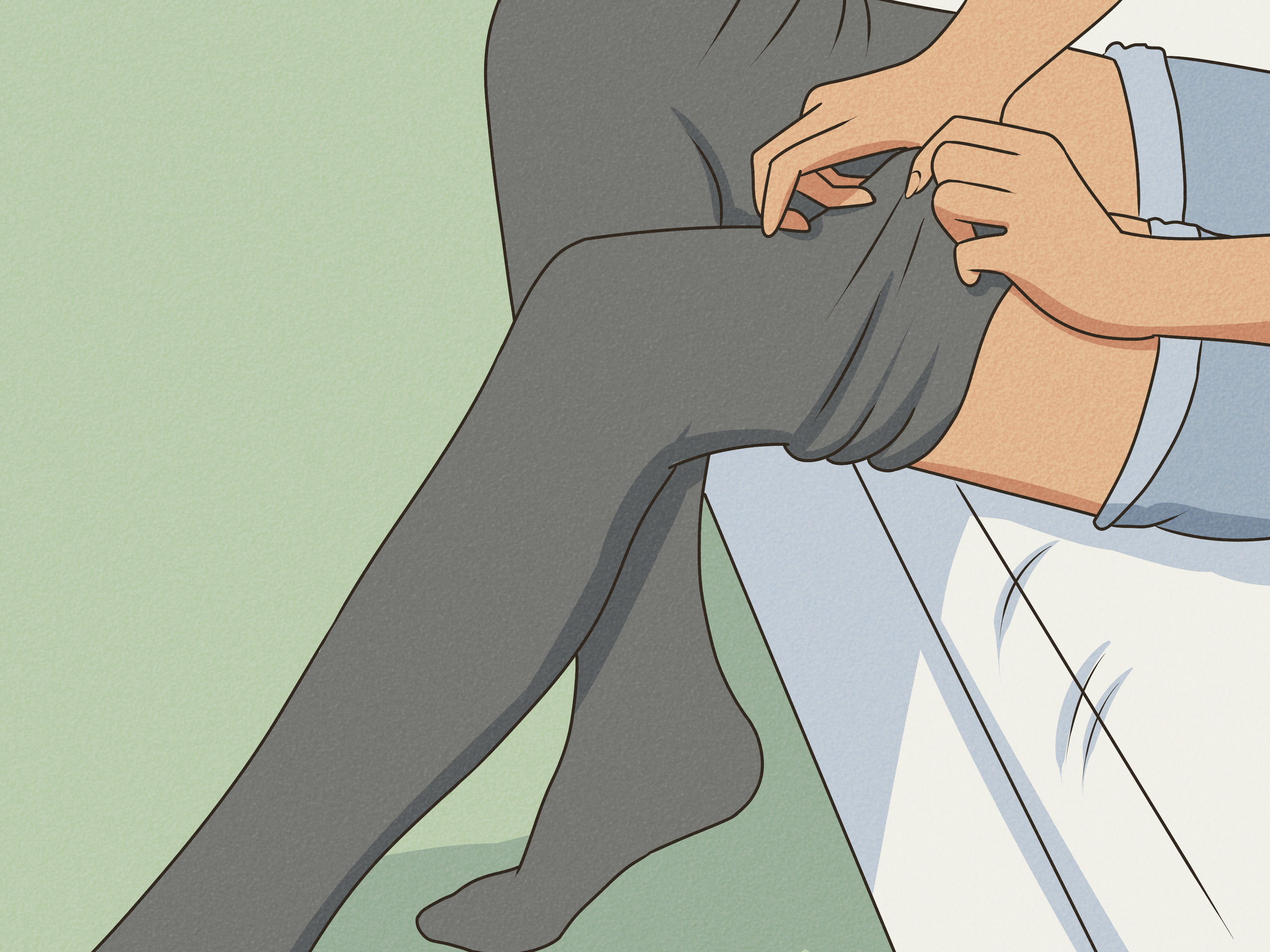
Hosiery appears sheerer over the knee and thigh because those areas stretch more. Skin visible everywhere suggests low denier; visibility mainly at a bent knee suggests semi-opaque fabric; nearly solid color suggests high denier.
Fit can fool you. A small pair stretches farther and looks sheerer, while a larger size may look darker. Compare properly fitting pairs or use objects of equal circumference.
Account for Color and Finish
Dark hosiery usually appears more opaque than pale colors at the same denier. Matte, satin, glossy, and patterned finishes can also alter the impression of coverage.
Research basis:
Step 3: Compare Weight, Feel, Stretch, and Construction
Next, use physical clues and side-by-side comparison with hosiery of known denier.
Build a Three-Pair Reference Kit
Keep labeled reference pairs near 20D, 40–50D, and 80–100D in the same color and similar sizes. Compare transparency, hand feel, rebound, and bulk at the toe. Low denier feels featherlight; medium denier has more body but still transmits light; high denier feels denser and keeps more uniform color when stretched.
Do Not Calculate Denier With a Kitchen Scale
Do not weigh finished tights and try to reverse-engineer denier. The garment includes multiple yarns, elastic, seams, a waistband, a gusset, and reinforced zones. Two products using similar leg yarns can have different total weights. Your kitchen scale deserves a day off.
Use Durability Only as Supporting Evidence
Higher denier often improves everyday durability, but fiber technology, knitting quality, and reinforcement can make sheer hosiery strong. Thick tights can still snag. Do not perform a heroic scratch test; coverage, rebound, and labeled references are more useful than sacrificing the garment to science.
Research basis:
Common Mistakes When Identifying Hosiery Denier
Assuming “Opaque” Means One Number
Retail terms overlap. One brand may call 40 denier opaque while another reserves the word for 60 denier and above. Treat category names as supporting descriptions.
Judging Unstretched Fabric
Almost all tights look darker when bunched in your hand. Denier identification should be based on how the material looks at realistic wearing tension.
Ignoring Fiber Content
Nylon, microfiber, elastane, and specialty fibers affect smoothness, shine, stretch, and strength. Fiber percentages do not reveal denier, but they explain differences between equal-denier products.
Confusing Compression With Denier
Compression hosiery is classified by pressure, commonly expressed in millimeters of mercury, while denier measures yarn linear density. A supportive stocking may feel firm because of its engineered stretch and pressure profile, not simply because it has a high denier.
Expecting an Exact Number From Sight Alone
Sight can distinguish 15D from 80D, but separating 30D from 40D may be difficult. An honest range such as “approximately 30–40 denier” is useful, not defeat.
Can You Measure Exact Denier at Home?
Not reliably from a finished garment. Textile laboratories determine yarn linear density from a known length and mass, following controlled sampling and conditioning procedures. Finished hosiery complicates the calculation because it combines many loops of yarn with elastane, seams, reinforced panels, and finishing treatments.
Cutting out a strip and weighing it would measure fabric mass, not the denier of the individual yarn. Even unraveling a sample is difficult because hosiery may use covered yarns, multiple filaments, or different constructions in the toe, leg, and panty. For consumers, the practical hierarchy is simple: manufacturer specification first, labeled comparison second, controlled visual estimate third.
Research basis:
Frequently Asked Questions About Hosiery Denier
Is 40 Denier Sheer or Opaque?
Forty denier sits near a category boundary. Many retailers describe it as medium coverage, semi-opaque, or opaque. Its appearance depends heavily on color, knit, finish, size, and stretch.
Is Higher Denier Always Warmer?
Usually, a higher denier creates a thicker, more covering fabric that retains more warmth. However, fiber type and construction matter. Wool blends and fleece linings can provide more insulation than denier alone suggests.
Does Higher Denier Mean the Tights Will Not Rip?
No. Higher denier often improves everyday durability, but rough surfaces, jewelry, damaged nails, and hook-and-loop fasteners can snag almost any hosiery. Advanced sheer yarns may also outperform inexpensive opaque products.
What Denier Is Best for Everyday Wear?
For a visible but polished sheer look, 20–30D is versatile. For more coverage without heavy winter weight, 40–60D works well. Choose 80D or higher for strong opacity and cooler weather.
Research basis:
Quick Hosiery Denier Identification Checklist
- Search the package, tag, receipt, style code, and retailer listing.
- Note whether the wording says actual denier or “denier appearance.”
- Stretch the leg fabric over a white card with bold printed text.
- Compare it under the same lighting with labeled 20D, 40D, and 80D pairs.
- Consider color, fit, knit, sheen, reinforced sections, and fiber content.
- Report a range when the evidence does not support an exact number.
How to Choose the Right Denier After You Identify It
Match denier to the job: 20–30D creates a polished sheer finish, 40–60D adds coverage for work and cooler days, and 80D or higher provides opacity and warmth. Also consider waistband comfort, toe construction, size, finish, care, and stretch recovery. Perfect denier cannot rescue a waistband that spends the afternoon rolling south.
Research basis:
Conclusion
To identify the denier of hosiery, begin with the label or product record, test opacity under consistent lighting, and compare the mystery pair with labeled references. These three steps can usually place tights or pantyhose into a useful denier range.
Remember the technical limitation: denier measures yarn linear density, while the eye sees the finished fabric. Knit structure, color, finish, fiber content, sizing, and stretch all influence appearance. When the packaging is missing, “about 40–50 denier” may be the most accurate answer availableand far better than guessing based on how dramatically the tights emerge from the drawer.
Experience Notes: What a Real-World Denier Comparison Teaches You
The following observations reflect a practical comparison process rather than a claim that every brand behaves identically. Imagine sorting a drawer containing six unmarked black pairs. At first glance, the task seems easy: thin pairs are low denier, thick pairs are high denier, mystery solved. Then the hosiery begins its campaign of deception.
The first useful lesson is that fabric in a pile tells you almost nothing. A very sheer pair folded several times can look as dark as opaque tights. Once each leg is stretched over the same white card, the differences become obvious. One pair leaves printed letters almost perfectly readable; another blurs them; a third turns the card into a vague pale rectangle. Consistent stretch transforms a subjective impression into a repeatable comparison.
The second lesson is that color depth and shine can mislead. A glossy 20-denier pair may catch highlights that make it look visually “busy,” while a matte 30-denier pair looks calmer and darker. Under warm indoor light, both may appear similar. Under neutral daylight, the glossy pair reveals substantially more of the card and skin. This is why changing the lighting halfway through the test produces results about as dependable as asking a cat to organize socks.
The third lesson is that fit changes everything. When a smaller pair is stretched over a wider form, its knit opens and becomes much more transparent. A larger pair with the same labeled denier can look denser because it is under less tension. Comparing garments flat on a table therefore creates false confidence. Testing at realistic circumference is essential.
A reference kit also proves more valuable than memory. People often believe they remember what 20, 40, or 80 denier looks like, but those mental pictures drift. Placing a known 20D leg beside the unknown sample immediately shows whether the mystery pair belongs in the sheer category. Comparing it next with a known 40D and 80D pair narrows the estimate quickly. The process becomes less “fashion intuition” and more simple visual calibration.
Physical feel helps most when the visual result falls between categories. A likely 15–20D pair feels extremely light and delicate at the toe. A 40–50D pair has more body and a smoother, slightly cushioned hand. An 80D pair forms a thicker roll and usually retains deep color while stretched. Yet softness alone remains unreliable because microfiber and premium finishing can make high-denier hosiery feel unexpectedly silky.
The final practical lesson is to accept ranges. Without manufacturer data, calling a pair exactly 37 denier would be theater, not textile science. A conclusion such as “sheer, approximately 15–20D” or “opaque, approximately 70–100D” is more honest and more useful for deciding when to wear it. After labeling each sorted pair, future outfit planning becomes faster, and the hosiery drawer loses at least some of its supernatural powers.
SEO Metadata
Note: Visual inspection can estimate a denier range, but exact verification requires the original product specification or laboratory yarn measurement.

