
Hair Care
30 Celebrities Spreading Awareness Of COVID-19 Vaccine
Aug
During the COVID-19 vaccine rollout, public-health communication faced a challenge almost as complicated as explaining a movie time-travel plot: scientists had to deliver accurate information quickly, while misinformation traveled online wearing rocket-powered sneakers. Government agencies and medical experts provided the evidence, but celebrities helped carry that information to audiences who might not watch a health briefingor voluntarily read a 40-page clinical report before breakfast.
Actors, musicians, athletes, television hosts, and other famous figures responded in different ways. Some received their vaccinations on camera. Others joined public service announcements, hosted television specials, performed at benefit concerts, discussed vaccine equity, or shared lighthearted social-media posts about their appointments.
Their influence was not a replacement for medical expertise. Rather, it worked as a bridge between formal public-health information and everyday conversations. Health campaigns have long recognized that trusted messengers, visible community participation, and respectful answers to common questions can improve vaccine confidence. The Ad Council’s national campaign similarly emphasized meeting people where they were instead of lecturing them from a metaphorical mountaintop.
Note: This article examines celebrity vaccine-awareness activities during the major COVID-19 rollout period, primarily from 2020 through 2022. Vaccine formulations and recommendations have changed since then. Current U.S. guidance for the 2025–2026 season uses individual-based decision-making, with the greatest potential benefit generally applying to people at higher risk of severe disease. Readers should consult current official guidance and a qualified healthcare professional for personal medical decisions.
How Celebrities Helped Promote COVID-19 Vaccine Awareness
Celebrity participation took several forms. Major broadcasts such as Global Citizen’s VAX LIVE: The Concert to Reunite the World combined entertainment with messages about vaccination, hesitancy, healthcare workers, and worldwide access. The campaign eventually helped mobilize hundreds of millions of dollars in commitments and millions of vaccine doses for vulnerable populations.
Other celebrities chose a smaller stage: the pharmacy chair. By posting a photograph or video of the actual injection, they made the experience look familiar, quick, and generally far less dramatic than a season finale. Here are 30 public figures who used their visibility to spread COVID-19 vaccine awareness.
30 Celebrities Who Raised COVID-19 Vaccine Awareness
1. Selena Gomez
Selena Gomez hosted VAX LIVE, one of the biggest entertainment events organized around COVID-19 vaccination and global vaccine equity. Rather than simply lending her name to a poster, Gomez guided a broadcast filled with performances, public-health messages, and appeals for fair access to vaccines in lower-income countries.
2. Jennifer Lopez
Jennifer Lopez performed at VAX LIVE and spoke about the importance of making vaccines available worldwide. One of the broadcast’s most memorable moments came when Lopez sang with her vaccinated mother, turning the abstract promise of family reunions into something warm, personal, and considerably more melodic than a government press conference.
3. Prince Harry
Prince Harry served as a campaign chair for VAX LIVE. His participation focused heavily on vaccine equity and the responsibility of wealthy countries, corporations, and pharmaceutical companies to help improve global access. His message expanded the conversation beyond personal protection to include worldwide public-health cooperation.
4. Meghan Markle
Meghan Markle joined Prince Harry as a campaign chair and advocated for equitable vaccine distribution. Her involvement highlighted how the pandemic affected women, families, and economically vulnerable communities. The message was straightforward: a global emergency cannot be solved by protecting only the neighborhoods fortunate enough to reach the pharmacy first.
5. Eddie Vedder
Pearl Jam frontman Eddie Vedder performed during VAX LIVE. His appearance helped connect the campaign with rock audiences while celebrating vaccinated healthcare and essential workers. Sometimes a public-health message needs a chart; sometimes it benefits from a guitar loud enough to make the chart vibrate.
6. Dave Grohl
Dave Grohl took the stage with Foo Fighters for the global broadcast. The band’s performance added energy and familiarity to a campaign designed to encourage vaccination and support worldwide distribution. Grohl’s involvement showed how musicians could transform a medical topic into a large cultural event without pretending to be medical professionals themselves.
7. J Balvin
Colombian superstar J Balvin helped the campaign reach Spanish-speaking and Latin music audiences. His performance reflected the international nature of the pandemic and the need for culturally relevant messengers. A health campaign becomes more effective when people can hear its message from artists they recognize, in communities they identify with.
8. H.E.R.
Grammy-winning singer H.E.R. was another featured VAX LIVE performer. Her appearance placed a younger, contemporary artist at the center of a worldwide vaccine-awareness effort. This mattered because younger adults were an especially important audience as eligibility expanded and officials attempted to answer their questions about vaccination.
9. Ben Affleck
Ben Affleck appeared as a special guest during the event, helping amplify its appeals for vaccination and equitable access. Affleck’s participation was a reminder that celebrities did not always need to deliver a long scientific explanation. Sometimes the most useful contribution was directing a large audience toward qualified experts and established campaigns.
10. Chrissy Teigen
Chrissy Teigen brought her highly recognizable social-media presence to VAX LIVE. Her involvement helped place vaccine awareness into the online celebrity conversation, where personal stories and informal language often travel farther than carefully laminated informational brochures that remain politely untouched in waiting rooms.
11. David Letterman
Veteran talk-show host David Letterman participated as a special guest. His familiar interviewing style and decades-long relationship with television viewers gave the campaign access to an audience spanning several generations. Trusted familiarity can be valuable when the subject is new, technical, and surrounded by confusing claims.
12. Gayle King
Gayle King used her broadcasting experience to support the event’s message. As a prominent journalist and television personality, she represented the role media figures played in asking questions, clarifying public concerns, and encouraging audiences to obtain reliable information rather than trusting whichever anonymous post used the most capital letters.
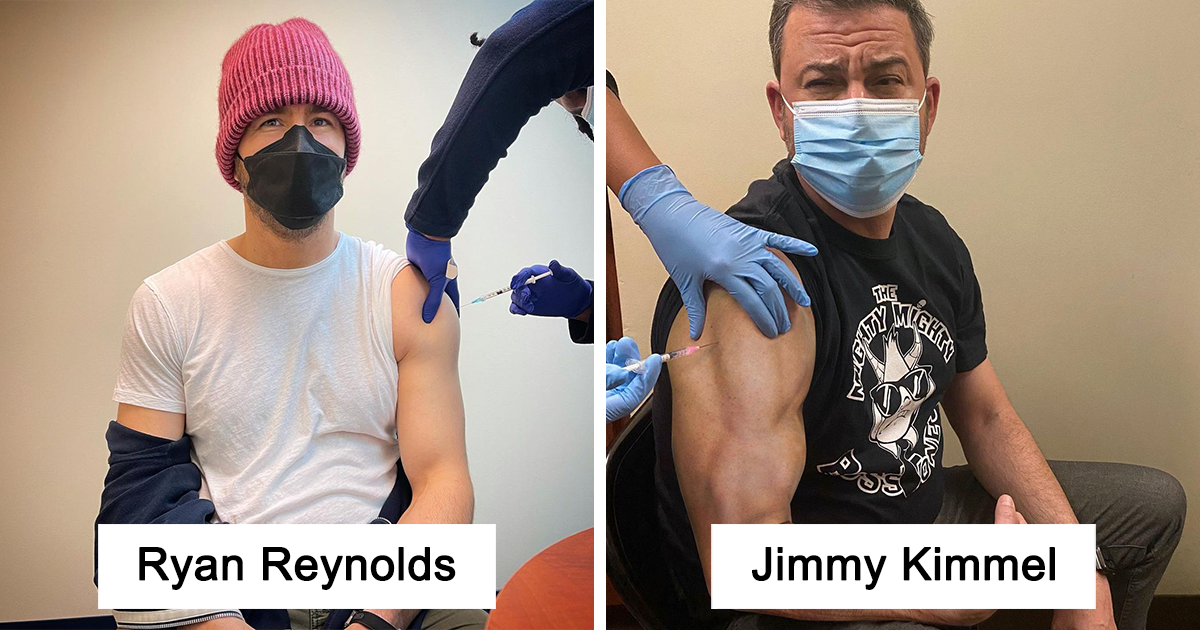
13. Jimmy Kimmel
Jimmy Kimmel joined the broadcast with the communication tool he knows best: humor. Comedy could not settle scientific questions, but it could make a tense conversation easier to enter. Kimmel’s participation demonstrated how entertainers could lower emotional barriers while leaving factual explanations to healthcare professionals.
14. Olivia Munn
Olivia Munn appeared among the special guests supporting VAX LIVE. Her participation helped extend the campaign across entertainment and social-media audiences. The broader strategy was less about finding one perfect spokesperson and more about surrounding the public with recognizable voices pointing toward the same evidence-based resources.
15. Sean Penn
Sean Penn participated in the broadcast after his nonprofit organization had already become involved in pandemic response activities. His appearance connected celebrity advocacy with practical community work, illustrating that awareness campaigns become more credible when they are accompanied by testing, vaccination, relief, or other on-the-ground services.
These performers and guests were part of a campaign that addressed both vaccine hesitancy and unequal access. Global Citizen reported that VAX LIVE helped mobilize approximately $302 million and commitments connected to more than 26 million vaccine doses.
16. Russell Wilson
NFL quarterback Russell Wilson co-hosted NBC’s Roll Up Your Sleeves vaccination special. His presence brought professional sports fans into the conversation and emphasized the connection between vaccination, safer gatherings, and the hoped-for return of activities people missedincluding stadiums containing more spectators than decorative cardboard cutouts.
17. Ciara
Ciara co-hosted the NBC special alongside Wilson. As a musician, performer, entrepreneur, and parent, she helped present vaccination as a family and community issue rather than a subject belonging only to hospitals. Her involvement also gave the program a strong connection to music and younger audiences.
18. Charles Barkley
Basketball legend Charles Barkley appeared during Roll Up Your Sleeves and encouraged vaccination, including among Black Americans. His direct style made him a useful messenger for a campaign attempting to reach communities with understandable questions rooted in both contemporary inequality and historical mistreatment.
19. Shaquille O’Neal
Shaquille O’Neal also participated in the NBC special. Shaq’s popularity extends well beyond basketball into television, advertising, business, and an impressive number of products bearing his endorsement. In this case, his enormous public profile was used to make vaccine awareness more visible and approachable.
20. Matthew McConaughey
Matthew McConaughey joined the special as another recognizable voice encouraging Americans to learn about vaccination. His participation reflected the campaign’s effort to include personalities with different geographic, cultural, and political audiences. Effective public-health outreach rarely succeeds by speaking only to people who already agree with one another.
21. Lin-Manuel Miranda
Lin-Manuel Miranda appeared in the NBC program and was also publicly photographed receiving his vaccination. The creator of Hamilton helped introduce theatrical audiences to the campaign, proving that rolling up a sleeve can be a meaningful public act even when nobody writes a twelve-minute opening number about it.
The NBC special was hosted by Russell Wilson and Ciara and included appearances by Barkley, O’Neal, McConaughey, Miranda, Lopez, and other public figures. Its stated purpose was to encourage COVID-19 vaccination and respond to public concerns.
22. Dolly Parton
Dolly Parton delivered one of the pandemic’s most memorable combinations of philanthropy, humor, and country music. She donated $1 million to Vanderbilt University Medical Center research connected to Moderna’s vaccine development. When she later received her shot, she rewrote the chorus of “Jolene” as “Vaccine,” encouraging eligible viewers to do the same.
23. Arnold Schwarzenegger
Arnold Schwarzenegger filmed himself receiving a vaccine at Dodger Stadium in Los Angeles. He ended the video with a perfectly deployed Terminator reference: “Come with me if you want to live.” It was brief, funny, instantly shareable, and possibly the only vaccination message that sounded as though it arrived from the future.
24. Olivia Rodrigo
Olivia Rodrigo visited the White House in July 2021 to help promote vaccination among teenagers and young adults. She recorded videos with President Joe Biden and Dr. Anthony Fauci, answered common questions, and told young people that getting accurate information was important. Her participation brought the campaign directly into Gen Z’s social-media feeds.
25. John Legend
John Legend partnered with Walgreens on its “This Is Our Shot” campaign. He appeared in promotional content and publicly received a vaccine while discussing protecting family members and returning to important parts of ordinary life. His calm delivery helped make vaccination appear routine rather than mysterious or intimidating.
26. Mariah Carey
Mariah Carey shared a video of herself receiving a COVID-19 vaccine and celebrated the moment by producing one of her famous high notes. The clip combined nervousness, humor, and reliefthe same mixture many ordinary patients felt while sitting in pharmacy chairs and pretending they were definitely not watching the needle.
27. Ryan Reynolds
Ryan Reynolds posted about receiving his vaccine with the dry humor audiences expect from him. By sharing the appointment rather than turning it into a solemn declaration, Reynolds made the process look ordinary. Normalization was an important communication goal when many people were uncertain about what the vaccination experience involved.
28. Blake Lively
Blake Lively also shared her vaccination experience online. Together, Lively and Reynolds reached millions of followers with posts that treated the shot as a practical, positive step. Their casual tone demonstrated that vaccine promotion did not always need dramatic music, spotlights, or a superhero landing.
29. Hugh Jackman
Hugh Jackman posted photographs from his appointment and joked that Wolverine’s famous healing powers could not protect him from COVID-19, but vaccination could help. The reference worked because it used a beloved fictional character while making a clear distinction between fantasy abilities and real-world preventive medicine.
30. Dwayne “The Rock” Johnson
Dwayne Johnson shared his second-dose experience after previously discussing his family’s encounter with COVID-19. His message emphasized learning, persistence, and taking the pandemic seriously. Johnson’s participation reached fans of movies, wrestling, fitness, and anyone who has ever wondered whether a vaccine needle looks unusually tiny beside a professional wrestler’s arm.
Public reporting and celebrity vaccination galleries documented these individual posts, campaigns, and appointments. Dolly Parton’s vaccination followed her support for Vanderbilt research; Rodrigo’s White House visit targeted younger audiences; John Legend partnered with Walgreens; and Carey, Reynolds, Lively, Jackman, and Johnson publicly shared their vaccination experiences.
Why Celebrity Vaccine Campaigns Attracted Attention
They Made an Unfamiliar Experience Visible
Early in the rollout, millions of people had never seen anyone receive a COVID-19 vaccine. A simple video answered several practical questions at once: Where is the injection given? How long does it take? What happens afterward? The celebrity did not need to explain immunology. The image itself made the appointment feel recognizable.
They Reached Different Communities
No celebrity speaks to everyone, and that was precisely the point. A football fan might notice Russell Wilson. A teenager might pay attention to Olivia Rodrigo. Country listeners might trust Dolly Parton, while Latin music audiences could connect with J Balvin or Jennifer Lopez. Diverse messengers allowed campaigns to reach audiences that a single national spokesperson could not.
They Used Humor Without Ignoring the Stakes
Parton’s rewritten song, Schwarzenegger’s movie quotation, Carey’s high note, and Jackman’s Wolverine joke made the content entertaining enough to share. The humor did not prove that vaccines worked; scientific evidence had to do that job. It simply encouraged people to pause, watch, and perhaps continue toward reliable information.
They Broadened the Conversation to Vaccine Equity
VAX LIVE emphasized that access was not equal around the world. While people in wealthy countries debated appointments and brands, many communities had few doses available at all. Celebrity advocacy helped connect personal vaccination with the larger goals of protecting healthcare systems, supporting frontline workers, and reducing international disparities.
Experience-Based Lessons From Celebrity COVID-19 Vaccine Awareness
Looking back at these campaigns, one of the clearest lessons is that people respond to experiences more readily than they respond to slogans. “Get vaccinated” is an instruction. Watching Dolly Parton walk into a clinic, sing a joke, receive her injection, and thank the medical staff is a story. It has a beginning, a recognizable human moment, and an outcome. That structure helps viewers imagine themselves completing the same process.
The shared experience also reduced uncertainty. Many people were not only worried about medical risks; they were anxious about the appointment itself. They wondered whether the shot would hurt, whether they would feel nervous, and whether asking questions would make them look foolish. Videos from Mariah Carey, Ryan Reynolds, and other stars showed that even confident performers could laugh, flinch, or admit nervousness. That emotional honesty made the experience feel less clinical and more human.
Another lesson is that effective awareness should not confuse popularity with expertise. Celebrities were most persuasive when they described their own decisions, thanked healthcare workers, or directed followers toward qualified sources. Problems appeared whenever public figures spoke beyond their knowledge or presented unsupported claims as medical facts. Fame provides reach, not an invisible medical degree tucked inside an awards-show envelope.
The campaigns also demonstrated the value of matching the messenger to the audience. Olivia Rodrigo’s White House appearance was designed for younger people who might never watch a traditional government briefing. Russell Wilson and Shaquille O’Neal reached sports fans. J Balvin and Jennifer Lopez expanded the message across multilingual and multicultural audiences. Good communication begins by asking who needs information, where they spend time, and whom they are willing to hear.
At the same time, celebrity advocacy could not erase distrust by itself. Some communities had legitimate concerns shaped by unequal healthcare access, discrimination, or historical medical abuse. Barkley’s direct appeal and the Ad Council’s research-based campaigns reflected an important principle: hesitation should be addressed with respect, accessible evidence, and opportunities to speak with trusted healthcare professionalsnot ridicule.
The experience of VAX LIVE added another dimension. Vaccination was not only framed as a personal choice but also as a global resource. The event asked governments and companies to consider people living in countries with limited supply. That perspective remains valuable for future health emergencies. A disease capable of crossing oceans is unlikely to be impressed by national borders or airport paperwork.
For content creators, marketers, and public-health communicators, these examples reveal a practical formula. Start with accurate information. Choose messengers who genuinely fit the intended audience. Show a real action rather than repeating a vague slogan. Use humor carefully. Address concerns without shaming people. Provide a clear next step, such as speaking with a clinician or visiting an official health resource.
Finally, messages must evolve as evidence, vaccine formulations, and public-health recommendations change. A celebrity post from 2021 captures an important historical moment, but it should not be treated as permanent medical guidance. The lasting value of these campaigns is not a frozen instruction. It is the demonstration that trusted voices can encourage people to ask better questions, seek reliable evidence, and consider how their health decisions affect families and communities.
Conclusion
The 30 celebrities spreading awareness of the COVID-19 vaccine approached the subject through concerts, television specials, pharmacy videos, public service campaigns, social-media posts, humor, and philanthropy. Some focused on personal vaccination, while others highlighted healthcare workers or worldwide vaccine access.
The strongest examples did not ask audiences to accept medical claims merely because a famous person repeated them. Instead, celebrities used their visibility to make vaccination easier to discuss and encouraged followers to seek trustworthy information. Their posts also showed that serious public-health communication does not always have to sound cold or robotic. It can include music, jokes, family stories, and even a carefully timed Terminator quotation.
Celebrity influence has limits, but attention is a valuable resource. During a period defined by confusion and rapidly changing information, these stars helped direct some of that attention toward vaccination, healthcare professionals, and the unequal impact of a global crisis.
SEO Tags

