
Beauty Tools & Accessories
30 Times People Had No Idea What They Were Looking At, But The Internet Knew What It Was Right Away
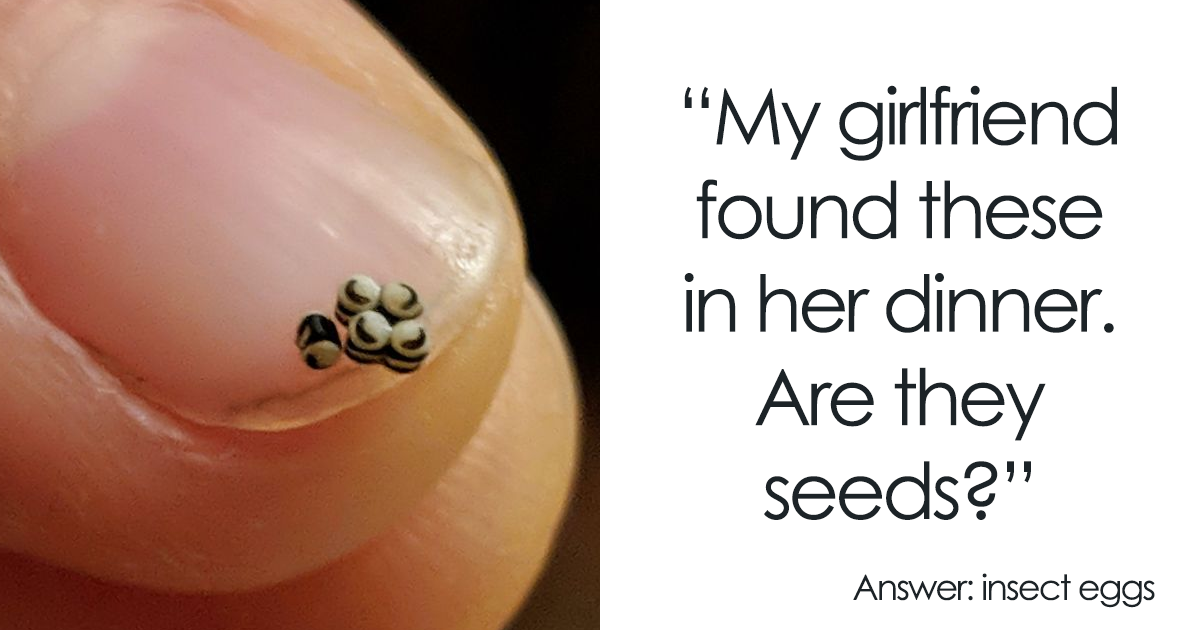
Aug
Finding an unidentified object can turn an ordinary afternoon into a low-budget archaeological expedition. One moment, you are cleaning the garage. The next, you are holding a rusty metal contraption and wondering whether it churned butter, repaired locomotives, or belonged to a dentist with deeply questionable methods.
Fortunately, the internet contains retired engineers, museum volunteers, gardeners, marine biologists, antique collectors, mechanics, farmers, and people who apparently memorized every hardware catalog printed since 1892. Post a clear photograph, add a banana for scale, and somebody may identify your mystery object before you finish typing, “Any ideas?”
The following 30 cases feature real natural formations, historical tools, household devices, and industrial components that regularly confuse people until the right expert appears.
Nature’s Strangest Mystery Objects
Natural objects are especially effective at alarming humans because evolution has never cared whether its creations resemble alien eggs, miniature brains, cursed noodles, or something the dog should not have eaten.
-
1. The Foam Blob Glued to a Branch
A tan lump attached to a twig may look like expanding insulation foam, but it can be a praying mantis egg case called an ootheca. The hardened, foam-like structure protects dozens or even hundreds of eggs through winter. Bringing one indoors is a memorable mistake because warmth may trigger a living-room mantis convention.
-
2. Tiny White Eggs Balanced on Threads
These delicate structures resemble microscopic balloons tied to plant leaves. They are often green lacewing eggs. Each egg sits at the end of a fine stalk, helping separate the newly hatched larvae, which are useful predators but not known for displaying warm sibling affection.
-
3. A Row of Mud Pipes Under the Roof
What looks like somebody squeezed clay through a pastry bag may be a mud dauber nest. A solitary female wasp constructs mud chambers on protected walls, beams, and eaves, then stocks them with prey for her young. It is an insect nursery with unexpectedly impressive masonry.
-
4. The Living Shoelace in a Puddle
A horsehair worm is so long and thin that many people assume they are looking at a strand of hair that has gained consciousness. These worms are parasites of insects during their immature stage but are harmless to people, pets, and plants. Adults are commonly noticed in puddles, pools, water tanks, and other damp places.
-
5. The Fuzzy Pink Pom-Pom Growing on an Oak
A wool sower gall looks like a tiny cotton-candy ornament growing from a branch. It is plant tissue produced in response to a gall wasp. The fuzzy growth often appears white and pink before turning brown with age, proving that even trees occasionally accessorize.
-
6. The Yellow Mass That Appeared Overnight
Few organisms have suffered a worse public-relations campaign than dog vomit slime mold. It often appears on wet mulch after heavy rain, starting as a bright yellow, slimy mass before becoming pale, crusty, and powdery. Despite the name and appearance, it is generally harmless and usually disappears on its own.
-
7. The Burned-Looking Growth on a Cherry Branch
Hard, black swellings on plum or cherry branches can be black knot, a fungal disease caused by Apiosporina morbosa. The growths contain both fungal and plant tissue and may expand over several seasons. It looks as though the tree accidentally left part of itself in the oven.
-
8. The Mushroom Wearing a Fishing Net
A stinkhorn fungus can emerge from an egg-like structure and develop a colorful stalk, unpleasant odor, or delicate net called an indusium. The smell attracts flies that help spread its spores. From a distance, it resembles a decorative garden ornament. From nearby, your nose will submit a formal disagreement.
-
9. The Black Leather Pouch on the Beach
Beachgoers sometimes discover dark rectangular capsules with curled tendrils and assume they have found seaweed, a plastic toy, or proof of extraterrestrial reproduction. These “mermaid’s purses” are egg cases produced by certain sharks, skates, and rays. Big skate egg cases can reach approximately 12 inches and may contain multiple embryos.
-
10. The Jelly Blob That Is Actually a Neighborhood
A translucent mass in a pond may be a freshwater bryozoan colony rather than one enormous animal. Bryozoans are colonial invertebrates made up of many small individuals living together. The internet answer is therefore both reassuring and slightly unsettling: it is not one creature; it is an apartment complex.
-
11. The Hollow Glass Tube Found in Sand
A branching, fragile tube buried in sandy ground may be a fulgurite. It forms when lightning heats, melts, and fuses sand or soil, leaving behind natural glass. In other words, somebody may be holding a physical record of the sky violently poking the ground.
-
12. The Perfect Stone Ball in a Cliff
Round rocks embedded in sediment are sometimes mistaken for fossil eggs or ancient ammunition. Many are concretions, which develop as minerals cement sediment around a central fragment. Erosion eventually exposes the harder sphere while softer surrounding rock wears away. Some become so round that “geological bowling ball” feels like the only reasonable description.
Old Household Tools That Look Completely Unhelpful Today
Historical household devices can be difficult to recognize because they were designed around jobs that have disappeared or changed dramatically. Their owners understood them instantly. Modern viewers see iron jaws, wooden handles, and several exciting opportunities to pinch a finger.
-
13. The Wooden Board With a V-Shaped Mouth
A boot jack allows a person to remove a boot without bending down or pulling with both hands. One heel rests in the V-shaped opening while the other foot holds the board in place. It is essentially a hands-free boot remover from an era when footwear fought back.
-
14. The Giant Pliers Made for a Very Specific Snack
Sugar nippers were used when refined sugar commonly arrived as a hard cone or loaf. Their heavy jaws broke the loaf into smaller pieces for the table or kitchen. To modern eyes, they resemble a medieval medical device; their actual job was making tea slightly sweeter.
-
15. The Tiny Spiked Wheel on an Ornate Handle
This is often a jagging wheel or pie crimper. Rolling the toothed wheel along pastry trimmed and decorated the dough’s edge. Nineteenth-century sailors even carved elaborate versions from whale ivory, apparently believing that pie crust deserved equipment with the dignity of a ceremonial artifact.
-
16. The Wire Loop That Looks Like a Giant Flyswatter
Before household vacuum cleaners became widespread, rugs and carpets were carried outdoors, hung over a line, and struck with a carpet beater. The looping wire frame removed dust while providing an energetic full-body workout nobody had requested.
-
17. The Wooden Device That Resembles Antique Virtual Reality
A stereoscope holds paired photographs that are slightly different from each other. Looking through the viewer combines them into the illusion of a single three-dimensional scene. Long before modern virtual-reality headsets, families could stare at distant landscapes while remaining safely surrounded by parlor furniture.
-
18. The Porcelain Container With a Screw-On Lid
A small decorated cup found in an old kitchen may be an egg coddler. An egg was cracked inside, the lid was secured, and the container was partially immersed in hot water. It is elegant, practical, and far more formal than most modern breakfasts deserve.
-
19. The Wooden Egg That Contains No Breakfast
A darning egg is a smooth wooden or ceramic form placed inside a sock or stocking while repairing a hole. It keeps the fabric stretched and prevents the needle from catching other layers. The object resembles an unsuccessful piece of fruit but saved countless socks from early retirement.
-
20. The Metal Wheel With Two Tiny Whisks
A hand-cranked rotary egg beater may appear strangely complicated beside a modern electric mixer, but turning its side handle rotates the beaters efficiently. It mixed eggs, cream, and batter without electricity and without requiring the cook to locate a charger.
-
21. The Spiked Metal Disk From a Flower Shop
A flower frog sits inside a vase or shallow bowl and holds cut stems in position. Versions may be made from glass, ceramic, or metal pins. Anyone unfamiliar with floral arranging might reasonably identify the spiked type as a defensive device intended to keep people away from the centerpiece.
-
22. The Hinged Wooden Shapes That Look Like Flat Hands
Antique glove stretchers were inserted into freshly washed gloves to restore their shape and loosen tight fingers. They often resemble wooden tongs or narrow paddles. The internet’s fashion historians can recognize them immediately, while everyone else guesses salad servers for extremely small salads.
Industrial Objects With Surprisingly Ordinary Purposes
Industrial components are often built for function rather than visual clarity. Remove one from its machine, railway, utility pole, or workshop, and it becomes a metal riddle with threads.
-
23. The Blue Glass “Cup” Found Near an Old Pole
Glass telegraph and telephone insulators separated electrical wires from wooden poles, helping prevent signals from shorting out. Their shapes and colors make them popular collectibles today. They are not drinking glasses, however, unless the beverage is disappointment with a hint of dust.
-
24. The Metal Disk Cemented Into the Ground
A stamped brass or aluminum disk embedded in concrete or bedrock may be a survey mark. Surveyors use these permanent reference points to record precise latitude, longitude, or elevation information. They are not secret treasure-map buttons, and removing one destroys valuable positioning data.
-
25. The Square Ceramic Knob in an Attic
Small porcelain knobs and tubes were used in early electrical wiring systems. The ceramic components held wires away from combustible framing and guided them through wood. Discovering them in an old house does not automatically mean the wiring is active, but it is an excellent reason to call a qualified electrician rather than conducting a bravery experiment.
-
26. The Heavy Metal Piece Clamped Under a Railroad Track
A rail anchor grips the base of a railroad rail and helps resist longitudinal movement caused by passing trains, temperature changes, and braking forces. Away from the track, it resembles an unfinished bottle opener designed by someone who disliked bottles.
-
27. The Rounded Metal Object Called a Cow Magnet
Cattle may accidentally swallow nails, wire, or other metal while eating. A livestock magnet can remain in the animal’s stomach compartment and attract ferrous debris, reducing the chance that sharp objects migrate into surrounding tissue. The mystery object is therefore a magnet with one of the strangest job descriptions in agriculture.
-
28. The Tool That Punches Metal Rings Into Fabric
A grommet press installs reinforced rings in tarps, banners, sails, curtains, and leather. The dies may look like mismatched metal chess pieces when separated from the press. Once assembled, they punch a hole and secure the grommet with satisfying mechanical finality.
-
29. The Clamp With a Wheel Used by Carpet Installers
A carpet stretcher or knee kicker grips carpet so it can be pulled tight and attached around a room’s edges. The short version is pushed with the installer’s knee, a fact that explains both its name and why flooring professionals deserve better holiday gifts.
-
30. The Sharp Stone That Might Be More Than a Rock
A stone with repeated flake scars, a shaped edge, and signs of deliberate striking may be a human-made tool rather than an ordinary broken rock. Archaeologists examine patterns of modification and context before identifying an artifact. Early stone toolkits included hammerstones, cores, and sharp flakes used for cutting and processing materials.
Why the Internet Identifies Mystery Objects So Quickly
No single person knows every insect egg, kitchen utensil, electrical fitting, fossil, military component, and agricultural tool. A large online community, however, behaves like a distributed museum department that never closes.
The key advantage is specialization. An object that seems completely unfamiliar to 10,000 viewers may be ordinary to one retired lineman, upholstery worker, machinist, veterinarian, or antique dealer. That person recognizes not only the general category but also the small details: the shape of a hinge, the position of a groove, the material used, or the way wear marks appear on one side.
Successful identification also depends on visual context. A clear image of the entire object is helpful, but close-ups of markings, fasteners, broken edges, and moving parts are often more valuable. Dimensions matter too. Without a ruler, an antique pie crimper can look like farm machinery, while a geological concretion can resemble a dinosaur egg large enough to require its own garage.
The Experience of Asking Strangers to Identify a Mystery Object
Posting an unknown object online begins with curiosity but quickly becomes a group investigation. The finder uploads several photographs and offers every available clue: where it appeared, what it is made from, whether it moves, how heavy it feels, and whether Grandfather kept it beside the tractor or inexplicably inside the linen closet.
The first answers are rarely useful. Somebody will call it a “thingamajig.” Another person will suggest that it is part of a bomb, regardless of whether the object is wooden, floral, and clearly labeled “Made in Ohio.” A third participant will claim that their uncle owned one but disappear before explaining what it did.
Then the specialist arrives.
The specialist does not merely provide a name. They explain that the curved jaws held a specific material, the notch aligned with another component, or the polished patch reveals how the user gripped it. They may identify the manufacturer from three faded letters or date the object from a design change invisible to everyone else. Suddenly, a piece of rusty confusion becomes understandable.
That transformation is the most satisfying part of mystery object identification. The answer reconnects an isolated item with its original world. Sugar nippers lead back to an era of sugar loaves. A stereoscope recalls the excitement of seeing photographs in three dimensions for the first time. A telegraph insulator points to communication networks that once carried urgent messages across vast distances. Even a mud nest on a garage wall becomes evidence of an insect building chambers one mouthful of soil at a time.
The process can also correct dramatic assumptions. The “parasite” in the pool may be a horsehair worm that cannot harm humans. The “alien pod” on the beach may be a skate egg case. The “human-made stone cannonball” may be a concretion produced by mineral-rich groundwater. The internet does not make the object less strange; it gives the strangeness a history.
There is also a gentle lesson in humility. Familiarity depends heavily on occupation, location, and generation. A tool that seems obvious to a farmer may puzzle a software engineer. A device recognized instantly by someone born in 1940 may look like fantasy equipment to someone born in 2000. Nobody is expected to know everything, which is precisely why collective knowledge works.
Of course, curiosity should not outrun safety. Unidentified ammunition, chemicals, medical waste, electrical equipment, pressurized containers, and suspected explosives should not be handled for the sake of a better photograph. Distance, local authorities, utility providers, or qualified professionals are more appropriate than an enthusiastic comment section.
For harmless discoveries, however, an online identification can turn a forgotten object into a miniature history lesson. The reward is not simply learning a name. It is discovering that somebody, somewhere, still remembers why the object mattered.
Conclusion: Every Strange Object Has a Story
The best mystery object stories begin with confusion and end with a wonderfully specific explanation. A frightening blob becomes slime mold. A glass cup becomes a telegraph insulator. A medieval-looking instrument becomes a device for breaking sugar into polite little pieces.
The internet is chaotic, argumentative, and occasionally convinced that every unidentified object came from a secret military project. Yet it is also filled with people who preserve specialized knowledge. Give them a clear photograph, useful measurements, and enough context, and there is a good chance that someone will recognize the object right away.
Editorial note: The examples in this article are based on documented natural phenomena, historical collections, scientific guidance, and real tools. Never touch or move an unidentified object that could be hazardous, explosive, electrical, toxic, pressurized, or biologically dangerous.

