
Makeup
ISS Artificial Gravity Study Shows Promise For Long Duration Spaceflight
Aug
Space is amazing, inspiring, and occasionally rude to the human body. The view is unbeatable, the sunrise schedule is wildly generous, and the science is extraordinary. But there is one stubborn problem that keeps showing up every time humans spend a long time off Earth: our bodies really, really like gravity. Take it away, and muscles weaken, bones lose density, fluids shift upward, and the whole human machine starts acting like it has been placed on an extended, very expensive couch.
That is why a new wave of research on the International Space Station is getting so much attention. Artificial gravity has been a favorite idea in space exploration for decades, usually somewhere between serious engineering proposal and science-fiction dream sequence. Now, ISS-based research is giving the concept something it has badly needed for years: better evidence. The latest findings suggest that artificial gravity may do more than sound cool in mission architecture presentations. It may become a practical tool for protecting astronauts during long-duration missions to the Moon, Mars, and beyond.
The most encouraging part is not that scientists proved gravity matters. Nobody needed an orbiting laboratory to tell us that. The encouraging part is that researchers are starting to identify how much gravity may be needed to preserve muscle function, and that kind of detail is exactly what mission planners need. “More gravity is probably better” is not a strategy. “Here is a possible threshold that preserves key muscle performance” is the beginning of one.
Why long missions are so hard on the human body
On Earth, gravity is the invisible trainer that never takes a day off. Standing, walking, climbing stairs, getting out of bed, carrying groceries, and even holding a good posture all require muscles and bones to constantly respond to load. In orbit, that load largely disappears. Suddenly, the body starts adapting to a new environment where pushing, pulling, and supporting itself are no longer quite as necessary. From a biological point of view, this makes terrible sense in the short term and perfect sense in the long term: if a system is not being used the same way, the body remodels it.
That remodeling creates major problems for astronauts. Muscle atrophy can reduce strength and endurance. Bone loss can raise the risk of injury and complicate recovery after landing. Cardiovascular systems also change because fluids redistribute and the heart no longer works against gravity in the usual way. Add in altered balance, coordination, and spatial orientation, and you start to understand why returning astronauts can look a little less like superheroes and a little more like travelers stepping off a very unfriendly carnival ride.
NASA has spent years fighting these effects with exercise, nutrition, and targeted medical research. Astronauts aboard the ISS already devote a large part of each day to working out. Treadmills, cycling systems, and resistive exercise devices are not optional luxuries up there. They are survival equipment in gym clothing. Even so, current countermeasures do not eliminate all deconditioning, especially for future missions that could stretch far beyond low Earth orbit.
Why artificial gravity keeps coming back into the conversation
Artificial gravity is attractive because it promises something exercise alone cannot fully provide: a whole-body loading environment. Instead of asking astronauts to spend hours every day trying to imitate gravity with machines, the idea is to use rotation to create a gravity-like force. In simple terms, spin part of a spacecraft or a centrifuge inside it, and objects inside get pushed outward in a way that can mimic weight.
It sounds like a trick because, in a way, it is. But it is a very useful one. Artificial gravity has long been seen as a potential multi-system countermeasure, meaning it might help muscles, bones, cardiovascular function, and aspects of sensorimotor performance at the same time. That matters because spaceflight hazards rarely arrive one at a time. They travel as a package deal.
The catch is that artificial gravity is not a magic dial you just turn to “Earth-like” and call it a day. Researchers still need to know the right gravity levels, exposure times, rotation rates, and hardware designs. Spin too slowly and the system gets large and heavy. Spin too quickly and people may feel disoriented or sick. That is why controlled experiments are so important. Before anyone builds a rotating deep-space habitat, they need to know what level of gravity actually preserves human health well enough to justify the engineering headache.
What the ISS studies are actually showing
The ISS became a gravity laboratory, not just a microgravity one
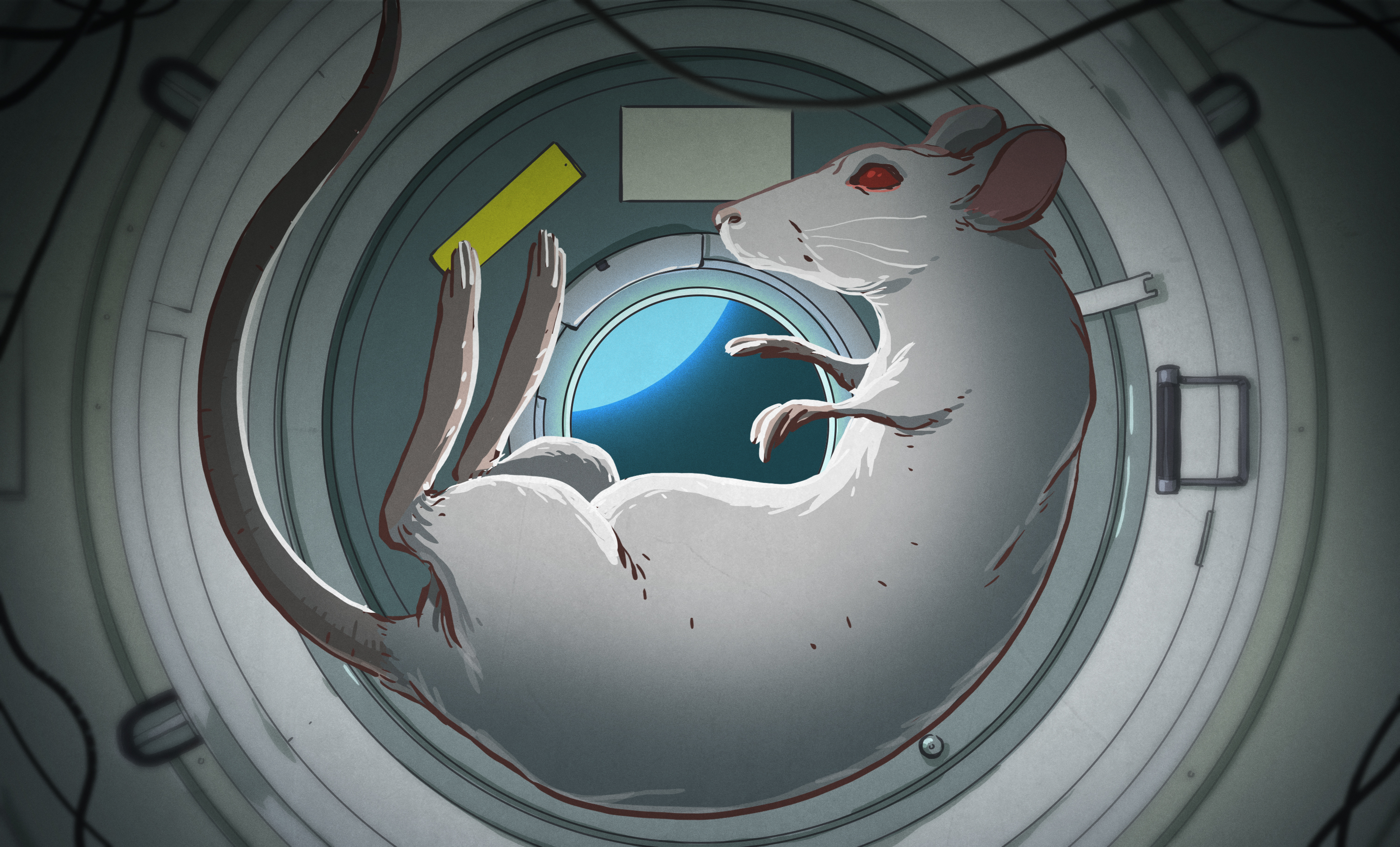
A major reason this research is gaining momentum is the Japanese-developed Multiple Artificial-gravity Research System, or MARS, aboard the ISS. This setup lets scientists compare animals living in different gravity conditions while they are all exposed to the same broader space environment. That is a huge advantage. It helps researchers separate the effects of gravity from other spaceflight factors such as radiation, launch stress, confinement, and altered day-night cues.
Earlier ISS mouse studies already hinted that artificial 1 g could protect skeletal muscle. Researchers saw that full artificial Earth gravity prevented some of the muscle mass loss, fiber-type changes, and gene-expression shifts that show up in microgravity. Follow-up work looking at lunar gravity, about one-sixth of Earth’s gravity, showed something even more interesting: some aspects of muscle atrophy were reduced, but not everything was protected. In other words, partial gravity helped, but it did not fully solve the problem.
The newer threshold study is where things get really interesting
The newer ISS study pushed the question further by testing multiple gravity levels in mice: microgravity, 0.33 g, 0.67 g, and 1 g. The animals spent roughly four weeks in orbit, and researchers then analyzed muscle structure and performance. The star of the show was the soleus muscle, a lower-leg muscle known for being highly sensitive to gravity and unloading.
The findings were nuanced, which is scientist language for “the body is complicated and refuses to behave like a simple spreadsheet.” At around one-third of Earth gravity, muscle cross-sectional area was partly preserved. That sounds encouraging, and it is. But structure alone is not the whole story. The more complete protection appeared around 0.67 g, where muscle function and fiber-type composition were preserved far better. The study also identified metabolite changes in the blood that may become useful biomarkers for monitoring how organisms adapt to different gravity levels.
This matters because it suggests there may be a meaningful threshold below full Earth gravity where muscle performance can still be protected. That is not the same thing as saying “Mars gravity is enough” or “we are done here.” In fact, the results raise concern that Martian gravity, roughly 0.38 g, may not be sufficient on its own for long-term muscle preservation. But the work is still a major step forward because it changes the conversation from vague theory to measured response.
Why 0.67 g matters for Mars, the Moon, and mission design
If a gravity level near two-thirds of Earth’s turns out to be important for preserving muscle function, mission designers have a very practical problem to solve. The Moon only offers about 0.17 g. Mars gives about 0.38 g. Both are well below Earth, and both may fall below the level needed to fully protect some muscle systems over long periods.
That does not mean humans cannot go to the Moon or Mars. It means gravity on those worlds may not be enough by itself to keep crews healthy during long stays. Astronauts may still need structured exercise, nutritional support, pharmaceutical countermeasures, and possibly time spent in artificial-gravity systems during transit or even while living off Earth.
This is why the ISS results are so valuable. They do not simply support a dream of spinning starships because they look elegant in movies. They suggest specific design targets. A partial-gravity habitat, a short-arm centrifuge for scheduled use, or a rotating transit section could potentially be evaluated against actual biological outcomes rather than pure guesswork.
Exercise is still essential, but it may not be enough
One of the most useful lessons from NASA’s human research program is that exercise remains necessary but imperfect. Astronauts already spend about two hours per day exercising on the ISS, and those routines are far more advanced than the early days of spaceflight. Yet bone and muscle loss still remain active research concerns. That tells us two things at once: exercise works, and exercise alone may not fully close the gap for the longest missions.
Ground analog studies point in the same direction. Bed rest experiments that simulate some effects of microgravity have been used to test artificial gravity delivered through centrifugation. These studies show promise in some areas, but they also make clear that short daily exposure is not a universal fix. Artificial gravity may need to be combined with exercise rather than replace it. Think less “silver bullet” and more “important member of a very overqualified team.”
That distinction is important for SEO headlines, mission plans, and sanity. Artificial gravity is promising precisely because it fits into a layered countermeasure strategy. The future probably will not be astronauts lounging in rotating hotel suites while biology politely behaves itself. It will be more like carefully designed schedules of exercise, monitoring, loading, recovery, and habitat engineering working together.
The engineering challenges are real
If artificial gravity is so useful, why not build it into everything immediately? Because spacecraft design is brutal about trade-offs. Rotating systems add mass, complexity, structural demands, and operational risk. Short-radius centrifuges can create gravity gradients across the body, which means your feet may experience a different load from your head. Rotation can also cause motion sickness or odd sensory effects if a person turns their head while spinning.
There is also the issue of mission architecture. A crewed Mars vehicle must already manage propulsion, radiation shielding, life support, communications, thermal control, maintenance, and redundancy. Adding a spinning module is not impossible, but it is not a casual weekend upgrade either. Engineers need solid biological evidence to justify every kilogram and every complication. That is exactly why ISS animal work and bed-rest analog studies matter so much. They help define whether artificial gravity is a luxury, a bonus, or a true requirement.
Why this research matters beyond space exploration
Space medicine often has a habit of boomeranging back to Earth with useful ideas. Muscle loss, bone loss, inactivity, aging, rehabilitation, and cardiovascular deconditioning are not just astronaut problems. They are hospital problems, elder-care problems, and public health problems. Research on loading, unloading, biomarkers, and recovery can help clinicians better understand how bodies weaken and how they can be protected or rebuilt.
That broader value is part of what makes the ISS such a productive laboratory. Spaceflight exaggerates physiological stresses in a way that helps researchers see mechanisms more clearly. Space is inconvenient, yes, but it is also a remarkably efficient teacher.
What the experience of artificial gravity could actually feel like for future crews
To understand why this topic matters so much, it helps to picture the human experience behind the data. Long-duration spaceflight is not just about surviving launch, landing, and the dramatic bits in between. It is about thousands of ordinary moments. It is about waking up, moving through a habitat, reaching for equipment, sleeping well, exercising, staying sharp, and still being physically capable when the mission reaches a critical moment. A crew headed to Mars will not simply need to arrive alive. They will need to arrive useful.
That is where artificial gravity becomes more than a technical concept. In practical terms, it could change the daily texture of life in space. A spacecraft with scheduled artificial-gravity sessions might make basic movement feel less foreign over time. Crews could maintain muscle memory and load-bearing capacity in ways that microgravity alone cannot support. Instead of constantly fighting the body’s drift toward weakness, they might be able to preserve more of their normal physical function during transit. That could influence everything from emergency response to scientific work to the simple ability to stand and move confidently after landing.
There is also a psychological angle that should not be ignored. Human beings are deeply adapted to a world where “down” means something. Partial restoration of that sensation, even for limited periods, could make long missions feel less physiologically alien. That does not mean artificial gravity would turn a Mars transfer vehicle into a suburban ranch house with better views. But it could reduce the sense that the body is living in a constant negotiation with a strange environment. For a crew spending many months away from Earth, that kind of normalcy may matter more than mission planners once assumed.
At the same time, the experience would not be effortless. Rotating systems may feel unusual, especially at first. Crew members might need training to tolerate head movements and adapt to the sensory quirks of a centrifuge or rotating habitat. Daily routines would need to be designed around the hardware. Medical teams would likely monitor biomarkers, strength, balance, and cardiovascular responses over time. In other words, the experience of artificial gravity would probably be part therapy, part operations protocol, and part adaptation challenge.
Still, that challenge may be worth it. Imagine the difference between stepping onto Mars after months of severe deconditioning and stepping onto Mars after a transit in which your muscles, balance, and work capacity were better preserved. One version of that arrival looks like a careful recovery period. The other looks more like the beginning of a mission. The same logic applies to returning home. Preserving muscle function is not only about what happens in transit. It is about whether astronauts can safely re-enter Earth gravity, respond to emergencies, and recover faster after landing.
That is why the current ISS artificial gravity research feels so important. It moves the idea out of the realm of cinematic spinning wheel stations and into the far more useful world of evidence-based mission planning. Scientists are no longer just asking whether artificial gravity is an elegant concept. They are starting to ask how much is enough, what it protects, what it does not protect, and how it might fit into a realistic health strategy for deep-space crews. That is the kind of progress space exploration needs: less hand-waving, more measured thresholds, and a much better chance that tomorrow’s astronauts can travel farther without leaving half their strength behind.
Conclusion
The ISS artificial gravity study does not hand space agencies a finished blueprint for Mars. What it does provide is arguably more valuable: a clearer biological target. Evidence from ISS mouse experiments suggests that partial gravity can help, and that a level near 0.67 g may preserve key aspects of muscle function better than lower gravity levels. That is a serious clue for mission planners trying to design safer long-duration spaceflight systems.
The bigger lesson is that artificial gravity is shifting from a romantic idea to a testable countermeasure. It will not replace exercise, and it will not solve every hazard of spaceflight. Radiation, isolation, and engineering constraints are still very real problems. But if future crews are going to live and work far from Earth for months or years, gravity may no longer be something they simply leave behind. It may become something they pack.

