
Beauty Unlocked
Am I Yin or Yang?
Jul
At some point, usually after a long workday, a chaotic group chat, or a suspiciously accurate online quiz, you may find yourself wondering: Am I Yin or Yang? It sounds like a simple personality question, almost like asking whether you are a morning person, a night owl, or the type of person who says “just one episode” and then accidentally watches six. But yin and yang are much deeper than a lifestyle label.
In traditional Chinese philosophy, yin and yang describe complementary patterns that appear throughout life: rest and action, coolness and heat, inward reflection and outward expression, softness and strength, stillness and movement. They are not enemies. They are not fixed identities. They are not a cosmic sorting hat. Instead, they are two interdependent qualities that continuously shift, balance, and transform into one another.
So, if you are asking, “Am I yin or yang?” the most accurate answer is: you are probably both, just in different proportions at different times. You may lean more yin in how you recharge, more yang in how you work, yin in relationships, yang under pressure, and suspiciously yang when someone cuts in line at the coffee shop. The goal is not to become only one. The goal is to recognize your natural pattern and create better yin yang balance.
What Do Yin and Yang Really Mean?
Yin and yang come from ancient Chinese thought and are often explained through the image of a hill: yin is the shaded side, while yang is the sunny side. That image is wonderfully simple because it shows something important. The shaded side and sunny side are not separate hills. They are two conditions of the same hill, changing as the sun moves.
Traditionally, yin energy is associated with qualities such as darkness, coolness, rest, receptivity, depth, quiet, moisture, reflection, and inward movement. Yang energy is associated with light, warmth, activity, expansion, clarity, movement, expression, and outward force. But these associations should not be treated as rigid stereotypes. Yin is not “weak,” and yang is not “better.” A calm lake can be powerful. A wildfire can be destructive. Context matters.
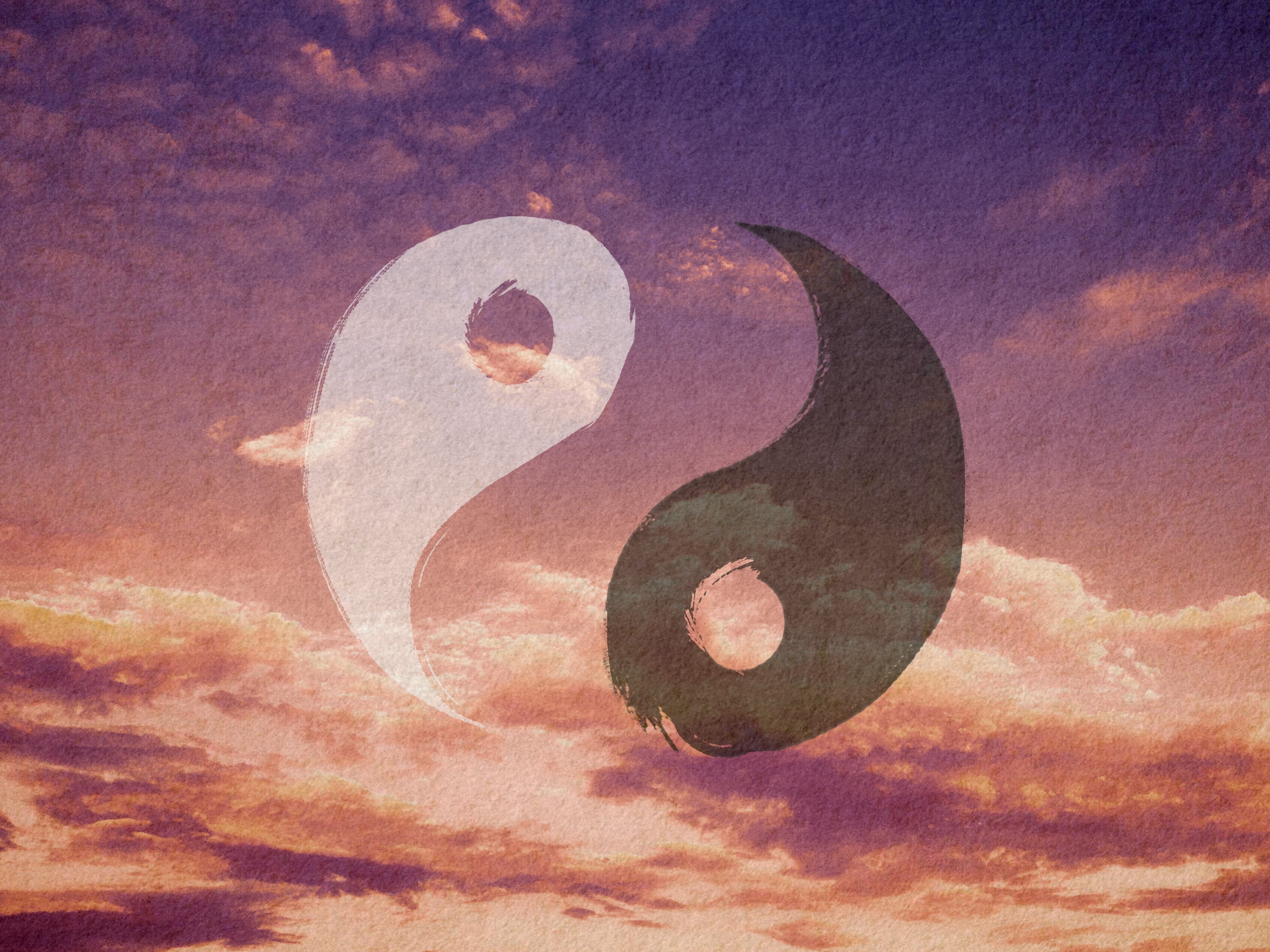
The famous yin-yang symbol shows a black and white swirl, each side containing a small dot of the other. That little dot is the philosophical mic drop. It means yin contains the seed of yang, and yang contains the seed of yin. Rest gives birth to action. Action eventually needs rest. Night becomes morning. A quiet idea becomes a bold decision. A bold decision needs quiet reflection before it turns into a mess with a calendar invite.
Am I Yin or Yang? A Simple Self-Check
You can think of your yin or yang personality as a pattern of tendencies, not a permanent identity. Read the signs below and notice which side feels more familiar in your daily life.
You May Lean Yin If…
- You recharge best through solitude, quiet, nature, reading, journaling, or slow conversations.
- You prefer to think before speaking and often need time to process your feelings.
- You are sensitive to noise, crowds, pressure, or overstimulation.
- You enjoy depth more than speed and meaning more than constant activity.
- You may be calm on the outside, even when your inner world is hosting a full committee meeting.
- You are drawn to cozy spaces, soft lighting, gentle routines, and emotional honesty.
A yin-leaning person often brings patience, intuition, empathy, and steadiness into a room. They may be the friend who notices when someone is not really “fine,” even if that person says it with Oscar-worthy confidence. However, too much yin can sometimes turn into avoidance, overthinking, low motivation, isolation, or difficulty taking action.
You May Lean Yang If…
- You feel energized by goals, movement, challenges, competition, or social interaction.
- You make decisions quickly and prefer action over endless discussion.
- You enjoy leadership, problem-solving, debate, exercise, travel, or building new things.
- You tend to speak directly and may become impatient when things move slowly.
- You like bright spaces, clear plans, strong coffee, and a calendar that looks slightly heroic.
- You often feel better after doing something rather than sitting with the feeling for too long.
A yang-leaning person often brings momentum, courage, optimism, and clarity. They get the project started, make the call, open the scary email, and somehow convince everyone that assembling furniture at 9 p.m. is “basically fun.” But too much yang can become burnout, irritability, restlessness, dominance, impulsive decisions, or the inability to relax without feeling guilty.
Yin vs Yang Is Not Introvert vs Extrovert
One common mistake is assuming yin means introvert and yang means extrovert. There is overlap, but they are not the same. An introvert can have strong yang energy when focused on a mission. An extrovert can be deeply yin when they are emotionally reflective, nurturing, or drawn to beauty and stillness.
Yin and yang are better understood as modes. You may use yang energy when giving a presentation, lifting weights, negotiating a contract, or cleaning your apartment like the health inspector is arriving in ten minutes. You may use yin energy when meditating, listening, sleeping, creating art, healing after stress, or noticing that your body has been whispering “please rest” for three weeks while you kept answering, “After one more thing.”
How Yin and Yang Show Up in Everyday Life
In Work
Yang at work is the energy of execution: deadlines, decisions, leadership, strategy, sales calls, launching projects, and pushing through obstacles. Yin at work is the energy of reflection: planning, listening, researching, editing, designing, mentoring, and sensing what is not being said.
A healthy workplace needs both. Too much yang creates chaos disguised as productivity. Too much yin creates beautiful plans that never leave the notebook. The best teams often pair yang starters with yin refiners: one person says, “Let’s launch,” while another says, “Lovely, but maybe let’s remove the typo from the headline first.” Society needs both heroes.
In Relationships
Yang energy in relationships may appear as initiating plans, expressing desire, protecting boundaries, solving problems, and speaking clearly. Yin energy may appear as emotional presence, compassion, patience, listening, and creating safety.
If you are too yang in relationships, you might try to fix every emotion as if sadness were a leaking faucet. If you are too yin, you might absorb everyone’s needs until your own needs quietly pack a suitcase and leave. Balance means knowing when to act and when to listen, when to speak and when to receive, when to support someone and when to stop managing their entire emotional weather system.
In Health and Wellness
In Traditional Chinese Medicine, yin and yang are used as a framework for understanding balance, patterns, and disharmony. This article is not medical advice, and “Am I yin or yang?” should not be used as a diagnosis. Still, the general idea can be helpful for everyday self-awareness.
Yang-style habits include movement, sunlight, warmth, goal-setting, and energizing routines. Yin-style habits include sleep, hydration, cooling foods, quiet time, stretching, breathwork, and recovery. A person who is always pushing may need more yin restoration. A person who feels stuck, heavy, or inactive may need more yang activation. The art is noticing what your life is asking for now, not forcing yourself into a permanent category.
A Practical Yin-Yang Balance Test
Use the questions below as a reflective tool. Count how many yin and yang answers feel true for you most of the time.
Yin Questions
- Do I feel most like myself in calm, private, or low-pressure environments?
- Do I need quiet time before I can understand what I really think?
- Do I often sense other people’s moods before they explain them?
- Do I prefer depth, comfort, and emotional meaning over speed and excitement?
- When stressed, do I withdraw, freeze, overthink, or sleep more?
Yang Questions
- Do I feel most alive when I am moving, building, competing, or leading?
- Do I make decisions quickly and learn by doing?
- Do I get restless when life becomes too slow or repetitive?
- Do I prefer direct communication, visible progress, and clear results?
- When stressed, do I push harder, talk louder, rush, or take control?
If you answered yes to more yin questions, you may currently lean yin. If you answered yes to more yang questions, you may currently lean yang. If you answered yes to both, congratulations: you are a human being, not a refrigerator magnet. Your energy may shift by season, age, stress level, environment, relationships, sleep quality, and the number of unread emails haunting your inbox.
What If I Have Too Much Yin?
Too much yin can feel like heaviness, hesitation, emotional fog, isolation, or a tendency to wait for the perfect moment before acting. Unfortunately, the perfect moment is often running late and may have stopped for snacks.
To invite more yang, try small actions rather than dramatic reinventions. Take a brisk walk in the morning. Open the curtains. Make one decision you have been postponing. Speak your opinion in a meeting. Set a clear deadline. Choose warmer, brighter environments. Move your body before your mind has time to form a legal objection.
The goal is not to bully yourself into productivity. It is to add spark where life has become too dim. Yang should energize you, not punish you.
What If I Have Too Much Yang?
Too much yang can feel like tension, impatience, overwork, irritability, sleep trouble, or the belief that resting is only acceptable after you have completed every task known to civilization. This is how burnout sneaks in wearing a productivity badge.
To invite more yin, create deliberate pauses. Protect your sleep. Lower stimulation at night. Practice slow breathing. Eat without multitasking. Spend time near water or trees. Listen without planning your response. Let a project breathe before you revise it for the ninth time. Choose softness without calling it laziness.
Yin is not the enemy of ambition. It is what keeps ambition from turning into a tiny dragon that lives in your nervous system and demands another espresso.
Can Your Yin or Yang Change Over Time?
Yes. In fact, change is the whole point. Yin and yang are dynamic. A person may be fiery and yang in youth, then become more reflective and yin after major life experiences. Someone may be naturally quiet but develop powerful yang energy when defending a loved one, launching a business, or pursuing a meaningful goal.
Seasons also offer a useful metaphor. Summer feels more yang: bright, hot, active, outward. Winter feels more yin: dark, cool, inward, restorative. A balanced life respects seasons instead of pretending every month should feel like a motivational poster with abs.
How to Balance Yin and Yang in Daily Life
1. Balance Action With Recovery
For every season of intense effort, plan real recovery. If your day is full of meetings, errands, workouts, and decisions, your evening should not be another battlefield. Recovery is not wasted time; it is how your system updates the software.
2. Balance Silence With Expression
If you are very yin, practice saying what you need. If you are very yang, practice listening without interrupting, advising, or turning someone’s pain into a three-step action plan. Communication becomes healthier when expression and reception take turns.
3. Balance Structure With Flow
Yang loves structure: schedules, goals, routines, and checklists. Yin loves flow: creativity, intuition, rest, and emotional truth. A good life needs both the calendar and the blank space. Even music needs notes and pauses.
4. Balance Heat With Coolness
When life feels overheated, add cooling practices: calm spaces, gentle stretching, fewer screens, slower meals, and less urgency. When life feels too cold or stagnant, add warmth: movement, sunlight, social connection, inspiring goals, and brave conversations.
5. Balance Giving With Receiving
Yin receives. Yang gives and acts. If you are always giving, leading, fixing, paying, planning, or rescuing, practice receiving help without writing a thank-you speech worthy of Congress. If you are always receiving, waiting, or being carried, practice contributing with confidence. Balance is relational.
Real-Life Experiences: Discovering “Am I Yin or Yang?”
Many people first ask “Am I Yin or Yang?” during a period of imbalance. Rarely does someone wonder about their cosmic energy while everything is peaceful, laundry is folded, sleep is perfect, and the group chat is behaving. Usually, the question appears when life starts feeling off. One person may feel exhausted from constant productivity and realize they have been living almost entirely in yang mode. Another may feel stuck, passive, or overly cautious and realize they need more yang courage.
Imagine someone named Maya. Maya is thoughtful, artistic, emotionally intelligent, and excellent at creating peaceful spaces. Her apartment has plants, candles, soft blankets, and the kind of lighting that makes even a bowl of cereal look like a wellness retreat. She is deeply yin. Friends come to her because she listens well and never makes them feel rushed. But Maya also has three unfinished projects, six unsent emails, and a dream business idea that has been “almost ready” since the last presidential administration. Her growth is not about becoming less yin. Her growth is about adding enough yang to move her gifts into the world.
Now imagine Jordan. Jordan is energetic, ambitious, and decisive. He books the trip, starts the project, makes the spreadsheet, leads the meeting, and somehow finds time to train for a half marathon. Jordan is strongly yang. People rely on him because he gets things done. But lately he is tired, snappy, and unable to sit still without checking his phone. His body is asking for yin: more sleep, softer evenings, slower meals, and conversations where he does not have to be impressive. His growth is not about losing ambition. It is about giving ambition a nervous system that can survive it.
In my experience writing about self-awareness topics, the most useful part of yin and yang is not the label. It is the mirror. The question “Am I yin or yang?” quickly becomes “Where am I out of balance?” Maybe you are brave at work but silent in love. Maybe you rest well but avoid risk. Maybe you lead beautifully but never let anyone care for you. Maybe you are peaceful until your plans change, at which point your inner yang arrives wearing boots.
The best practice is to observe your energy without shame. For one week, notice when you feel expanded, warm, active, and expressive. That is your yang showing up. Notice when you feel quiet, receptive, reflective, and inward. That is your yin. Then notice what happens when either side dominates for too long. Too much yin may become fog. Too much yang may become fire. A balanced life is not perfectly still in the middle. It is responsive, like dancing. Sometimes you step forward. Sometimes you step back. Sometimes you spin gracefully. Sometimes you step on your own foot and call it choreography.
So, are you yin or yang? You are a living mix of both. Your task is not to choose one forever. Your task is to listen closely enough to know which energy is needed now.
Conclusion: You Are Not Yin or YangYou Are a Balance in Motion
The question “Am I Yin or Yang?” is a useful doorway, but it should not become a tiny spiritual prison. Yin and yang are complementary forces, not personality cages. Yin gives you depth, rest, intuition, and emotional wisdom. Yang gives you movement, courage, expression, and purposeful action. You need both to live well.
If you lean yin, honor your sensitivity and reflection, but do not let comfort become avoidance. If you lean yang, honor your drive and confidence, but do not let momentum become burnout. The healthiest path is not choosing darkness over light or action over rest. It is learning when each belongs.
In the end, yin and yang remind us that life is not built from opposites fighting for control. It is built from pairs that complete each other: inhale and exhale, effort and recovery, speaking and listening, ambition and peace. You are not one side of the symbol. You are the whole circle, constantly changing, occasionally confused, and still somehow beautifully balanced.

