
Hair Care
The True Story of the Kursk Submarine Disaster
Jul
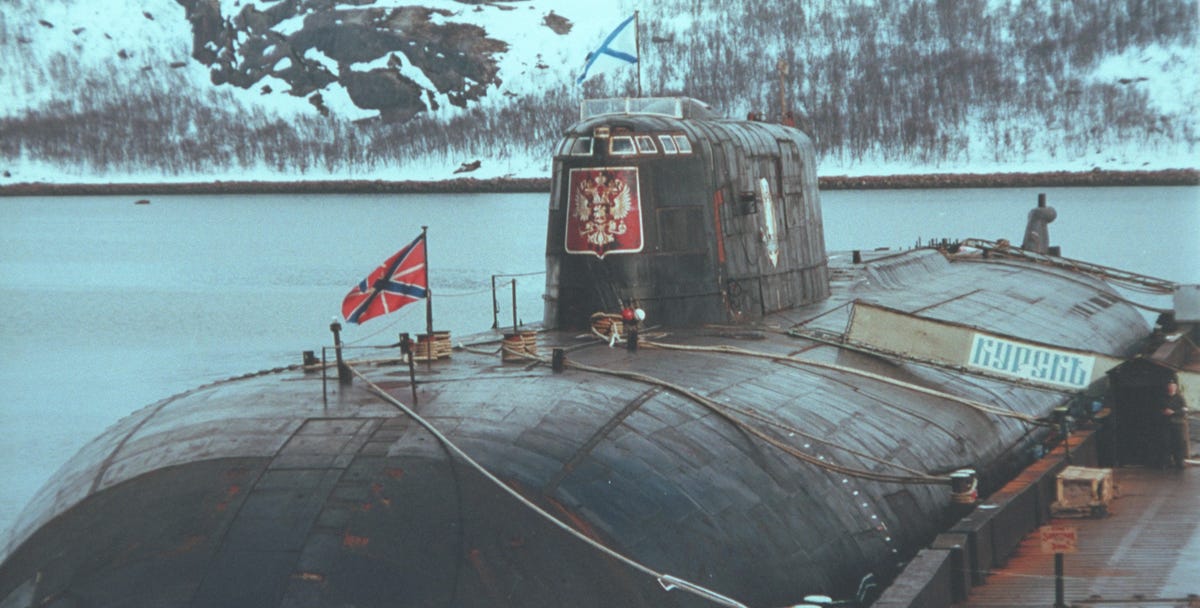
On August 12, 2000, one of Russia’s most powerful nuclear submarines disappeared beneath the Barents Sea during a major naval exercise. The vessel was not an aging relic on a farewell cruise. K-141 Kursk was a modern, heavily armed submarine built to stalk aircraft-carrier groups and survive punishment that would destroy smaller boats. Yet two explosions separated by barely more than two minutes sent it to the seabed with 118 men aboard.
The sinking itself was only the beginning of the tragedy. Some sailors survived the initial destruction and gathered in a rear compartment, where they waited in darkness for a rescue that never reached them. Above the water, malfunctioning rescue vehicles, poor coordination, official secrecy, and delayed acceptance of foreign assistance turned a naval accident into a national crisis.
The true story of the Kursk submarine disaster is therefore not a single tale of a defective torpedo. It is a chain of technical risks, neglected procedures, institutional pride, inadequate emergency preparation, and painful decisions. The ocean merely delivered the final verdictand oceans have never been impressed by reputations.
A Cold War Weapon in a Post-Soviet Navy
Kursk belonged to the Project 949A Antey class, known in NATO terminology as the Oscar II class. Approximately 505 feet long and equipped with two nuclear reactors, the submarine was designed during the Soviet era to attack American carrier battle groups. It carried powerful P-700 Granit cruise missiles along its sides and torpedoes in its bow. Its pressure hull was divided into nine compartments and surrounded by an outer hydrodynamic hull, giving the boat substantial reserve buoyancy and protection.
Commissioned in 1994, Kursk became a symbol of the Russian Northern Fleet at a time when the country’s armed forces were struggling with the financial and organizational consequences of the Soviet Union’s collapse. Ships remained impressive on paper, but training hours, maintenance budgets, spare parts, and rescue capabilities had deteriorated. A submarine can be built like an underwater fortress, but it still depends on ordinary things: inspections, drills, working batteries, competent communication, and equipment that has not spent the decade quietly becoming a museum exhibit.
In August 2000, Kursk joined a large exercise in the Barents Sea, the first major Russian naval maneuver of its kind in years. The exercise was intended to demonstrate that the Northern Fleet remained a serious military force. Kursk’s assignment included firing practice weapons at a surface target. There were 118 people aboard, including the regular crew, senior officers, and technical specialists observing the exercise.
August 12, 2000: Two Explosions
At about 11:28 a.m. local time, a relatively small explosion occurred in or near Kursk’s forward torpedo compartment. Seismic monitoring stations and submarines operating in the region detected the event. Approximately two minutes and fifteen seconds later, a vastly more powerful explosion tore through the bow. The second blast was caused by the detonation of several torpedo warheads stored in the compartment.
The larger explosion ripped open the submarine’s forward structure, destroyed several compartments, and sent a shock wave through the boat. Men in the torpedo room and command areas had little or no chance of survival. Water rushed into the damaged hull as Kursk descended and struck the seabed at a depth of roughly 354 feet.
The nuclear reactors shut down, preventing the accident from developing into a major radiological disaster. That successful shutdown protected the Barents Sea, but it also eliminated electrical generation aboard the crippled submarine. Emergency lighting and battery-powered systems were all that remained for anyone still alive in the stern.
The Torpedo That Started the Disaster
Russia’s official investigation eventually concluded that the first explosion began with a 65-76 practice torpedo loaded into the fourth torpedo tube. This large weapon used high-test peroxide, a highly concentrated form of hydrogen peroxide, as part of its propulsion system. The chemical offered excellent performance, but it could decompose violently after leaking and coming into contact with catalytic materials or contamination.
Investigators believed a defective weld allowed peroxide to escape from the torpedo. Contact with materials inside the tube triggered a rapid chemical reaction that generated intense heat, steam, and oxygen. The event ruptured the torpedo’s fuel components and caused the first explosion. Fire then reached the warheads of other torpedoes, producing the catastrophic second blast.
The official inquiry rejected early suggestions that Kursk had struck a World War II mine or collided with an American or British submarine. Some naval specialists continued to question details of the official sequence, including the precise location of the initial fire and why the torpedo compartment’s flooding and firefighting systems did not prevent the second explosion. However, the broad conclusion that an onboard torpedo accident destroyed Kursk became the best-supported explanation.
The Men Who Survived the Initial Blasts
The explosions did not kill everyone immediately. Twenty-three men from the submarine’s rear sections escaped the worst destruction and gathered in the ninth compartment, the farthest usable space in the stern. Among them was Lieutenant Captain Dmitry Kolesnikov, an officer responsible for the turbine section.
Kolesnikov wrote a note that rescuers later found in his clothing. One side contained a message for his family. The other recorded the situation aboard the submarine and the presence of the surviving sailors. Its most haunting line was remarkably plain: “There are 23 people here.” The note proved that part of the crew remained alive for hours after Kursk reached the bottom.
The survivors faced darkness, cold, rising water, smoke, limited oxygen, and increasing pressure. They may have considered escaping individually through the stern hatch, but such an ascent in Arctic water would have been extraordinarily dangerous. The hatch also had to remain sealed while they waited for a rescue vehicle to connect from outside.
Evidence recovered later suggested that the compartment eventually suffered a flash fire. Investigators believed a chemical oxygen cartridge was accidentally dropped into oily seawater, producing intense heat and flames. Several sailors may already have been injured, poisoned by carbon monoxide, or weakened by the deteriorating atmosphere. Precisely when the final survivors died remains uncertain.
A Rescue Operation Lost in Delay
Surface commanders did not immediately understand what had happened. Kursk failed to make scheduled reports, but hours passed before the navy declared an emergency and began an organized search. The submarine’s rescue buoy, which should have helped mark its position, did not deploy. Kursk was eventually located on the seabed, but by then the survivors had already been trapped for many hours.
Russian rescue submersibles attempted repeatedly to connect to the stern escape hatch. The operations were hampered by poor weather, strong currents, damaged or unreliable equipment, exhausted crews, and confusion about the condition and angle of the submarine. Some rescue craft had battery or mechanical problems. Others could not form a seal around the hatch. Each failed attempt consumed time that could not be replaced.
Britain, Norway, and the United States offered assistance. Russia initially declined or delayed accepting it, partly because Kursk contained sensitive military technology and partly because officials believedor wished to believethat their own rescue forces could handle the emergency. That instinct to protect secrets was understandable in a narrow military sense. In a rescue crisis, however, secrecy can become a luxury purchased with minutes, and the men below had very few minutes to spare.
Russia eventually accepted British and Norwegian help several days after the sinking. A British rescue submarine was dispatched, while Norwegian specialists prepared to dive directly to Kursk. On August 21, Norwegian divers opened the outer escape hatch. They found the escape chamber flooded and no possibility of survivors. The mission shifted from rescue to recovery.
Secrecy, Contradictions, and Putin’s First Major Crisis
The disaster became an early test for President Vladimir Putin, who had taken office only months earlier. He remained at a vacation residence during the first days of the crisis, a decision that created the impression of distance and indifference. When he eventually met the sailors’ relatives, he encountered grief, fury, and demands for honest answers.
Official statements during the rescue frequently contradicted one another. Families heard claims that rescuers had made contact, that tapping noises had been detected, that oxygen might last for days, and that Kursk had perhaps collided with a foreign submarine. Some reports were based on confusion; others appeared intended to protect the navy from blame. The result was a public-relations collapse almost as complete as the operational failure at sea.
Putin later acknowledged responsibility for the state’s failure to respond effectively. The tragedy damaged public trust and exposed the gap between Russia’s image as a nuclear military power and the actual condition of its rescue infrastructure. It also demonstrated a lesson that governments repeatedly learn and repeatedly forget: during a crisis, bad information rarely stays conveniently classified. It usually escapes, puts on running shoes, and arrives before the official statement.
Raising Kursk From the Barents Sea
After the rescue ended, attention turned to recovering the sailors and determining the cause of the disaster. Raising an enormous nuclear submarine from the seabed was a formidable engineering problem. The severely damaged bow posed the greatest risk because it contained destroyed weapons and unstable wreckage.
An international salvage team developed a plan to separate the mangled bow from the main hull. Engineers attached lifting cables to the remaining submarine and raised it beneath the specially modified barge Giant 4. In October 2001, most of Kursk was lifted from the seabed and transported to a dry dock near Murmansk. The operation recovered nearly all of the crew’s remains and gave investigators access to the interior.
The official findings announced in 2002 blamed the hydrogen-peroxide torpedo, unsafe handling practices, deficient training, and broader failures of discipline and maintenance. Russia withdrew the volatile torpedo type from service. The investigation ruled out a foreign collision, despite the confidence with which some officials had promoted that explanation during the rescue.
Could the Kursk Survivors Have Been Saved?
This remains the most emotionally charged question. The discovery of Kolesnikov’s note showed that 23 men survived the explosions. It did not establish exactly how long they remained alive or whether foreign rescuers could have reached them in time.
Russian investigators argued that the men probably died within several hours, before outside assistance could realistically have arrived. Evidence of fire, carbon monoxide, flooding, and chemical damage supports the possibility of a relatively rapid death. Critics responded that the rescue began too slowly, domestic equipment was poorly maintained, and foreign assistance should have been accepted immediately.
Both statements can be true: a faster international response might still have failed, and the Russian response was still unacceptably slow and unprepared. The absence of certainty does not excuse the institutional failures. Emergency organizations are judged not only by whether success was guaranteed, but by whether they gave trapped people every reasonable chance.
What the Kursk Disaster Changed
The catastrophe pushed Russia to reconsider submarine rescue cooperation and the risks of peroxide-powered torpedoes. It also encouraged greater international coordination in submarine emergencies. Five years later, when a Russian AS-28 rescue vehicle became trapped in the Pacific, Russia requested foreign help quickly. A British remotely operated vehicle cut it free, and all seven people aboard survived. The contrast with Kursk was difficult to miss.
Kursk also became a lasting symbol of post-Soviet military decline, state secrecy, and the human cost of maintaining advanced weapons without equally advanced support systems. A country may own nuclear reactors, cruise missiles, and enormous submarines, yet still fail because a rescue battery is weak, a procedure is outdated, or a leader hesitates to admit that help is needed.
Experiences and Practical Lessons From the Kursk Tragedy
Experience Lesson 1: Complex Machines Rarely Fail for One Reason
People often describe Kursk as a submarine destroyed by a leaking torpedo. Technically, that is reasonable. Practically, it is incomplete. The torpedo became fatal because several layers of protection either failed or were insufficient: manufacturing quality, inspection, crew preparation, firefighting, compartment design, emergency power, detection, rescue readiness, and command decisions.
This is an important experience for engineers, safety managers, ship operators, hospital administrators, aviation teams, and anyone responsible for high-risk systems. Serious disasters usually emerge from a sequence of weaknesses that seemed manageable when considered individually. A defective weld may look minor. A skipped training exercise may look temporary. An aging rescue craft may be scheduled for repairs “next quarter.” The danger appears only when these small compromises meet one another on the same day.
Effective safety programs therefore ask more than, “What component might break?” They ask, “What happens after it breaks, and what happens if our backup also fails?” Redundancy is useful only when it is maintained, tested, reachable, and operated by people who have practiced under realistic conditions.
Experience Lesson 2: Emergency Help Should Be Arranged Before the Emergency
Kursk demonstrated the cost of improvising international cooperation after a disaster has begun. Rescue vehicles from different countries may use different docking systems, communications procedures, transport arrangements, and security rules. Waiting until sailors are trapped underwater is a terrible moment to begin exchanging business cards.
Organizations that operate dangerous technology should establish assistance agreements in advance. They should know who can provide specialized equipment, how quickly it can travel, who has authority to request it, and what sensitive information can be shared during a life-threatening emergency. Pride should not be part of the activation checklist.
The lesson applies far beyond submarines. Chemical plants need regional hazardous-material agreements. Hospitals need plans for transferring patients during infrastructure failure. Technology companies need incident-response contacts before a major cyberattack. Preparation is not pessimism. It is the adult version of checking whether the fire extinguisher is real rather than decorative.
Experience Lesson 3: Honest Communication Is Operational Equipment
During the Kursk crisis, contradictory official claims increased the families’ suffering and damaged public confidence. Leaders sometimes treat communication as something separate from emergency operationsa press-office concern to be handled once the “real work” is underway. That is a mistake.
Clear communication helps coordinate teams, prevent rumors, manage outside assistance, and maintain trust when information is incomplete. An honest statement such as “We do not yet know, and these are the possibilities we are investigating” is often stronger than an unsupported claim designed to sound reassuring.
Trust is especially important when authorities must later explain why a rescue failed. People can accept that nature, time, or technology made success impossible. They are far less willing to accept that officials concealed delays, invented certainty, or protected institutional prestige.
Experience Lesson 4: Remember the People, Not Just the Hardware
Accounts of Kursk naturally focus on torpedoes, reactor systems, rescue capsules, and salvage cranes. Yet the center of the story is a group of sailors in a dark compartment, trying to organize themselves after an unimaginable shock. Kolesnikov’s note matters because it reduces an enormous military disaster to a human scale.
For readers studying the event, the most responsible approach is to avoid both sensationalism and sterile technical language. The victims were not merely a casualty figure or evidence in a debate over Putin’s leadership. They were engineers, officers, conscripts, husbands, sons, and shipmates. Their final hours deserve careful reporting rather than conspiracy theories presented as entertainment.
The lasting experience of Kursk is therefore one of humility. Powerful institutions can be fragile. Advanced machines can depend on neglected details. Secrecy can outlive its usefulness. And when a system fails, ordinary people inside it pay the price long before senior leaders finish deciding what to say.
Conclusion
The true story of the Kursk submarine disaster begins with a dangerous torpedo but does not end there. A chemical leak caused the first explosion. Stored weapons produced the second. Design limitations, maintenance failures, inadequate rescue equipment, delayed decisions, and secrecy deepened the catastrophe.
All 118 people aboard died, including 23 men who survived long enough to leave evidence of their final struggle. The recovery of Kursk clarified the technical cause, but it could not resolve every question about whether a faster response might have saved lives.
Kursk remains one of the clearest modern examples of how technological power can conceal institutional weakness. The submarine was built to fight some of the most formidable naval forces in the world. What it lacked was an effective way to survive an accident close to home.
Editorial note: This article distinguishes between the conclusions of the official Russian investigation and later technical analysis. Claims that remain disputed have been identified as uncertain rather than presented as settled fact.

