
Beauty Tools & Accessories
The Radical Plan to Cool Earth With Moon Dust: What Will It Do?
Jul
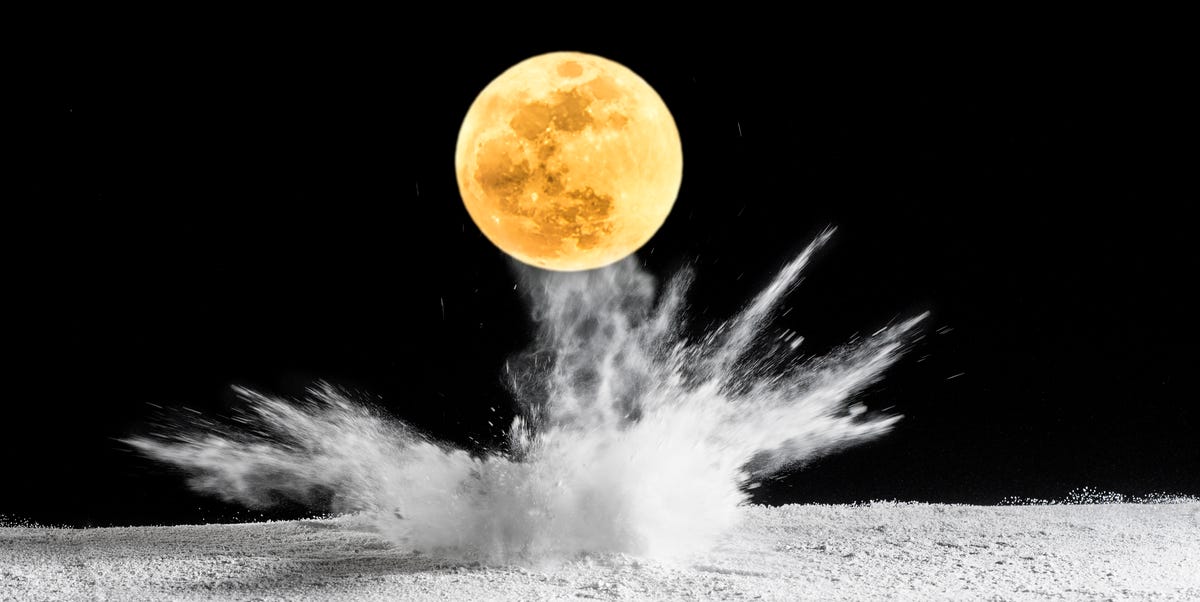
Imagine looking up at the Moon and thinking, “Nice crater. Could we borrow several billion tons of that powdery surface to fix our climate problem?” It sounds like the opening scene of an ambitious science-fiction movie, but a peer-reviewed study has explored a surprisingly serious version of that idea: mine lunar dust, launch carefully aimed streams toward a point between Earth and the Sun, and use the resulting cloud as a temporary planetary sunshade.
The proposal is not a plan approved for construction, and nobody has a lunar dust cannon hidden behind a crater. It is a computer-modeling study designed to test whether the orbital physics could work. The answer is intriguing: under ideal conditions, Moon dust could intercept a small fraction of incoming sunlight and potentially cool Earth. The less cinematic answer is that doing so would require immense infrastructure, constant replenishment, international governance, and a tolerance for uncertainty usually associated with phrases such as “planetary-scale experiment.”
What Is the Moon-Dust Cooling Plan?
The concept belongs to a family of ideas called solar radiation modification, solar geoengineering, or sunlight reflection. Rather than removing carbon dioxide from the atmosphere, these approaches try to reduce the amount of solar energy absorbed by Earth. The Moon-dust version would place tiny particles in space, where they would scatter or block a small portion of sunlight before it reached the planet.
In the 2023 study “Dust as a Solar Shield,” researchers from the University of Utah and the Center for Astrophysics | Harvard & Smithsonian examined several dust types, particle sizes, launch locations, and orbital paths. Their target was about 1.8% sunlight attenuation, roughly equivalent to obscuring the Sun for six days spread across a year. That does not mean six consecutive days of darkness. It means a small reduction accumulated over time.
Why Use Dust From the Moon?
Earth has plenty of dust, as anyone who has ignored a bookshelf for two weeks can confirm. The problem is gravity. Lifting billions of kilograms from Earth would be spectacularly expensive and energy-intensive. The Moon’s gravity is only about one-sixth as strong, its surface contains abundant regolith, and it has no thick atmosphere to fight during launch.
The researchers therefore considered mining lunar material and accelerating it from the Moon toward trajectories that pass near the Earth-Sun L1 region. The ideal grains would be small enough to scatter sunlight efficiently but large and well-shaped enough not to be immediately shoved away by radiation pressure and the solar wind.
What Is L1, and Why Does It Matter?
The Sun-Earth L1 Lagrange point lies about 1.5 million kilometers, or roughly one million miles, toward the Sun from Earth. At this location, the orbital relationship among the Sun, Earth, and a much smaller object allows that object to remain roughly aligned with the two larger bodies.
“Remain roughly aligned” is doing important work in that sentence. L1 is a metastable region, not a cosmic parking garage with painted spaces. Spacecraft near it require corrections, and microscopic grains are especially vulnerable to solar radiation pressure, solar wind, and gravitational disturbances. In the simulations, useful dust streams stayed in position for only days before dispersing. That short lifetime is both the plan’s safety feature and its logistical headache.
How Much Moon Dust Would Be Needed?
The headline number is enormous: more than 10 billion kilograms of dust per year, or about 22 billion pounds. When the study was published, that was roughly 100 times the total mass humanity had sent into space. The material would not be launched once and admired forever. It would have to be mined, processed, aimed, and fired repeatedly because the cloud would drift out of the useful line between Earth and the Sun.
Particle properties matter almost as much as total mass. Micron-scale grains can block more light per unit mass than larger chunks, but very small grains are also pushed around more easily. Porous, “fluffy” particles may perform better because they present more light-intercepting area for their weight. Unfortunately, the Moon does not ship regolith in neat, standardized bags labeled “premium climate grade.” A working system might need to sort or manufacture particles with tightly controlled sizes.
The Infrastructure Behind the Simple-Sounding Idea
A serious deployment would require far more than a shovel and strong optimism. It would need robotic or crewed mining equipment, abrasion-resistant machinery, power generation, dust handling, particle sorting, storage, an electromagnetic mass driver or another high-throughput launcher, precision navigation, solar-weather monitoring, and continuous observation of the dust cloud.
Every component would have to function in a harsh environment where lunar dust is sharp, electrostatically clingy, and famously rude to mechanical systems. Apollo astronauts found it abrasive enough to damage seals and coat equipment. Scaling from a few dusty spacesuits to an industrial operation moving billions of kilograms is not an incremental upgrade. It is a new extraterrestrial mining economy.
What Would Moon Dust Actually Do to Earth?
If the cloud intercepted the intended fraction of sunlight, Earth would receive slightly less incoming energy. Global average temperatures could then fall relative to the warmer path produced by greenhouse gases. Because the intervention affects sunlight directly, the cooling response could begin much faster than the response to carbon dioxide removal, which must reduce a vast atmospheric stock accumulated over centuries.
It Could Reduce Heat, but Not Reverse Climate Change
Cooling the surface is not the same as restoring the climate system. Carbon dioxide would remain in the atmosphere. It would continue trapping outgoing heat, influencing plant physiology, and dissolving into seawater. The ocean absorbs a substantial share of human-emitted carbon dioxide, driving acidification that harms corals and shell-building organisms. A shadow in space cannot neutralize that chemistry.
Moon-dust shading might reduce some temperature-related harms, such as extreme heat risk or additional ice loss, if it worked as modeled. It would not directly stop sea-level rise already committed by past warming, eliminate air pollution from fossil fuels, or repair ecological damage. In medical terms, it is closer to suppressing a dangerous fever than removing the infection.
Rainfall and Regional Climate Could Change
Sunlight drives evaporation, atmospheric circulation, and the water cycle. Reducing solar energy could therefore alter precipitation even if the global average temperature moved in a desirable direction. Some regions might experience less drought stress; others could receive less rain. Monsoons, storm tracks, cloud patterns, and agricultural growing conditions could respond unevenly.
This is a central problem with all sunlight-reflection proposals: “global average cooling” is not a universal thermostat setting. A temperature outcome that looks favorable on a planetary graph may produce winners, losers, and furious diplomatic meetings at regional scales.
Solar Power and Ecosystems Would Notice
A reduction near 1.8% is small enough that ordinary daylight would not suddenly resemble a noir film. Still, persistent changes in direct and diffuse sunlight could affect photovoltaic output, crop productivity, plant growth, and ecological timing. The exact consequences would depend on cloud behavior, geographic distribution, particle scattering, season, and the pattern of deployment.
Space-based dust may avoid some atmospheric side effects associated with injecting sulfate aerosols into the stratosphere, including direct chemical interactions with ozone. However, avoiding atmospheric particles does not eliminate climate-side effects. Earth’s systems respond to energy, not to whether the engineering proposal has elegant orbital diagrams.
Why Scientists Find the Idea Interesting
The proposal has three intellectually attractive features. First, lunar material is already outside Earth’s deep gravitational well. Second, dust offers a large optical area for relatively little mass. Third, the grains naturally disperse, making the effect potentially reversible. Stop launching, and the shield fades rather than remaining in the atmosphere for decades.
That reversibility could permit seasonal or adjustable deployment. In theory, operators could vary the dust stream as observations improve, rather than committing to a permanent structure the size of a small country. The quick dispersal also reduces the risk of leaving a long-lived artificial ring around Earth.
Yet reversibility has a darker twin: dependence. Once society relied on artificial shading while greenhouse gas concentrations remained high, a prolonged interruption could allow temperatures to rebound rapidly. Moon dust would disperse faster than many atmospheric aerosols, so launch failures, conflict, equipment breakdown, or a funding collapse could matter quickly. A reversible system is comforting only when the reverse switch is under reliable, legitimate control.
The Biggest Problems With the Radical Plan
1. It Is Far Beyond Current Industrial Capability
Humanity has not built a self-sustaining lunar mine, a bulk regolith-processing plant, or a launcher capable of sending climate-scale mass on precision trajectories. The study primarily tested orbital feasibility; it did not present a complete engineering, financial, legal, or environmental implementation plan. Turning a promising simulation into dependable hardware could take decades.
2. Aiming Dust Is Not the Same as Controlling It
Dust grains cannot steer themselves. Small variations in size, speed, launch angle, or charge could send them onto different paths. Solar activity also changes the environment through which they travel. Researchers would need exceptional forecasting and tracking while protecting spacecraft near L1, a region used by important solar- and Earth-observing missions.
3. International Law and Lunar Politics Are Complicated
Who would authorize the extraction of lunar resources for a global climate intervention? Who would own the launch infrastructure? Who would be liable if dust damaged a spacecraft or if altered rainfall harmed a country’s food supply? A project that changes sunlight for everyone cannot responsibly be governed like a private construction contract.
Scientific organizations and policy bodies increasingly emphasize transparency, public participation, independent review, justice, and international cooperation in climate-intervention research. The physics may be global, but consent, power, and risk are distributed very unevenly.
4. It Could Become an Excuse to Delay Emissions Cuts
The most immediate danger may be political rather than orbital. A futuristic cooling option could be used to justify continued fossil-fuel use: why replace the furnace when someone promises to install a shade? That logic ignores ocean acidification, air pollution, system failure, and the long-term burden placed on future generations.
Moon-dust geoengineering makes sense only as a possible supplement to aggressive emissions reductions, carbon removal, adaptation, and ecosystem protection. It is not permission to keep filling the bathtub because a very clever engineer has sketched a larger drain.
A Lived-Experience Thought Experiment: What Might Moon-Dust Cooling Feel Like?
Suppose the system existed several decades from now. Most people would probably not wake up on launch day, open the curtains, and gasp at a visibly dimmed Sun. A reduction of less than 2% would be subtle to human eyes, especially amid normal changes caused by clouds, haze, seasons, and latitude. The experience would arrive through measurements, forecasts, politics, and consequences rather than through a dramatic gray sky.
Weather apps might display a “managed solar reduction” index beside temperature and ultraviolet exposure. Solar-farm operators would adjust output forecasts. Farmers might receive planting guidance based on revised light levels and regional rainfall projections. Astronomers and satellite teams would track dust trajectories with the nervous attention air-traffic controllers give a crowded runway.
Public experience would also depend on trust. Residents in a region enjoying fewer deadly heat waves might view the project as an extraordinary success. A farming community facing an unexpected rainfall decline might call it reckless experimentation. Both reactions could be reasonable because planetary averages can conceal sharply different local outcomes.
The system’s control room would face decisions with no comfortable precedent. Should operators increase shading during a record-hot year? Reduce it after a major volcanic eruption adds natural atmospheric cooling? Pause during a solar storm that changes particle behavior? Each adjustment would mix climate science, orbital dynamics, food security, energy planning, and international politics. The person pressing the button would not merely be operating machinery; that person would be participating in the management of Earth’s energy budget.
There would likely be cultural effects as well. The Moon has been a calendar, navigation aid, religious symbol, artistic muse, and romantic lighting department for millennia. Turning it into an industrial climate resource would change how people imagine it. The phrase “Moon mine” might inspire pride in human ingenuity, grief over celestial exploitation, or both before breakfast.
Then there is the psychological experience of dependence. Every successful launch would bring relief, but also a reminder that the underlying carbon problem had not vanished. News of a launcher malfunction could move markets. A geopolitical crisis near lunar infrastructure could become a climate emergency. Maintenance budgets would no longer be ordinary appropriations; they would be part of the planet’s thermal life-support system.
The best possible experience would be deliberately temporary. Moon-dust shading would reduce peak risks while nations rapidly replaced fossil fuels, removed carbon dioxide, restored ecosystems, and adapted cities and farms. As greenhouse gas concentrations fell, dust launches would gradually shrink and stop. The sky would not have been “fixed” by lunar powder; humanity would simply have borrowed time and then used that time wisely.
The worst experience would be the opposite: emissions continue, the dust system expands, and each generation inherits a larger obligation to operate infrastructure it did not choose. What began as an emergency brake becomes a permanent accelerator-and-brake arrangementone foot burning carbon, the other firing Moon dust, both legs exhausted.
That contrast is why the proposal is valuable even if no dust is ever launched. It forces a serious question: when climate risk becomes extreme, which interventions are prudent to study, and what kind of world would their success create? The answer cannot come from astrophysics alone.
So, Could Moon Dust Cool Earth?
According to the orbital modeling, carefully launched lunar dust could temporarily shade Earth enough to influence climate. The physics is plausible. The complete project is not currently practical. It would demand an unprecedented lunar industry, extreme precision, sustained global oversight, and a clear exit strategy tied to reductions in greenhouse gases.
The plan is best understood as a provocative research concept, not a climate rescue package waiting for a billionaire and a launch window. Its strongest contribution may be showing that space-based shading could be physically possible and comparatively reversible. Its greatest weakness is that “possible” sits many engineering, political, ethical, and ecological mountain ranges away from “wise.”
Moon dust might someday buy time. It cannot buy responsibility, international legitimacy, or a stable climate at any price. Those still have to be built here on Earth.
SEO Metadata

