
Body Care
20 Products Earn The 2023 European Product Design Award
Jul
Great product design is not just about making something look expensive enough to scare your wallet into hiding. At its best, product design solves real problems, improves daily life, reduces waste, expands access, and occasionally makes us say, “Wait, why didn’t this exist already?” The 2023 European Product Design Award winners delivered exactly that mix: practical thinking, elegant engineering, sustainable ambition, and a few objects so sculptural they look like they might judge your living room.
The European Product Design Award, often shortened to EPDA, recognizes international product and industrial designers whose work combines innovation, usability, aesthetics, ergonomics, durability, impact, and production reality. In other words, a winning product cannot simply be pretty. It must also behave itself in the real world, which is where many beautiful-but-useless objects quietly go to retire.
The 2023 winners showed a broad view of modern design. Some products focused on accessibility, such as an inclusive pushchair for wheelchair users. Others explored sustainability through recycled materials, carbon-negative housing, and products designed for a second life. Several entries pushed technology forward, from flexible electronics printing to smart infrastructure monitoring and mobile-first content creation. Together, these 20 award-winning products tell a clear story: the future of product design is human-centered, resource-aware, and not afraid to be a little clever.
What Makes the 2023 EPDA Winners Worth Watching?
The most interesting thing about the 2023 European Product Design Award winners is their range. This was not a parade of shiny gadgets alone. The list included furniture, glassware, lighting, sustainable housing, baby products, security cameras, smartphones, electric vehicle concepts, and even crayons made from recycled plastic bottle caps. That variety matters because product design touches almost every corner of daily life, from the chair under your body to the phone in your hand to the window system keeping weather outside where it belongs.
Several themes repeat across these designs: inclusion, adaptability, ecological responsibility, and emotional appeal. A product now has to do more than perform a single function. It may need to transform, store easily, reduce material waste, use digital intelligence, or support people who have historically been left out of mainstream design. The best designs in this group do not shout, “Look at me!” They quietly say, “Life would be easier if this worked better.” Then they prove it.
20 Products That Earned Attention at the 2023 European Product Design Award
1. Accessible Pushchair by Designability, Wolfson Centre, Department D1, Royal United Hospital
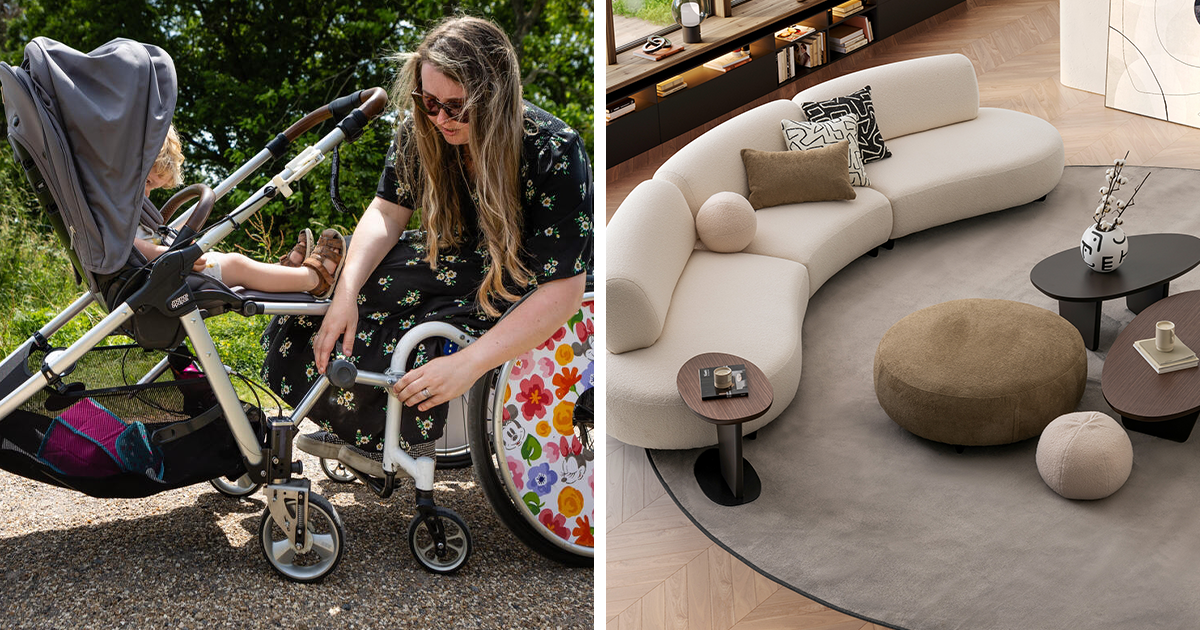
The Accessible Pushchair stands out as one of the most meaningful designs in the 2023 EPDA selection. Created for manual wheelchair users, it rethinks the ordinary pushchair so disabled parents and carers can move with greater independence. The design replaces the conventional rear wheel and footbrake assembly, allowing the pushchair to connect more naturally with wheelchair use. This is universal design at its best: not a niche compromise, but a smarter product that can serve more people.
2. Wunderhaus by Wunderhaus Ltd
Wunderhaus is a residential concept with an ambitious promise: a house designed to be energy-positive and carbon-negative. Its solar roof system and sustainable construction approach aim to make the home not just less harmful, but actively beneficial over time. While many buildings talk about sustainability the way some people talk about going to the gym in January, Wunderhaus builds that goal into the product from the start.
3. UbiGrid DTM+ by Ubicquia
UbiGrid DTM+ is a distribution transformer monitor designed for utilities. It tracks transformer load, oil temperature, pressure, power state, and other grid conditions in real time. That may not sound as glamorous as a luxury car concept, but when storms hit and neighborhoods lose power, smart infrastructure becomes very exciting very quickly. This product shows how design can support resilience, faster response, and better maintenance in critical energy systems.
4. Voltera NOVA Flexible Electronics Printer by Hofer Studio
Voltera NOVA is a flexible electronics printer made for soft, stretchable, and conformable surfaces. Instead of relying on traditional production methods, it uses direct-write printing to place functional materials where they are needed. For researchers and developers, that means faster prototyping and more freedom to experiment with wearable devices, sensors, medical technology, and flexible circuits. It is the kind of machine that makes engineers smile in a way that worries accountants.
5. Reli Light Cam Battery D1 by Reli Technologies LLC
The Reli Light Cam Battery D1 combines a spotlight camera with home security and wildlife observation features. With 1080p resolution, a wide-angle view, full-color night vision, motion detection, and simple installation, it answers a familiar consumer need: “What is happening outside my house, and is it a raccoon or a package thief?” By blending safety, convenience, and observation, it turns a security device into a more flexible home companion.
6. Hooked by Milan Bhullar
Hooked is a bent-lamination wooden side table that can be hung on the wall when not in use. Its looped ribbon-like legs give it a sculptural presence, but the real charm is behavioral: it encourages people to clear floor space easily. Small homes, apartments, studios, and multipurpose rooms all benefit from furniture that can step aside politely. Hooked does that with more elegance than simply shoving a table into a closet.
7. Light Composition Vargov Design LC0339 by Vargov Design
The Light Composition LC0339 is a pendant lighting design that treats illumination as an artistic installation. With glass, steel, mini LEDs, and a modular composition, it blurs the line between lighting and sculpture. Its appeal lies in atmosphere. It does not merely brighten a room; it gives the ceiling something interesting to say.
8. Bonbon by Saloni Furniture
Bonbon is a modular sofa designed for compact living, adaptability, and comfort. It can convert into a bed and can be arranged in different configurations depending on the room and user needs. In a world where living rooms often double as offices, guest rooms, movie theaters, and snack headquarters, modular furniture earns its keep.
9. Magical Mushroom Necklace by Shiri Hershkovitz Bartur
The Magical Mushroom Necklace is a jewelry design inspired by fungi and their ecological importance. It uses detailed 3D form and glow-in-the-dark elements to transform a natural idea into a wearable object. The piece is decorative, but it also carries a message: nature is complex, strange, useful, and occasionally fabulous enough to wear around your neck.
10. Take A Rest by Vestel Elektronik San. ve Tic. A.S.
Take A Rest is a 32-inch touchscreen workspace product designed for flexible home working. It includes ergonomic details, a foot bar, a magnetic back panel, a curtain for visual separation, and mobility so it can be moved away after work. Its core idea is simple: the home office should not permanently eat the home. Anyone who has stared at a laptop from the dining table for too long understands the assignment.
11. Man-Made Crayon by Miki Kawamura
Man-Made Crayon explores how recycled plastic bottle caps can become a creative material. By using colored plastic caps, the design reduces the need for added pigment while giving waste a tactile second life. The product is small, but the idea is large: sustainability becomes easier to understand when people can hold it, draw with it, and maybe make a very serious doodle of a dinosaur.
12. Kinetic 5200 by Kinetic Facades Ltd
Kinetic 5200 is an electric lift-and-slide slim window and door system for minimalist buildings with large openings. Its narrow middle post and high weather performance address a common architectural challenge: how to create wide, open views without sacrificing function. This is the kind of design that makes architects nod quietly while imagining a very expensive house on a cliff.
13. Re-Verre by Gallotti&Radice
Re-Verre is a recycled-glass coffee table collection designed by Federica Biasi for Gallotti&Radice. Its name suggests “glass once again,” and the concept gives reused material a refined new identity. Rather than hiding its recycled nature, the table celebrates texture, finish, and craft. It proves sustainable design does not need to dress like a cardboard box to be morally responsible.
14. Érimón Whiskey Glass by The Craft Irish Whiskey Co.
The Érimón Whiskey Glass was designed to improve nosing and tasting by managing ethanol vapor. Its curved form and Vortex Point aim to help aromas emerge more clearly, creating a richer tasting experience. Whether you are a whiskey expert or someone who mainly says “smooth” with confidence, the design shows how glass shape can influence sensory experience.
15. Automobili Pininfarina PURA Vision by Automobili Pininfarina
PURA Vision is an electric Luxury Utility Vehicle concept that presents a dramatic vision of future mobility. With sculptural surfaces, bold proportions, and luxury detailing, it bridges classic Pininfarina design language with electric-era expectations. It is less “daily grocery run” and more “arrive at the coastline as if the soundtrack started before you left the driveway.”
16. From Baby Potty to Flowerpot The Liimmi Potty by Liimmi GmbH
The Liimmi Potty asks a refreshingly practical question: why should baby products have such short lives? Its answer is a potty that can later become a flowerpot. By building a second function into the product from the beginning, Liimmi extends usefulness and reduces waste. Parents get a cleaner lifecycle story, and the potty gets a surprisingly elegant retirement plan.
17. Vase Juicer by Foshan Shengfang Hardware Co., Ltd
The Vase Juicer transforms a kitchen appliance into a decorative object. When not in use, its stacked components create the silhouette of a vase, reducing visual clutter and saving storage space. It reflects an increasingly popular idea in home product design: if an appliance must live on the counter, it should at least look like it was invited.
18. Latitude ROR Furniture Collection by Latitude
The ROR Furniture Collection includes pieces such as dining tables, chairs, and bar stools with dynamic converging forms. Inspired in part by visual movement and urban energy, the collection focuses on character and rhythm. It may not be the quietest furniture in the room, but that is rather the point. Some designs whisper; ROR appears to enter with a playlist.
19. Infinix Zero30 5G by Infinix Mobile Limited
The Infinix Zero30 5G is a fashion-forward smartphone focused on mobile video creation. Its front-facing camera supports high-resolution 4K video at 60 frames per second, targeting vloggers and younger creators who want polished content without hauling around a studio. The design combines imaging capability with jewelry-inspired styling, proving that smartphones are now both tools and personal accessories.
20. Flonq Max Smart by Flonq
Flonq Max Smart is a disposable e-cigarette design with a monolithic body, glossy tactile surface, color accents, and an LCD display for power and liquid levels. From a product design perspective, it shows how consumer electronics language has moved into unexpected categories. At the same time, disposable products raise fair questions about sustainability and public health. Good design should look beyond surface appeal, and this product usefully reminds us that aesthetics and responsibility must be discussed together.
Design Lessons From These 2023 Award-Winning Products
The 2023 EPDA winners demonstrate that modern product design is no longer satisfied with beauty alone. A chair, phone, camera, window, lamp, or stroller must justify its existence through usefulness. This does not mean products should be boring. On the contrary, the best examples here are memorable because they combine imagination with purpose.
The Accessible Pushchair is a strong example of inclusive product design because it addresses a real gap in the market. Instead of treating accessibility as an afterthought, it begins with the lived experience of disabled parents and carers. That approach creates better products and better social outcomes. Inclusion is not charity dressed as design; it is design doing its job properly.
Sustainability also appears in multiple forms. Wunderhaus uses architecture and energy generation to rethink housing. Re-Verre gives recycled glass a high-end furniture identity. Man-Made Crayon turns bottle caps into creative tools. Liimmi extends the life of a baby product by planning its next role. These products avoid the trap of vague green language by connecting ecological goals with visible function.
Technology-driven entries show another side of the award. Voltera NOVA supports advanced prototyping. UbiGrid DTM+ helps utilities monitor infrastructure. Infinix Zero30 5G responds to the creator economy. Reli Light Cam Battery D1 combines safety with wildlife observation. These products are not just “smart” because someone added an app. Their intelligence supports a clearer user need.
Real-World Experiences Inspired by the 2023 European Product Design Award Winners
Looking at these 20 products is a bit like walking through a very unusual department store where every item has a backstory, a design thesis, and probably a designer nearby explaining why the curve matters. But beyond the awards language, these products connect to familiar experiences.
Anyone who has lived in a small apartment understands the appeal of Hooked, Bonbon, and the Vase Juicer. Space is precious. A side table that can hang on the wall, a sofa that can become a bed, and a juicer that can look like décor all respond to the same modern problem: our homes are working harder than ever. The living room is now a lounge, office, guest suite, gym, classroom, and occasional laundry-folding arena. Products that adapt gracefully feel less like luxuries and more like survival tools.
The Accessible Pushchair connects to another deeply human experience: the desire to participate fully in family life. For many people, pushing a child in a stroller is treated as ordinary. For wheelchair users, ordinary products can create unnecessary barriers. A design like this does not simply add convenience; it protects dignity, independence, and bonding. That is why accessible design often feels so powerful. It reminds us that the best products do not make users feel grateful for being included. They make inclusion feel normal.
Sustainable products such as Man-Made Crayon, Re-Verre, Wunderhaus, and Liimmi Potty also reflect a shift in consumer expectations. People are increasingly skeptical of products that arrive with too much packaging, too little lifespan, and a vague promise to be “eco-friendly” because the label is green. These award-winning designs make sustainability more tangible. You can see the recycled glass. You can understand the second life of a potty. You can imagine plastic caps becoming crayons. Even the most distracted consumer can grasp the story without needing a 42-page environmental report and three cups of coffee.
The technology winners speak to everyday anxieties and ambitions. The Reli camera answers the small but persistent question: “What was that noise outside?” The Infinix phone responds to a generation that documents, edits, and shares life in motion. Voltera NOVA and UbiGrid DTM+ may serve more specialized professional users, but their impact can eventually reach ordinary people through better electronics, better infrastructure, and faster innovation. Not every important product is glamorous. Sometimes the most valuable design sits inside a utility workflow, quietly preventing bigger problems.
Finally, the more expressive objects, such as the Magical Mushroom Necklace, Vargov lighting, ROR furniture, and PURA Vision, remind us that emotion still matters. Humans do not choose products by function alone. We want atmosphere, identity, delight, and sometimes a little drama. A lamp can change a mood. A necklace can carry a story. A car concept can set a design direction even if most of us will only admire it from a screen while eating cereal.
The practical takeaway is simple: good design is not one thing. It is empathy, engineering, material intelligence, beauty, restraint, and timing. The 2023 European Product Design Award winners show that when those ingredients come together, products become more than objects. They become better answers to how people live now.
Conclusion
The 20 products highlighted from the 2023 European Product Design Award reveal a design world moving toward smarter, more responsible, and more emotionally engaging solutions. From accessible mobility and energy-positive housing to flexible electronics, recycled materials, modular furniture, and creator-focused smartphones, these winners show how wide the definition of product design has become.
What ties them together is not a single style. Some are minimal, some are bold, some are technical, and some are almost poetic. Their shared strength is problem-solving. The best designs improve daily routines, reduce friction, extend product lifespans, or help people see familiar objects in a fresh way. That is the real achievement of the 2023 EPDA winners: they prove that product design can be useful, beautiful, sustainable, inclusive, and occasionally charming enough to make a juicer pretend to be a vase.
Note: This article is written for web publication and synthesizes publicly available award and product information without inserting source links in the body content.

