
Body Care
7 Best Car Upholstery Cleaners to Erase Stains and Odors
Jul
Car seats are basically tiny, mobile couchesexcept they also host French fries, spilled iced coffee, gym-bag funk, and that mysterious sticky spot no one will confess to. The good news: you don’t need a professional detailer (or a time machine) to make your upholstery look and smell normal again. You just need the right cleaner for your seat material, the right tools, and the patience to not panic-scrub like you’re trying to sand a deck.
Below are seven standout car upholstery cleaners that reliably tackle stains and odors, plus the exact techniques that keep you from creating a bigger mess (like water rings, crunchy fabric, or that “I used way too much product” residue).
Quick Picks at a Glance
| Pick | Best For | Why It Works |
|---|---|---|
| CarGuys Super Cleaner | One-bottle simplicity | Versatile, wipe-friendly formula for multiple interior materials |
| Meguiar’s Carpet & Upholstery Cleaner | Everyday stains on cloth seats & carpet | Foaming action + built-in scrub head helps lift grime from fibers |
| Tuff Stuff Multi-Purpose Foam Cleaner | Fast “foam-and-wipe” cleanups | Dense foam clings to fabric to loosen dirt without soaking |
| Armor All Carpet & Upholstery Cleaner Spray | Budget-friendly refresh | Easy aerosol application for quick spot work |
| Chemical Guys Lightning Fast Stain Extractor | Stubborn, set-in spots | Designed for targeted stain extraction on fabric and carpets |
| Griot’s Garage Odor Neutralizing Carpet & Upholstery Cleaner | Stains + lingering odors | Peroxide + anti-resoiling approach helps with organic grime and funk |
| Bissell Little Green (portable extractor) | Deep cleaning & odor removal | Spray + brush + suction physically pulls gunk out of upholstery |
How We Chose These (Without the Hype)
“Best” depends on what you’re fighting: grease, sugar, mud, sweat, pet accidents, or the unforgettable aroma of spilled protein shake. To build this list, we cross-checked lab-style testing writeups, automotive publication roundups, and manufacturer guidancethen filtered for products that are widely available in the U.S., easy for normal humans to use, and appropriate for car upholstery (not just kitchen counters or industrial floors).
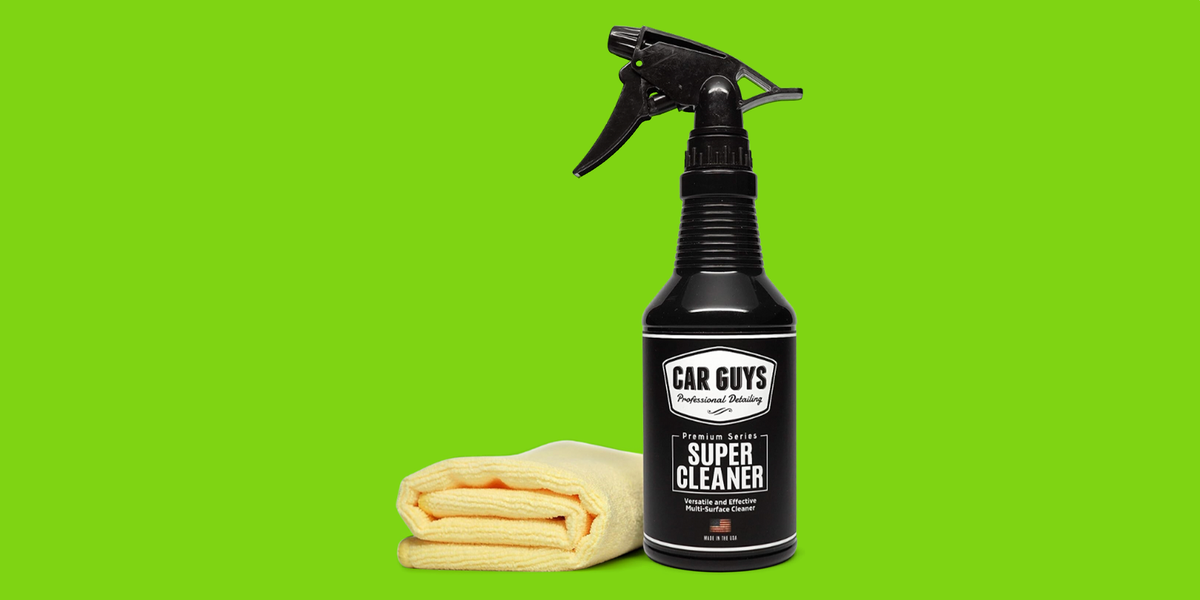
1) CarGuys Super Cleaner (Best Overall “One Bottle Does Most”)
If you want one cleaner that can handle cloth seats, carpet, vinyl trim, and plenty of other interior surfaces, CarGuys Super Cleaner is a strong “keep it simple” choice. It’s commonly recommended as an all-purpose interior option, and it shines for quick spot cleaning when you don’t want to juggle separate bottles for every material.
Why people like it
- Multi-surface convenience: Useful for mixed interiors where fabric meets vinyl meets “what is this panel even made of?”
- Low-drama workflow: Spray, agitate gently, blot/wiperepeat if needed.
- Good for maintenance: Keeps seats and door panels from slowly turning gray.
Pro tip: Don’t treat it like a car wash cannon. Mist lightly onto a microfiber towel first for delicate areas, and avoid screens/glass unless the label explicitly says it’s safe there.
2) Meguiar’s Carpet & Upholstery Cleaner (Best for Cloth Seats + Built-In Scrub Help)
Meguiar’s is a classic in the car-care aisle for a reason: it’s designed for fabric and carpet, and it’s very friendly for DIYers. Versions with an integrated scrub head are especially useful for lifting dirt out of textured fabric without hunting down a separate brush.
Where it excels
- Mud and ground-in grime: Foam helps push cleaner into the fibers, and agitation does the rest.
- Quick improvement: Great for “I just need this seat to stop looking haunted.”
- Good technique match: Vacuum first, then spray, agitate, and blotsimple and effective.
Best practice: Work in small sections. Upholstery hates being soaked. Your goal is to lift the stain, not create a shallow lake inside the seat foam.
3) Tuff Stuff Multi-Purpose Foam Cleaner (Best Fast Foam for Seats, Mats, and More)
Tuff Stuff is the “old-school foam can” that keeps showing up in real-world car-cleaning routines. The dense foam clings well, which helps loosen grime without instantly saturating the fabric. It’s a handy pick when you want fast results and you’re dealing with general dirt, scuffs, and the kind of stains that are more “life happened” than “biohazard.”
Why foam helps
- Cling time: Foam stays where you spray it, giving surfactants time to work.
- Less oversaturation: Easier to control than watery sprays if you’re heavy-handed.
- Good for mats: Especially useful on floor mats and carpeted areas that take a beating.
Heads-up: Always test for colorfastness in a hidden spotespecially on older cloth and aftermarket upholstery.
4) Armor All Carpet & Upholstery Cleaner Spray (Best Value Pick)
Sometimes you don’t need a premium boutique formulayou need a reliable, inexpensive cleaner you can grab at a big-box store on the way home. Armor All’s carpet and upholstery cleaner is a popular value option for freshening up cloth seats and carpets, especially for light-to-moderate stains and everyday messes.
When it’s the right move
- Budget refreshes: You want “cleaner than it was,” not concours-level perfection.
- Frequent touch-ups: Good for families, rideshare drivers, and snack-related emergencies.
- Quick routine: Spray lightly, agitate gently, blot with a clean towel.
Make it work better: Pair it with a soft interior brush and a wet/dry vacuum for faster drying and less residue.
5) Chemical Guys Lightning Fast Stain Extractor (Best for Stubborn Spots)
When you’ve got a stain that laughs at your “gentle cleaning” approach, a stain extractor formula can help. Chemical Guys Lightning Fast is made for fabric and upholstery stain extractionuseful for older spots, concentrated spills, and those “I swear it wasn’t there yesterday” stains.
How to use it without making things worse
- Vacuum first: Dry dirt turns into mud when you add liquid.
- Apply sparingly: Mist the area or your microfiber, not half the seat.
- Agitate gently: Soft brush for fabric; don’t shred the fibers.
- Blot, don’t rub: Blotting lifts the stain up and out instead of spreading it.
Best for: Set-in food/drink spots, grime lines, and targeted “problem child” areas.
6) Griot’s Garage Odor Neutralizing Carpet & Upholstery Cleaner (Best for Stains + Odors)
If the stain is gone but the smell refuses to leavethis is where odor-focused upholstery cleaners earn their keep. Griot’s odor-neutralizing option is designed to tackle both visible messes and stubborn odors, using a peroxide-based approach and an anti-resoiling strategy so the cleaned area doesn’t immediately attract new grime like a lint roller at a pet shelter.
Why it’s different
- Odor + stain focus: Helpful for organic messes (spills, sweat, food, general funk).
- Foaming action: Penetrates fibers while staying controllable.
- Cleaner-looking for longer: Encapsulation-style claims aim to reduce rapid re-soiling.
Use-case sweet spot: Cloth seats and carpets that look okay-ish but smell like a fast food bag that’s been living under the seat since last summer.
7) Bissell Little Green (Portable Upholstery Extractor) (Best Deep Clean for Real Odor Removal)
Sprays and foams are greatuntil the mess is deep in the padding. A portable extractor like the Bissell Little Green works differently: it sprays cleaning solution, agitates with a tool, then sucks the dirty liquid back out. That physical extraction is a big deal for odors, because smells often live below the surface.
Why an extractor can beat any spray
- Removes, not just treats: Pulls dirty moisture out instead of leaving it to dry inside the seat.
- Better for milk/coffee disasters: Deep spills are where odors are born and raised.
- Great for families & pet owners: Especially when accidents happen (because they will).
Important: Drying matters. Leave windows cracked (safe location), run fans if possible, and avoid trapping moisture in a closed car.
How to Remove Stains and Odors Like a Pro (Step-by-Step)
Step 1: Dry prep (the part everyone skips)
- Vacuum thoroughly: Seats, creases, and seams. This prevents turning loose dirt into sludge.
- Brush first if needed: A soft brush loosens embedded grit so the vacuum can pull it out.
Step 2: Choose the right approach
- Light stains + maintenance: CarGuys, Armor All, or a gentle interior cleaner routine.
- Moderate stains: Meguiar’s or Tuff Stuff with agitation and blotting.
- Deep stains or old spots: Chemical Guys Lightning Fast + repeated light passes.
- Odors that won’t quit: Griot’s odor-neutralizing cleaner, or go straight to extraction.
Step 3: Agitate carefully (not angrily)
Use a soft upholstery brush and light pressure. If you’re scrubbing so hard your shoulder files a complaint, you’re risking pilling, fuzzing, or discolorationespecially on delicate fabrics.
Step 4: Blot and extract
- Blot with clean microfiber towels: Press and lift; don’t grind the stain around.
- Use a wet/dry vacuum if you have one: Faster drying, fewer water marks.
- Extractor method: Multiple light passes beat one “flood and pray” pass.
Step 5: Dry like you mean it
Odors love moisture. If you clean seats and then seal the car up like a Tupperware container, you’re basically hosting a mildew party. Airflow is your friendfans, cracked windows, and time.
Common Mistakes That Make Upholstery Worse
- Over-wetting the fabric: Leads to water rings, slow drying, and musty smells.
- Skipping the vacuum: You’re just smearing grit deeper into the fibers.
- Using the wrong tool: Stiff brushes can damage fabric; harsh chemicals can dull leather.
- Mixing too many products: Residue builds up, attracts dirt, and can create streaking.
- Ignoring label warnings: Some cleaners aren’t meant for screens, uncoated leather, or specialty materials.
FAQ
What’s the best way to remove odors (not just cover them)?
True odor removal usually means removing the source: extract the spill, lift the grime, and dry the area completely. Odor-targeted upholstery cleaners help, but deep odors often respond best to extraction and thorough drying.
Can I use household upholstery cleaner on car seats?
Sometimes, but use caution. Car interiors combine fabric, foam, adhesives, dyes, plastics, and coatings. A product that’s fine on a couch can be too wet, too harsh, or too residue-heavy for automotive upholstery. When in doubt, choose products specifically marketed for automotive use and always spot test.
How do I clean leather seats safely?
Use a leather-safe cleaner, apply to a microfiber towel (not directly to the seat), wipe gently, then follow with a conditioner if needed. Avoid soaking seams and perforationsliquid can get into the foam and create odor issues later.
Conclusion
The best car upholstery cleaner is the one that matches your mess. For quick, everyday cleanup, a versatile all-purpose interior cleaner can keep things under control. For cloth-seat stains, a dedicated carpet and upholstery cleaner with foam and gentle agitation usually gets you 80% of the way there. And for odorsespecially deep spillsextraction and proper drying are the real heroes.
If you only remember one rule, make it this: vacuum first, use less product than you think, blot more than you scrub, and dry thoroughly. Your car will look better, smell better, and stop reminding you of that one road trip where the soda “definitely wasn’t shaken.”
Real-World Experiences (Because Life Happens in the Back Seat)
The first time I tried to “quick clean” a fabric car seat, I made the classic rookie move: I used way too much cleaner. The seat looked amazing for about five minutesuntil it dried with a faint ring like a coffee cup stain on a desk. That’s when you learn the real lesson of upholstery cleaning: the seat isn’t a countertop. It’s a sponge wearing a shirt. If you flood it, the mess (and the product) sinks below the surface and comes back later to haunt you.
I’ve also learned that the smell problem is usually a moisture problem wearing a disguise. A car can look clean and still smell like “mysterious gym sock” because whatever caused the odormilk spill, wet dog, spilled lattesoaked into the padding. You can wipe the surface all day, but if the seat foam is still holding onto the funk, your nose will keep filing complaints. That’s where odor-focused formulas and, honestly, a portable extractor change the game. The first time you watch an extractor pull brownish water out of a seat that “wasn’t that dirty,” you go through the five stages of grief in about 30 seconds.
Foam cleaners are my favorite for “fast wins,” especially when you’re dealing with everyday grime. The foam sits on top long enough to loosen dirt, and it’s easier to control than a watery spray when you’re trying not to soak anything. But there’s a trick: foam still needs agitation, and agitation needs the right brush. Too soft and you’re petting the stain. Too stiff and you’re giving your upholstery a bad haircut. A soft interior brush and a stack of clean microfiber towels are the unsung heroes herebecause blotting is what actually lifts the stain out.
The most satisfying cleanup I ever did was a “kid snack catastrophe” situation: crushed crackers, melted chocolate, and a juice spillbasically a five-star buffet for ants. I vacuumed like my reputation depended on it, used a foaming upholstery cleaner in small sections, and blotted until the towels stopped turning brown. The smell was still a little “sweet,” so I followed up with an odor-neutralizing cleaner and focused on drying: windows cracked, fan running, and no sealing the car up overnight. The next day, the seats looked normal again, and the only lingering odor was the faint sense of victory.
And yes, sometimes the best “cleaner” is preventing the problem in the first place: keep a small towel in the glovebox, stash a pack of wipes for emergencies, and deal with spills immediately. The longer a mess sits, the more it bonds with fabric fibers like it’s signing a lease. If you catch it early, almost any decent upholstery cleaner can help. If you wait… well, you’re basically doing archaeology, one blot at a time.

