
Hair Care
How to Tell a Knock Knock Joke: 10 Steps
Jun
A knock knock joke is comedy with training wheels, a doorbell, and a tiny surprise hiding behind it. It is short, simple, and famously corny, which is exactly why it works. Unlike a long story joke that requires setup, characters, and the dramatic commitment of a community theater audition, a knock knock joke follows a familiar call-and-response pattern. One person starts with “Knock, knock,” the listener answers, and the punchline arrives through wordplay, misdirection, or a pun so silly it deserves its own little hat.
Learning how to tell a knock knock joke is not only about memorizing the words. The best delivery depends on timing, audience awareness, confidence, facial expression, and knowing when to stop before your friends begin pretending they have urgent appointments with the refrigerator. Whether you are entertaining kids, warming up a classroom, making a family dinner more fun, or trying to become the official “funny person” of your group chat, these ten steps will help you land the laugh.
This guide breaks down the classic format, shows how to choose the right joke, explains how to practice your rhythm, and gives examples you can use or adapt. By the end, you will know how to tell a knock knock joke clearly, naturally, and with just enough dramatic flair to make even the groaniest punchline feel like a tiny comedy masterpiece.
Why Knock Knock Jokes Still Work
Knock knock jokes have lasted for generations because they are interactive. The listener is not just sitting there waiting for entertainment like a bored houseplant. They have a role. They answer “Who’s there?” and then repeat the setup phrase before the punchline arrives. That shared rhythm creates anticipation, and anticipation is one of comedy’s favorite snacks.
They also work because they are safe, quick, and easy to repeat. A good knock knock joke is usually family-friendly, portable, and understandable in seconds. It can be told in a classroom, at a birthday party, during a car ride, or while waiting for pizza. Plus, the format teaches one of the biggest secrets of humor: surprise. The punchline often changes the meaning of a word or phrase the listener thought they understood.
For example, an ordinary word like “lettuce” can suddenly become “let us.” That little twist is the joke. It is simple, but when delivered with confidence, it can still make people smile. Comedy does not always need fireworks. Sometimes it just needs a vegetable with excellent timing.
How to Tell a Knock Knock Joke: 10 Steps
Step 1: Understand the Classic Knock Knock Joke Structure
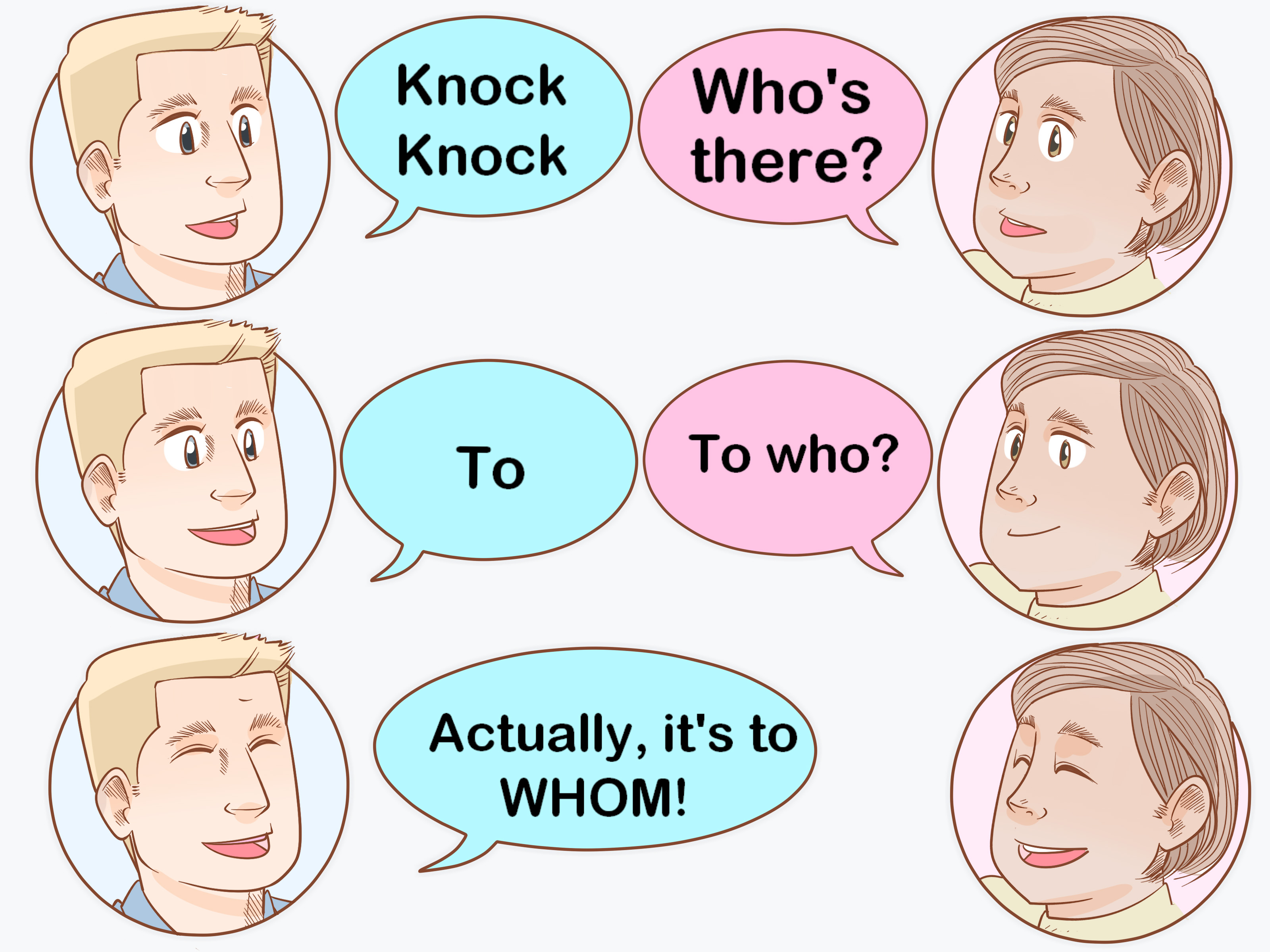
Before you perform the joke, learn the pattern. Most knock knock jokes follow five short lines:
- You say: “Knock, knock.”
- The listener says: “Who’s there?”
- You give the setup word or phrase.
- The listener repeats it and adds “who?”
- You deliver the punchline.
Here is a simple original example:
You: Knock, knock.
Listener: Who’s there?
You: Olive.
Listener: Olive who?
You: Olive telling jokes, even the cheesy ones.
The structure matters because it trains the listener to expect a familiar rhythm. Once they know their part, the joke becomes a tiny performance between two people. If you skip a line or rush the setup, the joke can feel confusing. Keep the format clean and easy to follow.
Step 2: Choose a Joke That Matches Your Audience
The funniest joke in the world can flop if it does not fit the audience. A group of first graders might love a silly animal pun. Adults at a work event may prefer a clever, clean wordplay joke. Your grandparents might laugh at anything you tell them because they are kind, or because they cannot hear you clearly. Either way, choose wisely.
For kids, pick jokes with simple words, animals, food, school topics, or familiar names. For teens and adults, choose jokes with slightly sharper wordplay or unexpected twists. Avoid jokes that are mean, embarrassing, or based on someone’s appearance, background, or personal situation. Knock knock jokes are best when everyone feels included in the fun.
Try this audience-friendly rule: if the joke would make sense on a lunchbox note, it is probably safe for a wide audience. Clean humor is not boring. It just means nobody has to fake a laugh while quietly wishing the floor would open.
Step 3: Memorize the Joke Before You Tell It
Knock knock jokes are short, but forgetting one halfway through is surprisingly easy. Nothing drains the comedy from a punchline faster than saying, “Wait, hold on, I had it… something about a banana?” Practice the joke until you can say it without reading.
Start by memorizing the setup word and the final punchline. Those are the two most important parts. Then rehearse the whole exchange out loud. Speaking it helps you hear the rhythm. Comedy is not only about words on a page; it is about sound, pause, energy, and pacing.
If you are nervous, write the joke on a small card and review it before telling it. Do not read from the card during the joke unless you are doing it playfully. The goal is to make the delivery feel natural, not like you are giving a weather report about incoming puns.
Step 4: Start with Confidence
The opening line “Knock, knock” should be clear and confident. If you mumble it, the listener may not realize you are starting a joke. Say it like you are inviting them into a game.
You do not need to be loud, but you should be easy to hear. Stand or sit comfortably, look at the listener, and smile a little. That smile tells them, “This is going somewhere fun.” It also helps you relax. If you look terrified, the listener may worry that the punchline is trapped in a burning building.
Confidence does not mean acting like a professional comedian. It means committing to the joke. Even a silly joke works better when you deliver it as if it deserves its moment. Corny humor is proud humor. Let the corn stand tall.
Step 5: Give the Listener Time to Respond
A knock knock joke needs cooperation. After you say “Knock, knock,” pause. Let the listener say “Who’s there?” Do not answer your own joke unless you are doing a one-person comedy show in the mirror, which is allowed but may alarm your toothbrush.
The pause is important because it builds rhythm. If you rush, the listener cannot participate. If you wait too long, the moment may get awkward. Aim for a comfortable beat, like tossing a ball back and forth.
If the listener does not know the format, gently guide them. You can say, “You say, ‘Who’s there?’” Keep it light. Once they understand, continue. Many kids learn humor through repetition, so guiding them can actually make the joke more fun.
Step 6: Say the Setup Word Clearly
The setup word is the key to the punchline. If the listener mishears it, the ending may not make sense. Say the word slowly enough to be understood, especially if it is a pun, a name, or a phrase that will change meaning in the punchline.
For example:
You: Knock, knock.
Listener: Who’s there?
You: Canoe.
Listener: Canoe who?
You: Canoe help me think of another joke?
In this joke, “canoe” sounds like “can you.” If you say it too quickly or unclearly, the listener may miss the wordplay. Let the setup land. A pun is like a tiny acrobat. It needs space to flip.
Step 7: Pause Before the Punchline
The pause before the punchline is where the magic happens. After the listener says the setup phrase plus “who?” take a small beat before delivering the final line. This pause creates suspense. The listener knows something is coming, but not exactly what.
Do not make the pause too long unless you are going for dramatic silliness. A tiny pause is enough. Think of it as comedy punctuation. It gives the audience a second to lean in mentally.
Here is the difference:
Rushed: “Canoe who? Canoe help me think of another joke?”
Better: “Canoe who?” pause “Canoe help me think of another joke?”
That little pause turns a sentence into a punchline. Timing does not have to be perfect, but it should feel intentional.
Step 8: Deliver the Punchline with Energy
The punchline is the payoff, so do not throw it away. Say it clearly, with enough energy to show that this is the funny part. You can slightly change your voice, raise your eyebrows, or use a playful expression. Physical delivery can make a simple joke much funnier.
Try this original example:
You: Knock, knock.
Listener: Who’s there?
You: Waffle.
Listener: Waffle who?
You: Waffle lot of jokes, but this one is golden.
Is it ridiculous? Absolutely. But if you say the punchline with a grin and a little confidence, it becomes charming. Half the fun of knock knock jokes is that everyone knows they are corny. The trick is to enjoy the corniness instead of apologizing for it.
Step 9: React Naturally After the Joke
After the punchline, give the listener a moment to laugh, groan, or say, “Wow, that was terrible,” which is often secretly a compliment in knock knock joke culture. Do not immediately explain the joke unless they look confused. Explaining a joke too soon is like popping a balloon and then describing how round it used to be.
If they laugh, laugh with them. If they groan, smile and say something playful like, “I accept your applause in groan form.” If they do not get it, you can gently explain the wordplay without making them feel awkward.
For example, if they do not understand “lettuce,” you might say, “It sounds like ‘let us,’ so ‘lettuce in’ means ‘let us in.’” Keep the explanation short. Then move on. Not every joke lands, and that is fine. Even professional comedians test material. Your knock knock joke career can survive one quiet room.
Step 10: Know When to Stopor When to Tell One More
One knock knock joke can be delightful. Three can be hilarious. Twelve may cause people to hide behind furniture. The final step is learning when the audience wants more and when they have reached full pun capacity.
Watch their reactions. Are they laughing and asking for another? Great. Tell one more. Are they checking their phone, changing the subject, or slowly backing toward the exit? Wrap it up. Comedy is partly about reading the room.
A strong ending can make your jokes more memorable. You might say, “Okay, last onethis door is closing.” Then tell your best joke. Ending on a good laugh is better than continuing until the room feels like a museum exhibit titled “Pun Fatigue.”
How to Make Your Own Knock Knock Joke
Once you understand the format, writing your own knock knock joke becomes easier. Start with a word that sounds like another phrase. Food words, names, animals, and everyday objects are great starting points. Then build a punchline that reveals the second meaning.
Here is a simple formula:
- Pick a word: “Harry.”
- Think of what it sounds like: “hurry.”
- Create a punchline: “Harry up, I have more jokes to tell.”
Now turn it into the full joke:
You: Knock, knock.
Listener: Who’s there?
You: Harry.
Listener: Harry who?
You: Harry up, I have more jokes to tell.
You can also use names, places, and objects. The best homemade knock knock jokes are simple enough to understand quickly. If your listener needs a dictionary, a map, and emotional support to understand the punchline, simplify it.
Common Mistakes to Avoid
Rushing the Joke
Speed can ruin the rhythm. Slow down just enough for the listener to follow each line.
Choosing a Joke That Is Too Complicated
Knock knock jokes should be quick. If the setup requires a three-minute explanation, it is probably not the right joke.
Repeating the Same Joke Too Often
A classic joke can be fun, but repeating it five times in one afternoon may reduce its sparkle. Rotate your material like a tiny comedy buffet.
Using Mean-Spirited Humor
The best knock knock jokes make people laugh together. Avoid jokes that target someone in a hurtful way.
Explaining Every Punchline
Explain only if needed. Let the joke breathe first.
Best Places to Tell Knock Knock Jokes
Knock knock jokes work well in casual, friendly settings. They are especially useful when people are already relaxed or open to being playful. Try them during family dinners, road trips, classroom icebreakers, birthday parties, summer camp activities, sleepovers, or text conversations. They are also great for younger children who are learning about language, rhythm, and wordplay.
They can even be useful for public speaking. A short, clean joke can warm up a room before a presentation, especially if the audience includes families or children. However, use them carefully in formal settings. If you are giving a serious business report, opening with “Knock, knock” may be memorable, but not always in the way you hoped.
Examples of Knock Knock Jokes You Can Practice
Use these original examples to practice timing, pauses, and punchline delivery:
Knock, knock.
Who’s there?
Berry.
Berry who?
Berry glad you opened the door for this joke.
Knock, knock.
Who’s there?
Soup.
Soup who?
Soup-er excited to tell another joke.
Knock, knock.
Who’s there?
Howard.
Howard who?
Howard you like to hear one more?
Knock, knock.
Who’s there?
Radio.
Radio who?
Radio not, here comes the punchline.
Practice each one with a different style. Try one with dramatic seriousness, one with a cheerful voice, and one with a fake mysterious whisper. You will quickly learn how delivery changes the joke.
Experience Notes: What Really Happens When You Tell Knock Knock Jokes
The funny thing about knock knock jokes is that the smallest changes can make the biggest difference. In real life, the joke itself is only half the performance. The other half is the moment: who is listening, where you are, how you say it, and whether everyone is in the mood for a little silliness.
One common experience is that kids often enjoy the pattern as much as the punchline. A child may laugh before the joke is even finished because they know their part is coming. They like saying “Who’s there?” and repeating the setup phrase. The joke becomes a game, not just a sentence with a funny ending. That is why knock knock jokes are perfect for family activities, classrooms, and road trips. They give everyone a role, even the shy person in the back seat who has been silently guarding a bag of chips.
Another real experience is that adults often laugh because the joke is bad in a lovable way. A knock knock joke does not need to be brilliant to be fun. Sometimes the groan is the goal. When someone says, “That was awful,” while smiling, you have probably succeeded. The secret is to enjoy the silliness without acting embarrassed. If you deliver the joke like you know it is corny and you are proud of it anyway, people tend to relax and play along.
Timing becomes easier with practice. The first few times, you may rush because you want to get to the punchline. But after telling several jokes, you start to feel the rhythm. You learn to pause after “Knock, knock,” wait for the response, give the setup clearly, and then hold a tiny beat before the punchline. That beat is powerful. It tells the listener, “Here it comes.” Too short, and the joke feels flat. Too long, and people may wonder if you forgot your own material. The perfect pause is small but confident.
Audience reaction also teaches you which jokes work best. Food jokes often land well because the words are familiar. Name-based jokes can be funny, but only if the listener understands the sound-alike phrase. Seasonal jokes work nicely around holidays, birthdays, or school events because the context helps the punchline. A “pumpkin” joke feels funnier in October than in the middle of April, unless you are deeply committed to year-round pumpkin energy.
One useful habit is keeping a few reliable jokes ready. Think of them as your emergency comedy snacks. You may not need them every day, but when a dull moment appears, you can brighten it quickly. A short joke can help break awkward silence, cheer up a younger sibling, start a conversation, or make a group feel more comfortable.
Finally, the best experience comes when you invite others to create their own jokes. Once someone understands the pattern, they often want to invent a version. Many homemade jokes will be wonderfully terrible, and that is part of the fun. Laugh with people, not at them. Encourage the attempt. A knock knock joke is not only about getting a perfect laugh; it is about sharing a playful moment. In a world full of serious doors, sometimes it feels good to knock on one and find a pun waiting on the other side.
Conclusion
Learning how to tell a knock knock joke is really learning how to share a tiny piece of playful language. The format is simple, but the performance matters. Choose a joke that fits your audience, memorize the structure, speak clearly, pause before the punchline, and react naturally when the laughor the glorious groanarrives.
The best knock knock jokes are not complicated. They are quick, friendly, and surprising. They invite the listener to join in, which makes them more interactive than many other types of jokes. With a little practice, you can turn a basic pun into a cheerful moment that works at home, in school, at parties, or anywhere people are willing to open the door to silliness.
Note: This article is written for web publication in standard American English, using original examples and practical guidance based on established principles of humor, public speaking, wordplay, and family-friendly storytelling.

