
Body Care
Earth’s Mini Moon 2020: Is New Mini Moon Actually Space Junk?
Jun
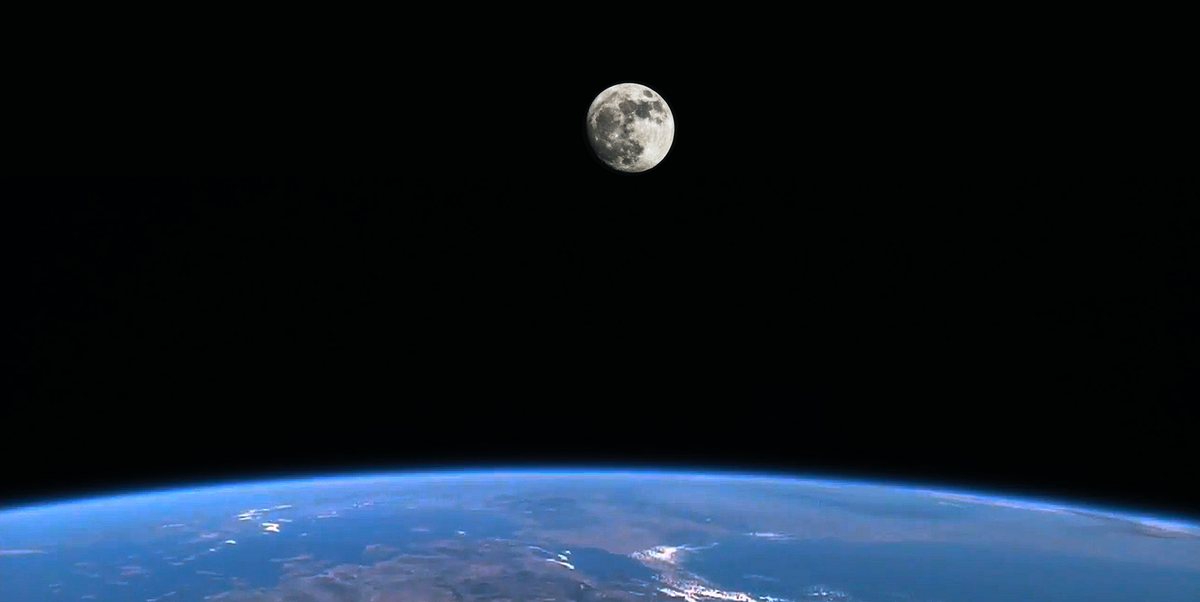
Every once in a while, Earth gets a tiny new companion and the internet collectively leans toward the sky like a neighbor peeking over a fence. In 2020, that happened twice. First came 2020 CD3, a small natural asteroid temporarily captured by Earth’s gravity. Then came 2020 SO, a mysterious object that wandered near our planet and looked suspiciously like a “mini moon.”
The twist? The second object was not a fresh cosmic pebble from deep space. It was almost certainly something humanity had misplaced: an old rocket booster from the 1960s. Yes, Earth briefly “adopted” space junk. Somewhere, a celestial lost-and-found desk is very busy.
So, was Earth’s mini moon in 2020 actually space junk? For 2020 SO, the answer is yes. Astronomers confirmed that this temporary visitor was the upper-stage Centaur rocket booster used during NASA’s Surveyor 2 mission to the Moon in 1966. The story is part astronomy, part detective work, part space-age nostalgia, and part reminder that what we send into space does not always politely disappear.
What Is a Mini Moon?
A mini moon, also called a temporary natural satellite or temporarily captured object, is a small object that gets caught by Earth’s gravity for a limited time. Unlike the Moon, which has been our loyal nightlight for billions of years, a mini moon is more like a couch-surfing asteroid. It stops by, loops around for a while, and eventually leaves to continue orbiting the Sun.
Most mini moons are tiny, faint, and difficult to spot. They may be only a few feet across, which makes them practically invisible unless powerful survey telescopes catch them at the right moment. They also do not stay long by astronomical standards. Earth’s gravity, the Moon’s gravity, and the Sun’s pull all tug on them until they escape.
The phrase “mini moon” sounds dramatic, but these objects are not new planets, doomsday rocks, or secret alien parking meters. They are usually small near-Earth objects with orbits similar enough to Earth’s that a slow gravitational encounter can temporarily trap them.
The 2020 Mini Moon Confusion: 2020 CD3 vs. 2020 SO
The phrase Earth’s mini moon 2020 can refer to two different objects, and this is where confusion begins.
2020 CD3: The Real Natural Mini Moon
In February 2020, astronomers announced the discovery of 2020 CD3, a small asteroid temporarily orbiting Earth. It was likely only a few feet wide, roughly the size of a washing machine, a compact car, or a very ambitious boulder. This object was considered a natural mini moon. Studies suggested it was a real rocky asteroid, not a piece of human-made debris.
2020 CD3 was exciting because confirmed natural mini moons are rare. Earth probably captures small objects more often than we notice, but most are too faint to detect. 2020 CD3 gave scientists a valuable chance to study a tiny asteroid up close, at least in observational terms. It eventually escaped Earth’s gravitational grip and returned to its path around the Sun.
2020 SO: The “Mini Moon” That Was Probably Space Junk
Later in 2020, another object entered the news: 2020 SO. At first, it was treated like a near-Earth object. But astronomers quickly noticed several strange clues. Its orbit looked unusually Earth-like. It approached our planet very slowly. Its path matched the kind of trajectory an old rocket stage might follow after being sent toward the Moon. And sunlight seemed to push it around more than expected for a dense asteroid.
That last clue mattered. A solid space rock is compact and heavy for its size. A spent rocket booster is more like an empty metal tube. Sunlight can exert a tiny but continuous pressure on objects in space. That pressure barely nudges a dense rock, but it can noticeably affect a hollow, lightweight object. Imagine wind pushing an empty soda can compared with a stone. The can skitters away; the stone sits there judging everyone.
How Astronomers Solved the Mystery of 2020 SO
2020 SO was discovered in September 2020 by the Pan-STARRS1 survey telescope in Hawaii, part of the global effort to identify near-Earth objects. At first glance, it looked like one more faint object moving against the background stars. But orbital analysis made it unusual.
Scientists at NASA’s Center for Near-Earth Object Studies, known as CNEOS, ran the object’s path backward in time. That analysis showed that 2020 SO had made close approaches to Earth before, including one in 1966. That date was a cosmic eyebrow raise, because 1966 was a busy year for lunar missions during the Space Race.
One mission stood out: Surveyor 2. NASA launched Surveyor 2 on September 20, 1966, using an Atlas-Centaur rocket. The spacecraft was supposed to land on the Moon and collect information that would help prepare for the Apollo program. Unfortunately, during the coast to the Moon, one of the spacecraft’s thrusters failed, sending the lander into a spin. Surveyor 2 crashed near the Moon’s Copernicus crater on September 23, 1966.
The lander was lost, but the Centaur upper-stage booster did not crash with it. After helping send Surveyor 2 toward the Moon, the booster continued into space and entered an orbit around the Sun. For decades, it became a forgotten relic: not exactly lost, but not exactly sending postcards either.
The Clues That Pointed to Space Junk
Several pieces of evidence helped astronomers conclude that 2020 SO was the old Centaur booster.
1. Its Orbit Looked Too Much Like Earth’s
Natural asteroids can have Earth-like orbits, but 2020 SO’s path was suspiciously close to Earth’s orbit around the Sun. It was nearly circular and stayed close to the same plane as Earth. That is exactly the kind of orbit expected for a rocket stage sent toward the Moon and later left to drift around the Sun.
2. It Moved Slowly Relative to Earth
Many near-Earth asteroids zip past at high speeds. 2020 SO approached gently, with a low relative velocity. That slow movement made temporary capture easier and also fit the profile of a human-made object that had once departed from Earth.
3. Sunlight Pushed It Around
Solar radiation pressure became one of the strongest clues. Observers gathered more than 170 position measurements, and the orbit showed a non-gravitational effect. In plain English: gravity alone could not fully explain its motion. Something else was nudging it, and the nudge fit a hollow, low-density object much better than a dense asteroid.
4. Its Spectrum Matched Rocket Materials
Researchers used NASA’s Infrared Telescope Facility in Hawaii to study the light reflected from 2020 SO. Different materials reflect light in different ways, almost like fingerprints. The data matched old Centaur rocket material better than natural asteroid rock. That turned the case from “probably space junk” into “yes, this is almost certainly a vintage rocket booster.”
What Happened When 2020 SO Became Earth’s Temporary Companion?
2020 SO entered Earth’s neighborhood in late 2020 and made two large, looping paths around the Earth-Moon system. It was not a moon in the romantic, poetic, tides-and-wolves sense. It was more like a temporary gravitational guest wobbling through the front yard.
On December 1, 2020, 2020 SO passed very close by astronomical standards, coming within about 0.13 lunar distances, or roughly 30,000 miles from Earth. It made another close approach on February 2, 2021, at about 0.58 lunar distances. After that, Earth gradually lost its hold, and the object drifted back into orbit around the Sun.
There was no danger to Earth. 2020 SO was small, faint, and not on a collision course. Even if a small piece of debris or a tiny asteroid were headed toward Earth, objects of this scale usually burn up in the atmosphere. The real value of 2020 SO was not danger; it was discovery.
Why Old Space Junk Can Look Like an Asteroid
Space is big, dark, and not especially helpful with labels. A telescope does not immediately see “rocket booster” written across an object. It sees a dot of light moving across images. Astronomers then calculate its orbit, brightness, rotation, and reflected spectrum to understand what it might be.
Old rocket stages can masquerade as asteroids because they are small, distant, and often no longer transmitting signals. Once a booster is dead, it becomes a silent object reflecting sunlight. If it drifts into a solar orbit similar to Earth’s, it may return years or decades later looking like a natural near-Earth object.
2020 SO was not the first case of suspected space debris being mistaken for an asteroid-like object. As space exploration grows, this type of identification will become more important. The space around Earth and the Moon is getting busier, and astronomers must distinguish between natural objects, active spacecraft, dead hardware, and debris.
Why the 2020 SO Discovery Matters
The 2020 SO story is more than a quirky headline. It highlights several important issues in modern space science.
It Improves Planetary Defense
Planetary defense is not just about spotting giant asteroids in disaster movies. It also involves understanding small near-Earth objects, calculating their orbits, and learning how different objects behave. If scientists can separate natural rocks from artificial debris, they can prioritize real threats more effectively.
It Teaches Us About Space Debris
Most people think of space debris as junk orbiting close to Earth. But debris can also end up in unusual places, including solar orbits that bring it back near Earth decades later. 2020 SO showed that the history of spaceflight is still moving around out there, quietly obeying physics and occasionally photobombing asteroid surveys.
It Connects Modern Astronomy to Space History
The idea that a piece of the Surveyor 2 mission returned to Earth’s neighborhood more than fifty years later is wonderfully strange. It turns a failed lunar mission into a long-running space archaeology story. The booster helped push a spacecraft toward the Moon before Apollo, vanished into solar orbit, and then came back for a brief encore in the 21st century.
It Shows How Good Modern Surveys Have Become
Detecting something as faint as 2020 SO requires powerful sky surveys, fast data processing, and international follow-up observations. Telescopes like Pan-STARRS and Catalina Sky Survey scan the sky for moving objects, while observatories and radar facilities help refine orbits and identify physical characteristics. The system is not perfect, but it is impressively good at catching faint visitors that previous generations would have missed.
Was 2020 SO Really a Moon?
This depends on how strict you want to be. 2020 SO temporarily moved around the Earth-Moon system, so calling it a “mini moon” in casual language is understandable. But scientifically, it was not a natural moon. It was human-made space debris temporarily captured by Earth’s gravity.
That distinction matters. A natural mini moon, like 2020 CD3, teaches scientists about small asteroids and near-Earth object populations. An artificial mini moon, like 2020 SO, teaches scientists about orbital debris, spacecraft materials, and how human spaceflight artifacts evolve over decades.
Both are fascinating. One is a tiny rock from the solar system’s natural debris field. The other is a retired rocket stage from the early Space Age. If 2020 CD3 is a wild pebble, 2020 SO is a museum exhibit that escaped the museum and started orbiting the Sun.
Could Earth Capture More Mini Moons?
Yes. Earth probably captures small temporary objects more often than we realize. Most are too small and faint to detect, especially if they arrive from directions difficult for ground-based telescopes to observe. Future observatories, including wide-field survey telescopes, are expected to find more of them.
Natural mini moons could become scientifically valuable targets. Because they come close to Earth, they may be easier to study than asteroids in the main asteroid belt. In theory, future spacecraft missions could visit a mini moon, collect samples, or test asteroid mining and planetary defense technologies. That sounds futuristic, but so did reusable rockets, private lunar landers, and billionaires arguing about Mars on social media.
Artificial mini moons may also become more common as human activity expands around Earth and the Moon. Old mission hardware, discarded stages, and fragments may occasionally return to Earth’s neighborhood. Identifying them will be essential for tracking space traffic and preventing confusion in asteroid catalogs.
Is Space Junk Dangerous?
Space junk can be dangerous, but 2020 SO itself was not a serious threat. The most dangerous debris is usually in Earth orbit, where fast-moving fragments can damage satellites, spacecraft, or the International Space Station. A small bolt traveling at orbital speed can cause major problems. Space does not need cannonballs when it has tiny metal crumbs moving faster than a rifle bullet.
2020 SO was different because it was not part of the dense debris environment in low Earth orbit. It was a long-lost upper stage drifting through solar orbit and temporarily passing near Earth. Its return was scientifically interesting, not apocalyptic.
Still, the object reminds us that space missions leave footprints. Some footprints are on the Moon. Some are in orbit. Some wander around the Sun for decades and later reappear like a vintage car rolling back into the driveway with no driver.
Experience Notes: What Following the 2020 Mini Moon Story Teaches Us
For readers, the 2020 mini moon story offers a surprisingly good lesson in how science works in public. At first, the headline was simple and exciting: Earth might have a new mini moon. That alone was enough to spark curiosity. People imagined a tiny second moon circling above us, perhaps visible in the night sky. Then the details arrived, and the story became even better. The “moon” might not be a rock at all. It might be old space junk from a mission launched before the first Apollo landing.
One useful experience from this story is learning to be patient with early space news. When astronomers discover a faint moving object, the first announcement is often provisional. Scientists may know where it is and how bright it looks, but not yet what it is made of. More observations are needed. The orbit must be refined. Spectra must be collected. A dramatic headline may appear before the final answer is known. That does not mean scientists were wrong; it means they were still investigating.
Another experience is realizing how much detective work hides behind a tiny dot of light. To most of us, a telescope image of 2020 SO would look like nothing special. It might appear as a faint point or streak. But to astronomers, that dot contains clues. Its brightness hints at size. Its motion reveals its path. Its response to sunlight suggests density. Its reflected colors can expose whether it is rock, metal, paint, or some combination of spacecraft materials. The mystery is solved not by one magical observation but by many small pieces clicking together.
The story is also a reminder that space history is not frozen in museums. The Surveyor program belongs to the 1960s, but one piece of that era kept moving through space for more than half a century. That gives the story emotional texture. A failed lunar mission, a forgotten booster, modern asteroid surveys, and today’s planetary defense teams all meet in one object. It is like finding a message in a bottle, except the bottle is a rocket stage and the ocean is the inner solar system.
For amateur sky watchers, 2020 SO also shows why observing space can be humbling. Most exciting objects are not visible to the naked eye. You cannot simply walk outside, point dramatically, and say, “Behold, the mini moon!” Many mini moons require professional telescopes or coordinated observation networks. But that does not make them less exciting. In fact, it makes the science more impressive. Humans built instruments sensitive enough to detect a faint relic from 1966 and reconstruct its journey across decades.
Finally, the mini moon story encourages a healthier kind of wonder. It does not need aliens, panic, or conspiracy theories to be interesting. The real explanation is already delightful: Earth temporarily recaptured an old rocket booster from a Moon mission, astronomers noticed sunlight pushing it like an empty can, and spectroscopy helped confirm its identity. That is not a letdown. That is science doing what science does best: turning confusion into understanding, one weird little object at a time.
Conclusion: So, Was Earth’s 2020 Mini Moon Space Junk?
Yes, if we are talking about 2020 SO. The object that made headlines as a possible new mini moon was confirmed to be old space junk: the Centaur upper-stage rocket booster from NASA’s 1966 Surveyor 2 mission. Its Earth-like orbit, low relative speed, sensitivity to solar radiation pressure, and spectral signature all pointed toward an artificial origin.
But 2020 also gave us 2020 CD3, a genuine natural mini moon. That means the year delivered both flavors of temporary Earth companion: one tiny asteroid and one vintage rocket part. The universe, apparently, enjoys variety.
The larger lesson is that Earth’s neighborhood is dynamic. Small rocks drift in. Old hardware drifts back. Telescopes scan the darkness, and sometimes they discover that yesterday’s space mission has become today’s astronomy headline. Whether natural asteroid or forgotten booster, a mini moon reminds us that space is not empty. It is full of motion, history, and the occasional cosmic plot twist.

