
Beauty Tools & Accessories
16 Display Shelving Ideas for Your Home
Jun
Display shelving is the home décor version of a good haircut: when it is done right, everything suddenly looks intentional. A blank wall becomes useful. A lonely corner gets a personality. Your favorite books, ceramics, framed photos, travel souvenirs, candles, plants, baskets, and “I bought this on vacation and refuse to explain it” objects finally have a place to shine.
The best display shelving ideas for your home are not just about adding boards to a wall. They are about creating storage that feels beautiful, personal, and practical. Whether you live in a small apartment, a family home, a rental, or a house with enough blank walls to make an art museum nervous, the right shelves can transform dead space into a stylish focal point.
Below are 16 display shelving ideas that combine form, function, and a little design magicwithout making your home look like a furniture showroom where nobody is allowed to touch anything.
Why Display Shelving Works in Almost Every Home
Display shelves solve several common decorating problems at once. They add vertical storage, reduce clutter on tables and counters, show off personal objects, and help rooms feel finished. Unlike bulky cabinets, open shelving keeps a space feeling lighter and more breathable. Unlike closed storage, it encourages you to keep only what is beautiful, useful, or meaningfulideally all three, but we are not judging the drawer full of tangled charging cables.
Good shelf styling also gives a room rhythm. By mixing books, art, plants, bowls, baskets, and sculptural pieces, you create layers that make the eye move naturally around the space. The trick is balance: enough items to feel collected, enough empty space to avoid visual chaos.
16 Display Shelving Ideas for Your Home
1. Floating Shelves for a Clean, Modern Look
Floating shelves are one of the most popular display shelving ideas because they appear to hover without visible brackets. They work beautifully in living rooms, kitchens, bedrooms, bathrooms, and home offices. Use them to display framed art, small plants, ceramic bowls, candles, or a rotating collection of seasonal décor.
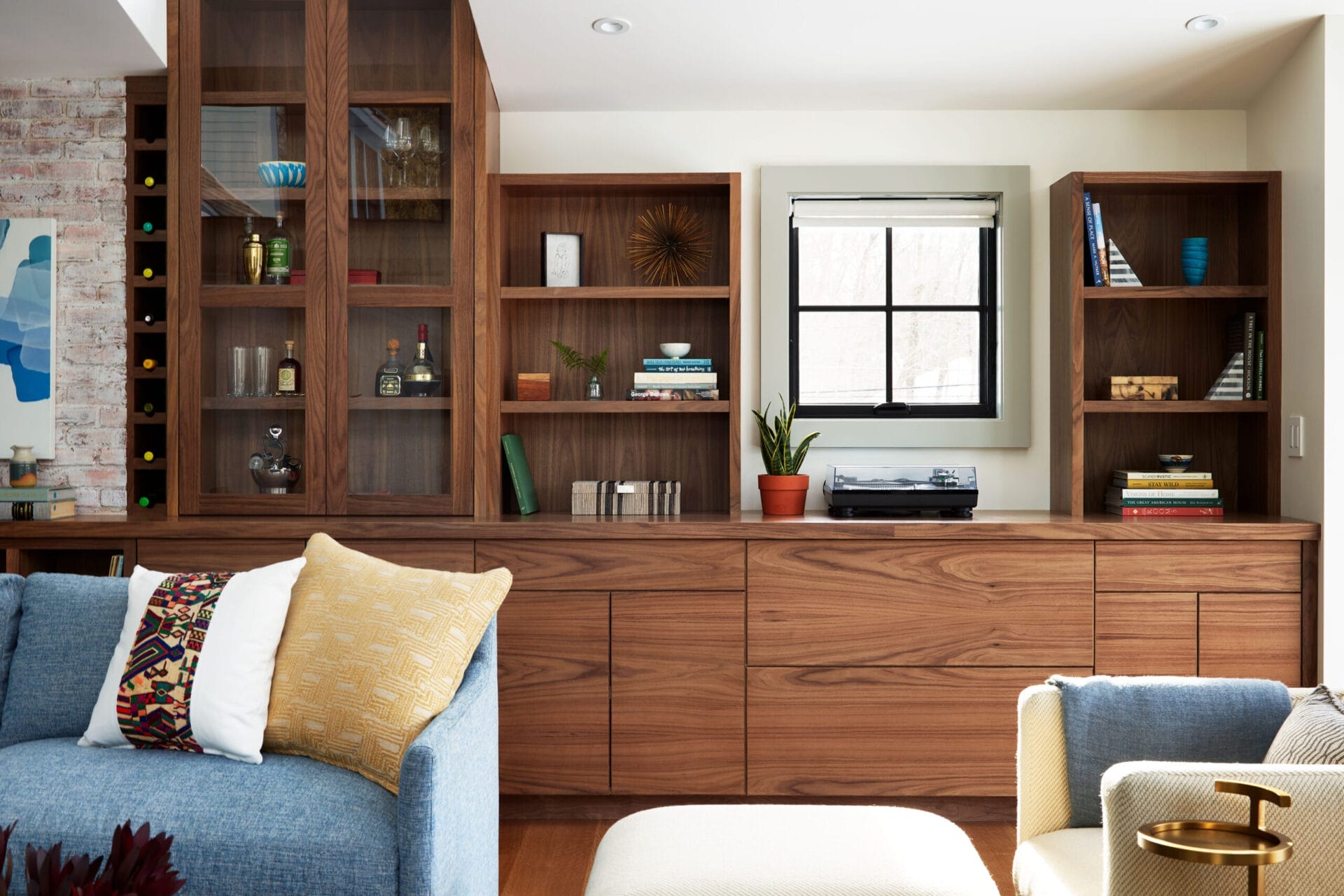
For a polished look, install two or three shelves in a vertical stack and keep the color palette tight. Think white oak shelves with cream pottery, black shelves with framed photography, or walnut shelves with brass accents. Floating shelves are also excellent for small spaces because they add storage without stealing floor area.
2. Built-In Shelves Around a Fireplace
If your living room has a fireplace, built-in shelves on either side can make the entire wall feel custom and complete. This idea creates symmetry, which is especially useful when you want a calm, traditional, or balanced room design.
Use the lower sections for closed cabinets if you need hidden storage, then reserve the upper shelves for books, framed photos, vases, and decorative boxes. To avoid the “library exploded” effect, alternate horizontal stacks of books with vertical rows. Add one or two larger objects per shelf so tiny accessories do not start a visual stampede.
3. Glass Display Cabinets for Treasured Collections
A glass-front display cabinet is perfect for items you want to showcase but also protect from dust, pets, and curious guests who believe every object is an invitation. These cabinets are great for vintage glassware, heirloom china, pottery, art books, linens, barware, or collectibles.
Modern display cabinets do not need to look formal or old-fashioned. Choose a clean-lined wood, metal, or painted cabinet and style the inside with restraint. Group similar pieces together, vary object heights, and leave a little breathing room. A cabinet with interior lighting can turn even ordinary white dishes into a quiet design moment.
4. Kitchen Open Shelving for Everyday Beauty
Kitchen open shelving works best when it displays items you actually use: plates, bowls, mugs, glass jars, cookbooks, cutting boards, and attractive cookware. The key is to avoid treating shelves like a garage sale in midair.
Choose a consistent material or color family. For example, white dishes, clear jars, wood boards, and a few green plants create a fresh, timeless kitchen display. If you cook often, keep the most-used items on the lower shelf and decorative pieces higher up. Open kitchen shelves should be pretty, yes, but they should also survive Tuesday dinner.
5. Corner Shelves for Awkward Spaces
Corners are often neglected because they are hard to furnish. Corner display shelves solve that problem by turning unused space into a charming vertical feature. They are ideal for small living rooms, bathrooms, bedrooms, and entryways.
Use corner shelves for plants, small sculptures, candles, perfume bottles, framed mini art, or rolled hand towels. In a tiny apartment, a corner shelf can act like a compact display tower. In a larger room, it can soften an empty corner that otherwise seems to be waiting for a houseplant with emotional support needs.
6. Picture Ledge Shelves for Art and Photos
Picture ledges are shallow shelves designed to hold framed art, photographs, postcards, small prints, and slim decorative objects. They are especially useful because you can change your display without making new holes in the wall every time your taste evolves.
Try one long ledge above a sofa, bed, desk, or hallway console. Layer frames in different sizes, allowing some overlap for depth. For a gallery-style look, keep frames in the same finish. For a more collected look, mix wood, black, brass, and white frames while repeating at least one color throughout the display.
7. Wall-to-Wall Shelving for a Statement Room
Wall-to-wall shelving creates serious visual impact. It can turn a living room, dining room, office, or media room into the most memorable space in the house. This idea works especially well if you have a large collection of books, ceramics, records, baskets, or art objects.
To keep a full wall of shelves from looking overwhelming, organize by zones. Dedicate some shelves to books, some to decorative pieces, and some to closed baskets or boxes. Repeating colors and materials helps the arrangement feel cohesive. A wall of shelves should feel like a curated story, not like a storage unit got promoted.
8. Bathroom Shelves That Balance Storage and Style
Bathrooms need storage, but they rarely have enough space for bulky furniture. Display shelves can hold towels, jars, candles, small plants, skincare products, and decorative trays while keeping counters clear.
Install shelves above the toilet, beside the vanity, over the bathtub, or inside a recessed nook. Use matching containers for cotton balls, bath salts, and small essentials. Add one framed print or a tiny vase to keep the space from feeling too clinical. The goal is spa-like, not “pharmacy aisle at 11 p.m.”
9. Ladder Shelves for Flexible Display
Ladder shelves lean against the wall and offer an easy, renter-friendly way to add display space. They work well in living rooms, bedrooms, bathrooms, and home offices because they look casual but still intentional.
The wider bottom shelves can hold baskets, folded blankets, or larger books, while the narrower top shelves are perfect for plants, candles, and small decorative objects. Because ladder shelves are open and airy, they are great for rooms where a heavy bookcase would feel too bulky.
10. Bookshelves Styled Beyond Books
Bookshelves do not have to be filled with books from end to end. In fact, mixing books with décor usually creates a more interesting and livable display. Add framed art, bowls, vases, bookends, small lamps, baskets, and meaningful objects.
Try arranging some books vertically and others horizontally. Use a horizontal stack as a riser for a small object. Keep heavy books lower and lighter décor higher. If your shelves feel chaotic, edit by color. A limited palette can instantly make mismatched items look more intentional.
11. Plant Shelves for a Fresh, Natural Display
Plant shelves bring life, texture, and color into a room. They are ideal near windows, in sunrooms, kitchens, bathrooms with natural light, and any corner that needs a little leafy drama.
Mix trailing plants, upright plants, and small pots for variety. Use saucers or waterproof trays to protect the shelves from moisture. If you are not blessed with a green thumb, start with hardy options such as pothos, snake plant, ZZ plant, or philodendron. Fake plants are also allowed. The design police are busy elsewhere.
12. Entryway Shelves With Hooks
An entryway shelf with hooks is one of the most practical display shelving ideas for a busy home. It provides a spot for keys, sunglasses, mail, hats, bags, dog leashes, and a small decorative touch like a framed photo or vase.
Choose a shelf with pegs or hooks underneath to maximize vertical space. Add a small tray to corral loose items. If your entryway is narrow, use a slim shelf that does not interrupt foot traffic. The best entryway shelf makes leaving the house easier and makes coming home feel calmer.
13. Bar Shelves for Entertaining
Bar shelves can transform a blank wall or unused corner into a stylish entertaining area. Display glassware, cocktail tools, bottles, decanters, bitters, napkins, and a small piece of art. Even if your signature drink is sparkling water with ambition, bar shelves add sophistication.
For a clean look, use matching glassware and keep labels facing forward. Add a tray to organize smaller pieces. If you do not drink alcohol, the same idea works beautifully as a coffee, tea, or mocktail station with mugs, syrups, jars, and accessories.
14. Shelf Niches for Built-In Charm
Recessed shelf niches are ideal for bathrooms, hallways, kitchens, and living rooms. Because they sit inside the wall cavity, they create display storage without protruding into the room.
A niche can hold towels, art, pottery, candles, or toiletries. In a shower, it can store bottles neatly. In a hallway, it can become a small gallery moment. Paint the back of the niche a contrasting color or use tile, wallpaper, or beadboard to add texture.
15. Asymmetrical Shelving for a Contemporary Feel
If you want a modern, artistic look, try asymmetrical shelves. These can be staggered floating shelves, irregular built-ins, modular cubes, or shelves of different lengths arranged in a loose composition.
Asymmetry works best when there is still a visual thread tying the design together. Use the same shelf material, repeat a color, or balance larger objects across the arrangement. This style is especially good for displaying ceramics, art books, plants, and sculptural pieces.
16. Shelf Skirts for Hidden Storage With Softness
Not everything deserves to be on display. Shelf skirts are a clever way to combine open shelving with hidden storage. A fabric skirt attached below a shelf or counter can conceal cleaning supplies, toys, extra linens, pantry overflow, or bathroom essentials while adding texture and charm.
This idea works well in laundry rooms, bathrooms, kitchens, craft rooms, and small spaces where solid cabinet doors might feel too heavy. Choose durable fabric such as linen, cotton canvas, or a performance blend. A tailored pleat or clean gathered edge keeps the look intentional rather than “I panicked and found a curtain.”
How to Style Display Shelves Like a Designer
Start With the Largest Items
Begin with the biggest pieces first: framed art, large books, baskets, bowls, or tall vases. These items act as anchors. Once they are placed, fill in with smaller accessories. This keeps the shelves balanced and prevents you from sprinkling tiny objects everywhere like decorative confetti.
Use the Rule of Three
Odd-numbered groupings often look more natural than pairs. Try arranging three items with different heights, such as a vase, a small framed photo, and a stack of books. The rule of three is not a law, but it is a helpful shortcut when a shelf feels almost right and you cannot figure out why.
Vary Height, Shape, and Texture
A strong shelf display includes contrast. Mix tall and short items, smooth and rough textures, round and angular shapes, matte and shiny finishes. A ceramic vase, woven basket, framed print, and stack of books create more interest together than four objects with the same size and finish.
Leave Breathing Room
Negative space is not wasted space. Empty areas help each object stand out. If every inch of a shelf is filled, the eye has nowhere to rest. Edit until the arrangement feels collected, not crowded.
Add Something Personal
The best display shelves include at least a few pieces that mean something: a family photo, a handmade bowl, a souvenir, a favorite book, a child’s art project, or an heirloom. These objects keep shelves from looking generic. A room should not feel like it was decorated by an algorithm with a beige throw pillow budget.
Practical Tips Before Installing Display Shelves
Before installing wall-mounted shelves, think about weight, placement, and daily use. Heavy shelves or shelves holding dishes, books, or electronics should be secured into wall studs whenever possible. Use a level, proper brackets, and wall anchors rated for the load when studs are not available. Always follow the manufacturer’s installation instructions.
Place shelves where they make sense for the room. Kitchen shelves should be reachable. Bathroom shelves should avoid constant splashes unless the materials can handle moisture. Entry shelves should not sit at forehead height unless you enjoy surprise architecture. In kids’ rooms, keep heavy or breakable items out of reach.
Also consider depth. Narrow ledges are great for art and photos. Deeper shelves are better for baskets, dishes, folded linens, and larger books. A shelf that is too deep in a hallway can become a hip-check obstacle. A shelf that is too shallow in a kitchen may turn your favorite mug into a tragic gravity experiment.
Best Materials for Display Shelving
Wood shelves bring warmth and work with almost every style, from farmhouse to modern. Painted shelves can blend into walls or create bold contrast. Glass shelves feel light and elegant, especially in bathrooms or display cabinets. Metal shelves add an industrial or contemporary edge. Acrylic shelves are useful in small spaces because they visually disappear.
For a high-end look, match shelving materials to something already in the room. For example, repeat the tone of wood floors, coordinate metal brackets with cabinet hardware, or paint built-ins the same color as the trim. Repetition makes shelves feel like part of the design rather than an afterthought.
Common Display Shelving Mistakes to Avoid
The biggest mistake is overcrowding. When shelves become packed with unrelated objects, the display loses focus. Another common mistake is using only small items. Tiny objects need larger anchors, such as trays, bowls, art, or books, to keep them from looking scattered.
A third mistake is ignoring function. Beautiful shelves should still work for your life. If you use coffee mugs every morning, do not put them on the top shelf unless you enjoy climbing before caffeine. If you have pets, avoid placing fragile items on low, tempting ledges. Design should support daily life, not turn your home into an obstacle course.
Personal Experience: What Actually Makes Display Shelves Work at Home
After seeing many shelf arrangements in real homesnot just the perfect kind that appears in glossy design photosthe most successful display shelves usually have one thing in common: they look lived-in. Not messy, not random, but lived-in. The shelves tell you something about the people who live there. There might be a travel photo, a stack of cookbooks with sauce stains, a handmade mug, a plant that is heroically surviving, or a small object with a story attached.
One useful experience-based approach is to style shelves in rounds instead of trying to finish them in one dramatic afternoon. First, place the practical items. In a kitchen, that might be dishes, jars, and cookbooks. In a living room, it might be books, baskets, and media accessories. In a bathroom, it might be towels, jars, and daily products. Once the useful pieces are in place, add personality: art, plants, candles, pottery, or framed photos. Finally, remove about 10 to 20 percent of what you added. That last editing step is where the magic happens. It is also where many tiny decorative objects go to a drawer and think about what they have done.
Another lesson is that shelves should change over time. A display that works in winter may feel heavy in summer. Dark ceramics, candles, and layered books can look cozy during colder months, while glass, lighter pottery, shells, or fresh greenery can make shelves feel brighter when the weather warms up. You do not need to buy new décor every season. Move items from one room to another, swap framed prints, rotate books, or bring out pieces that have been hiding in cabinets.
In small homes, display shelves are especially powerful because they help reduce surface clutter. Instead of covering every table with decorative pieces, you can move the visual interest upward. A single picture ledge above a desk or a pair of floating shelves beside a bed can make a room feel designed without adding another piece of furniture. In rentals, freestanding ladder shelves or bookcases are often the safest choice because they add height and storage without requiring major wall changes.
The most practical advice is to style shelves for the way you actually live. If you hate dusting, do not create a shelf full of tiny figurines. If you cook every day, keep open kitchen shelves simple and washable. If you have children, pets, or both, place delicate items higher and use lower shelves for baskets, books, or sturdy pieces. A beautiful shelf that causes daily stress is not good design. It is just a very photogenic problem.
Finally, remember that display shelving does not need to be expensive to look good. Some of the most charming shelves combine affordable basics with meaningful objects: thrifted frames, old books, family pieces, handmade ceramics, glass jars, and plants propagated from cuttings. The goal is not to make your home look like everyone else’s inspiration board. The goal is to create shelves that hold what you love, hide what you do not want to see, and make ordinary rooms feel more complete.
Conclusion
Display shelving is one of the easiest ways to add style, storage, and personality to your home. From floating shelves and built-ins to bathroom niches, bar shelves, plant shelves, and glass display cabinets, the right shelving can turn empty walls and awkward corners into useful design features.
The secret is to balance beauty with function. Choose shelves that fit the room, install them safely, style them with a mix of heights and textures, and leave enough space for each object to breathe. Most importantly, include pieces that feel personal. Your shelves should not simply display things; they should display a little bit of your life.
Note: This article was created from a synthesis of current home design, interior styling, shelving installation, and organization guidance from reputable U.S. shelter, lifestyle, and home-improvement publications. It is written as original, publication-ready content with no copied source text.

