
Body Care
How to Keep a Pet Turtle in Minecraft
Jun
Keeping a pet turtle in Minecraft sounds simple: find turtle, love turtle, build cute turtle house, become proud turtle parent. Then the turtle immediately ignores your architectural masterpiece and starts waddling toward the beach it was born on like it has an unpaid mortgage there. Welcome to Minecraft turtle ownership, where the pets are adorable, the babies are microscopic, and the eggs are so fragile that zombies treat them like bubble wrap.
The good news? You absolutely can keep turtles as pets in Minecraft. You just cannot tame them in the same way you tame wolves, cats, parrots, or horses. A turtle will not sit, follow commands, wear a collar, or defend you from skeletons. It is more of a peaceful beach roommate with a shell, a strong homing instinct, and a talent for producing turtle scutes when raised properly. If you want a safe turtle enclosure, a reliable breeding setup, or a cozy ocean-side sanctuary, this guide explains exactly how to do it.
Below, you will learn where to find turtles, how to move them, how to build a turtle habitat, how to breed them with seagrass, how to protect turtle eggs, and how to collect scutes for a turtle shell helmet. Think of it as your full Minecraft turtle care manual, minus the tiny turtle-sized clipboard.
Can You Really Keep a Pet Turtle in Minecraft?
Yes, you can keep a pet turtle in Minecraft, but with one important catch: turtles are not tameable mobs. That means there is no official “tame” action, no ownership tag, and no way to make one permanently loyal to you. Instead, keeping a pet turtle means creating a safe enclosure where turtles can live, swim, breed, lay eggs, and grow babies without wandering into danger.
In practical terms, your turtle becomes a pet because you protect it, feed it, and design a home around its behavior. It is less like adopting a dog and more like running a charming seaside conservation center. You are not the turtle’s master. You are its unpaid beach contractor.
Where to Find Turtles in Minecraft
Minecraft turtles naturally spawn on beach biomes, usually near ocean water. Look for sandy shores beside warm or normal oceans. Turtles do not usually appear on every beach immediately, so you may need to explore coastlines until you spot a group. They are passive mobs, so they will not attack you. If you hit one, it will try to flee, and also you will feel emotionally terrible because it is a turtle.
Best Places to Search
The easiest way to find turtles is to travel by boat along sandy coasts during the day. Scan the shoreline where sand meets water. Turtles often hang around the edge of the ocean, slowly moving between land and sea. Bring food, a bed, shears, and blocks for a quick fence, because once you find turtles, you may want to set up your enclosure immediately.
What to Bring Before Turtle Hunting
Before you begin, prepare a small turtle care kit. Bring shears to collect seagrass, fences or walls to build a pen, torches or lanterns to stop hostile mobs from spawning, a shovel for shaping sand, and a Silk Touch tool if you plan to move turtle eggs. Without Silk Touch, turtle eggs break when mined, which is both unhelpful and emotionally devastating.
Understanding the Turtle “Home Beach” Mechanic
The most important turtle rule in Minecraft is the home beach mechanic. A turtle remembers the beach where it spawned or hatched. When it breeds and becomes pregnant, it will try to return to that home beach to lay eggs. This is why turtles can be awkward pets if you drag them across half the world and expect them to start a new life beside your castle.
If you want a successful pet turtle habitat, you have two smart options. First, build your turtle enclosure right where the turtles already live. This is the easiest method because their home beach is already there. Second, use Silk Touch to collect turtle eggs, place those eggs on sand near your base, and let them hatch there. The baby turtles that hatch will treat that new beach as their home beach when they grow up.
That second method is the secret to creating a proper turtle sanctuary near your base. You are not moving adult turtles and begging them to forget their childhood. You are raising new turtles in the location where you want future generations to lay eggs.
How to Move Turtles Without Losing Your Mind
Turtles cannot be led with a lead in the usual simple way many players expect. The best way to guide them is with seagrass. Hold seagrass in your hand, and nearby turtles will follow you slowly. Very slowly. Painfully slowly. “I could have built a Nether highway by now” slowly.
Because turtles move slowly on land, avoid long-distance relocation whenever possible. If you must move them, create a safe path, remove hazards, and be patient. Boats may help in some versions and situations, but turtle behavior can be inconsistent depending on edition and setup. The most reliable method is still to build near their home beach or relocate eggs with Silk Touch.
How to Build a Pet Turtle Enclosure
A good Minecraft turtle enclosure needs three things: sand, water, and protection. Turtles need sand for egg-laying, water for swimming, and safety from hostile mobs. Your goal is to create a beach habitat that feels natural but works like a secure turtle nursery.
Basic Turtle Habitat Design
Start with a fenced area that includes both dry sand and shallow water. A simple design is a rectangle or oval with half beach and half pond. Make the water at least two blocks deep in some areas so turtles can swim comfortably. Keep sand blocks accessible from the water so pregnant turtles can reach a place to lay eggs.
Use fences, walls, glass, or natural blocks to stop turtles from wandering away. Make sure baby turtles cannot escape through tiny openings. Baby turtles are extremely small, and if your enclosure has gaps, they may slip out like adorable green crumbs.
Lighting and Mob Protection
Turtle eggs are vulnerable. Hostile mobs such as zombies and drowned may trample or break them, and careless players can also destroy them by jumping on them. Light the enclosure well with torches, lanterns, sea lanterns, glowstone, or other light sources. Fence off the egg-laying area and keep the entire habitat secure from land and water entrances.
If your enclosure borders the ocean, consider using gates, trapdoors, or glass walls underwater to stop drowned mobs from drifting in. You can also add slabs or carpets in strategic places to control mob movement, but keep the turtle path to sand clear.
What Do Turtles Eat in Minecraft?
Turtles eat seagrass in Minecraft. Not kelp. Not sea pickles. Not suspicious stew, despite the name sounding like something a turtle might politely decline. Seagrass is found underwater in oceans, rivers, and other aquatic areas, and you need shears to collect it as an item.
Once you have seagrass, you can use it to lure turtles, breed adult turtles, and speed up baby turtle growth. It is the all-purpose turtle snack, dating app, and baby growth supplement of Minecraft.
How to Breed Turtles in Minecraft
To breed turtles, feed seagrass to two adult turtles near each other. Heart particles will appear, and one turtle will become pregnant. The pregnant turtle then tries to return to its home beach. Once it reaches the right sand area, it digs for a while and lays a cluster of turtle eggs.
Step-by-Step Turtle Breeding
First, collect seagrass with shears. Second, find two adult turtles. Third, lure them into a safe beach enclosure or keep them near their original beach. Fourth, feed each turtle seagrass. Fifth, follow the pregnant turtle and protect the place where it lays eggs. Finally, guard the eggs until they hatch.
A turtle usually lays multiple eggs in one spot, often between one and four eggs. These eggs will slowly crack over time before hatching. The process is not instant, so patience is part of the turtle parent lifestyle. Bring snacks. Maybe build a chair.
How to Hatch Turtle Eggs Safely
Turtle eggs must be placed on sand, red sand, or suspicious sand to hatch. Although eggs can be placed on some other blocks, they need suitable sand blocks for proper hatching. Eggs hatch gradually and tend to progress most actively at night. You will see cracking stages before baby turtles finally emerge.
Protecting Eggs from Danger
Build a fence around the eggs as soon as possible. Add lighting so hostile mobs do not spawn nearby. Do not jump on the eggs. Do not let mobs walk over them. Do not invite your chaotic friend Steve into the enclosure unless he has signed the “I will not stomp the eggs” agreement.
If you want to move turtle eggs, use a Silk Touch enchanted tool. Mining eggs without Silk Touch destroys them. After moving eggs, place them on sand in your chosen enclosure. When they hatch, the baby turtles will remember that location as their home beach, which is extremely useful for long-term turtle keeping.
Raising Baby Turtles and Getting Scutes
Baby turtles are among the smallest mobs in Minecraft. They are tiny, charming, and very easy to lose if your habitat is messy. After hatching, baby turtles usually try to reach nearby water. Keep the route safe and avoid deep holes, open gates, lava, cactus, berry bushes, or any other hazard that would turn your turtle nursery into a tragedy documentary.
When a baby turtle grows into an adult, it drops one turtle scute. This is the main reason many players breed turtles. Scutes are used to craft a turtle shell helmet, often called a turtle helmet. You need five turtle scutes to craft one turtle shell.
How to Speed Up Baby Turtle Growth
You can feed baby turtles seagrass to speed up their growth. Each feeding reduces the remaining growth time. If you want scutes quickly, keep a stack of seagrass ready and feed the babies after they hatch. Just remember that you need the baby to grow into an adult before the scute drops. You cannot shear baby turtles, brush them, or negotiate with them. They are babies. Let them have their moment.
What Can You Do With Turtle Scutes?
Turtle scutes are mainly used to craft a turtle shell helmet. Place five scutes in a helmet shape in the crafting table: three across the top row, one on the left of the middle row, and one on the right of the middle row. The result is a turtle shell helmet.
The turtle shell helmet provides armor and gives the player a short Water Breathing effect when entering water. This makes it useful for early ocean exploration, underwater building, shipwreck looting, ocean ruin searches, and general “I forgot to make potions again” survival moments.
A turtle shell can also be used in brewing to make a Potion of the Turtle Master. This potion gives Resistance but also Slowness, making it a strange but powerful defensive option. It is basically Minecraft’s way of saying, “Congratulations, you are now very hard to kill and also move like a refrigerator.”
Best Tips for Keeping Pet Turtles Long-Term
The best turtle habitats are simple, safe, and close to a valid home beach. Build with turtle behavior in mind instead of forcing turtles into a design made for cows or sheep. Turtles need room to swim, sand to lay eggs, and protection from mobs. If your enclosure has those basics, it can be both useful and beautiful.
Use Glass for Visibility
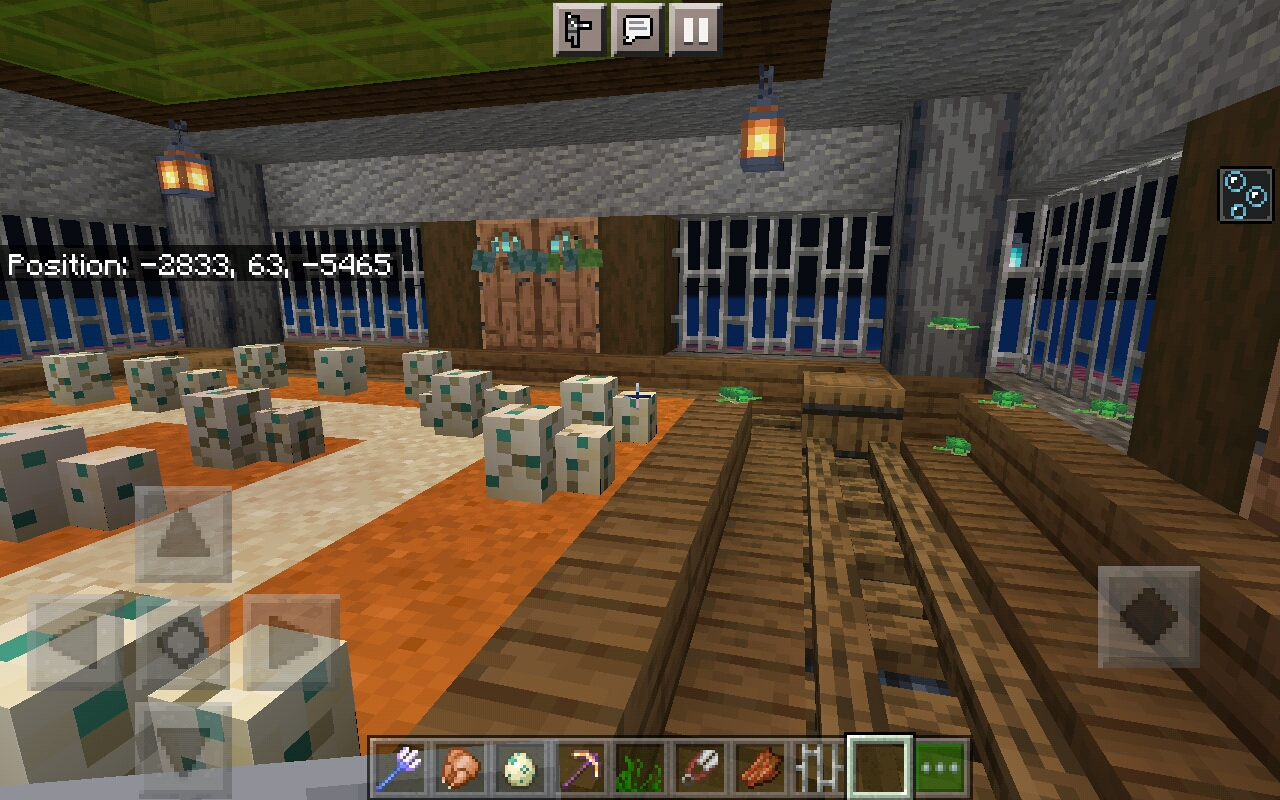
Glass walls are excellent for turtle enclosures because they let you watch turtles swim and babies hatch. A glass viewing wall beside an underwater section can turn your turtle pen into an aquarium. Add coral, seagrass, sea pickles, and sand for a natural look, but make sure decoration does not block turtle movement.
Keep Adults and Eggs Organized
If you are breeding many turtles, create a dedicated egg zone. This helps you protect eggs and collect scutes more efficiently. You can also create separate areas for adult turtles, baby turtles, and hatching eggs, but do not overcomplicate it unless you enjoy building turtle logistics departments.
Avoid Overcrowding
Too many turtles in a small enclosure can make movement messy. Give them enough space to swim and reach sand. If your turtle population grows too large, expand the habitat or release some adults into a safe nearby beach area. A crowded turtle pen may still function, but it looks less like a sanctuary and more like a reptile traffic jam.
Common Mistakes Players Make With Minecraft Turtles
The first mistake is trying to tame turtles like cats or wolves. You cannot. The second mistake is moving adult turtles far from their home beach and wondering why they refuse to lay eggs near your base. The third mistake is leaving eggs unprotected at night. Hostile mobs are not respectful wildlife observers.
Another common mistake is collecting seagrass incorrectly. You need shears. Breaking seagrass by hand will not give you the item you need. Players also sometimes forget that baby turtles are tiny and can escape through gaps that adult mobs cannot. Always check your enclosure from baby turtle height, which is basically “green pixel with ambition.”
Creative Turtle Habitat Ideas
Once the mechanics are handled, you can have fun with design. Build a tropical turtle lagoon beside your starter base. Create a glass-domed turtle aquarium connected to the ocean. Make a conservation center with signs, docks, and observation decks. Build a beach resort where turtles have better real estate than villagers. Minecraft does not judge your priorities.
For a survival-friendly design, use oak fences, sand, water, torches, and a small hut for storage. For a fancier build, use quartz, prismarine, sea lanterns, coral blocks, mangrove wood, and glass. Add a boardwalk, turtle nursery, kelp garden, and underwater viewing tunnel for extra style.
My 500-Word Experience Guide: What Keeping a Pet Turtle in Minecraft Actually Feels Like
Keeping a pet turtle in Minecraft is one of those projects that starts as a five-minute idea and quietly becomes your entire afternoon. At first, you think, “I will just grab two turtles, feed them seagrass, and make a cute little pen.” Then you discover that turtles have opinions. Strong opinions. Mostly about beaches.
The first time I tried to keep turtles near my base, I made the classic mistake: I found two turtles on a distant beach and lured them across land with seagrass. This was not a journey. It was a pilgrimage. Every few blocks, one turtle would drift sideways, stare at the ocean, or get stuck on a tiny ledge like it had encountered advanced calculus. By the time I got them home, I felt less like a Minecraft player and more like a tired tour guide for two shelled tourists.
Then came the real lesson. I bred them, saw the hearts, celebrated too early, and watched the pregnant turtle immediately attempt to leave. She did not care about my carefully built pond. She did not care about the cozy sand patch. She had a home beach, and apparently my base was just a weird vacation rental. That was when I learned the value of hatching eggs where you want turtles to live.
My better turtle setup started with Silk Touch. I collected eggs carefully, brought them back to a beach area near my base, and built a protected enclosure before placing them. I used fences around the sand, lanterns everywhere, and a shallow pool with a little deeper section in the middle. I also added glass on one side so I could watch the eggs. Was it necessary? No. Was it adorable? Absolutely.
The waiting period made the project feel different from ordinary animal farming. Cows, sheep, and chickens are immediate. Turtles require patience. You check the eggs at night. You look for cracks. You defend the area from zombies. You start naming the eggs even though that is not a real feature. By the time the baby turtles hatch, it feels like an event. They are comically tiny, and watching them shuffle toward water is one of Minecraft’s most quietly delightful moments.
Collecting the first scute is surprisingly satisfying. It is not dramatic like defeating the Ender Dragon, but it feels earned. You protected the eggs, raised the babies, and finally got a material that can become a turtle shell helmet. That helmet is useful, especially for early underwater exploration. I used mine to loot shipwrecks and ocean ruins before I had proper potions, and the extra breathing time saved me from several embarrassing drowning incidents.
My biggest advice from experience is to keep turtle habitats simple at first. Do not build a massive complicated farm until you understand how turtles move, where they lay eggs, and how babies behave. Start with one safe beach pen. Add water, sand, lighting, and fences. Breed a pair. Watch what happens. Once you understand the rhythm, you can expand into a turtle farm, aquarium, or full coastal sanctuary.
The charm of keeping a pet turtle in Minecraft is that it is both useful and peaceful. You get scutes, a turtle helmet, and possibly potions, but you also get a living beach scene that makes your world feel warmer. The turtles do not fight for you, follow you, or perform tricks. They simply exist, swim, lay eggs, and make your base feel a little more alive. Honestly, that is enough. Not every pet needs to be a warrior. Some just need sand, seagrass, and a fence tall enough to keep zombies from ruining everything.
Conclusion
Learning how to keep a pet turtle in Minecraft is really about learning how turtles behave. They cannot be tamed, but they can be cared for. Find them on beaches, feed them seagrass, respect their home beach, protect their eggs, and give baby turtles a safe path to water. If you do it right, you will have a peaceful turtle habitat, a renewable source of turtle scutes, and one of the cutest beach builds in your world.
The key is patience. Minecraft turtles are slow, fragile in the egg stage, and very attached to their birthplace. But that is what makes them interesting. They are not just another passive mob to toss into a pen. They have a life cycle, a nesting habit, and a reward system that encourages thoughtful building. Treat them well, and your turtle sanctuary will become both practical and charming. Treat them badly, and zombies will turn your nursery into scrambled eggs. Choose wisely.

