
Beauty Unlocked
I Photographed 5 Centuries Of Fashion At Chatsworth House
Jun
There are museums where fashion waits politely behind glass. Then there is Chatsworth House, where fashion seems to sweep down the staircase, rustle through a corridor, glance at a portrait, and whisper, “Try to keep up.” Photographing five centuries of fashion at Chatsworth House is not simply a visual assignment. It is a time-travel workout for the eyes, the camera, and occasionally the knees, because historic houses were apparently designed by people who believed stairs build character.
Set in Derbyshire, England, Chatsworth House has been home to the Cavendish family for generations and is one of Britain’s most celebrated country houses. Its rooms are filled with art, textiles, furniture, sculpture, archives, and personal objects that tell a story far richer than “rich people wore fancy things.” The real story is about identity, power, taste, inheritance, rebellion, craft, and the surprising emotional life of clothing. A dress is never just a dress at Chatsworth. It may be a political signal, a family memory, a designer collaboration, a coronation duty, or the reason a photographer starts muttering lovingly at the lighting.
The famous exhibition House Style: Five Centuries of Fashion at Chatsworth brought this idea into dazzling focus. Curated by Hamish Bowles, long associated with American Vogue, and inspired by Laura Burlington’s deep interest in the family archives, the exhibition explored fashion and adornment connected to Chatsworth across 500 years. It placed historic garments, couture, liveries, jewelry, christening robes, photographs, and contemporary fashion inside the actual rooms where family history unfolded. For a photographer, that setting changes everything. You are not shooting fashion in a blank studio. You are photographing silk, velvet, lace, metalwork, and memory inside a house that has its own dramatic opinions.
Why Chatsworth House Is a Dream for Fashion Photography
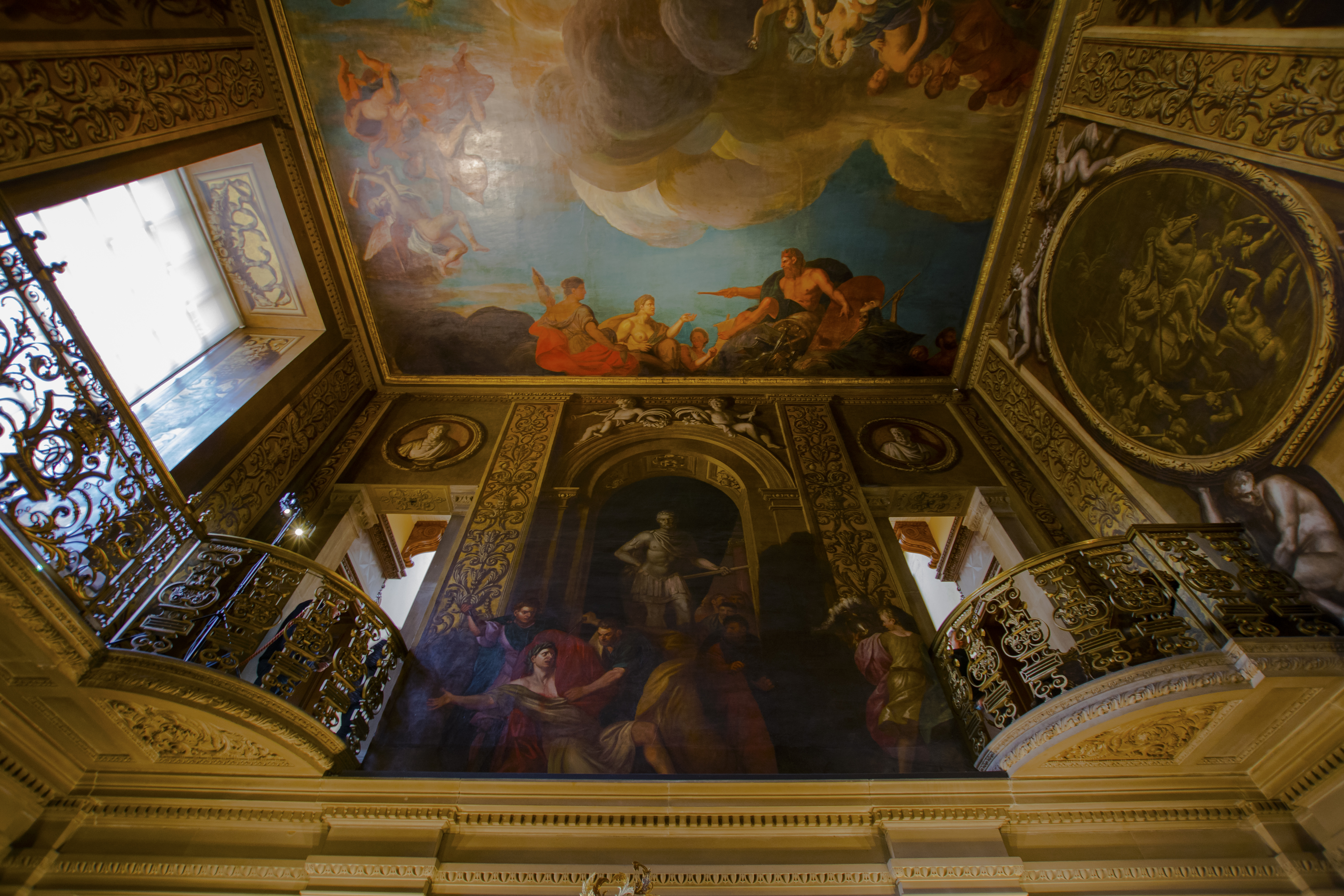
Chatsworth House is not merely a backdrop. It is a character. The Painted Hall, State Rooms, Sculpture Gallery, guest bedrooms, staircases, windows, gilded details, and layered textures create a visual conversation between clothing and architecture. When a gown stands beneath a painted ceiling, the image becomes less about display and more about dialogue. The fabric answers the room. The room answers the family portrait. The photographer tries not to trip over a velvet rope while having an artistic revelation.
What makes Chatsworth especially compelling is the range of its collection. The house is known for art and objects spanning thousands of years, and its textile archive has been carefully stored, studied, and catalogued over time. That means a photographer can move from the grandeur of aristocratic dress to the intimacy of personal garments. A coronation robe speaks loudly; a shoe, fan, glove, or scrap of embroidery speaks softly. Both deserve attention.
Five Centuries of Fashion, One Family Story
The phrase “five centuries of fashion” sounds glamorous, and it is. But it is also practical history. Clothing records how people moved, sat, danced, married, ruled, traveled, performed, mourned, and wanted to be remembered. At Chatsworth, fashion connects public life with private life. The Cavendish family and their circle were not dressing in isolation. They were responding to court culture, social expectation, empire, art, modernity, celebrity, and personal taste.
From Bess of Hardwick to Georgiana, Duchess of Devonshire
Any journey through Chatsworth fashion begins with powerful women. Bess of Hardwick, one of the great figures of Elizabethan England, helped establish the Cavendish dynasty’s visual world. Her age understood dress as status, armor, and announcement. Portraits from the period remind us that pearls, ruffs, sleeves, bodices, and embroidered surfaces were not decorative afterthoughts. They were messages, and very expensive ones at that.
Then comes Georgiana Cavendish, Duchess of Devonshire, an 18th-century style icon whose reputation for fashion still floats through the history of the house like a perfectly powdered cloud. Georgiana understood visibility. Her hats, silhouettes, and public image helped turn personal style into social force. Photographing objects connected with such figures means looking for more than beauty. It means looking for attitude.
Victorian Grandeur, Servants’ Livery, and the Theater of Rank
The Victorian and Edwardian periods add another layer of visual richness. Evening gowns, court dress, embroidered textiles, and liveries reveal the precision of social performance. Servants’ clothing, often overlooked in fashion storytelling, can be just as revealing as aristocratic dress. Livery is clothing as institution. It tells us who served, who was served, and how hierarchy was made visible before anyone opened their mouth.
From a photography standpoint, livery can be fascinating because it often carries strong lines, bold structure, and repeated motifs. It also keeps the article honest. Fashion history is not only about duchesses and diamonds. It is also about labor, maintenance, storage, cleaning, mending, and the hands that kept the whole glittering machine running.
Modern Icons: Couture, Designers, and Stella Tennant
Chatsworth’s fashion story does not stop politely in the past. The exhibition also connected historic dress with contemporary fashion and figures such as Stella Tennant, the model and family member whose modern style offered a sharp contrast to earlier courtly forms. Pieces by major designers, including couture and contemporary fashion, showed how the house continues to inspire creative work.
This is where the camera becomes especially playful. Historic garments often ask for reverence; modern garments ask for rhythm. A photographer has to shift pace. A structured Dior gown may require stillness and symmetry. A contemporary designer piece may demand angle, shadow, and a little visual mischief. Chatsworth allows both moods to exist in the same breath.
How I Approached Photographing Fashion Inside Chatsworth
Photographing historic fashion is different from photographing a model on a runway. The garments are fragile. The rooms are controlled. The light is often natural, indirect, and wonderfully moody until the exact second it becomes impossible. Flash may be restricted. Angles may be limited. Reflections appear in glass cases like tiny ghosts with autofocus problems.
So the first rule is patience. The second rule is respect. The third rule is to accept that your best shot may require waiting for a tour group to finish discussing whether they could live in a house with that many fireplaces.
Working With Light, Not Against It
Chatsworth’s rooms are full of reflective surfaces: gilding, polished wood, glass, chandeliers, marble, silk, and metal thread. These surfaces can either create magic or chaos. I looked for soft side light, gentle highlights on fabric, and shadows that helped reveal texture. Lace needs delicacy. Velvet needs depth. Beading needs restraint, because too much sparkle can make a photograph look like it sneezed glitter.
When photographing a historic gown, I paid attention to how the light crossed seams, pleats, embroidery, and worn edges. Those details tell the truth of the object. A perfect front-facing shot may document the garment, but a close-up of a frayed ribbon or hand-finished stitch can reveal its life.
Composition: Let the Room Speak
In a studio, negative space is something you create. At Chatsworth, it is something you negotiate with ceilings, portraits, doorways, windows, sculptures, and the occasional priceless chair sitting exactly where your composition wants to stand. Instead of fighting the environment, I used it.
Doorframes became natural borders. Portraits became echoes. Marble busts became silent witnesses. Long corridors suggested time. A gown placed near historic furniture gained context. A headpiece photographed against a painted wall became part of a larger visual argument: fashion belongs to place.
What the Clothes Reveal About Power and Personality
Fashion at Chatsworth is beautiful, but beauty is only the opening act. The deeper subject is power. Clothing can make authority visible, soften it, exaggerate it, or challenge it. A coronation robe is public duty stitched into fabric. An evening gown is social fluency. A riding habit suggests movement and control. A christening gown carries continuity. A pair of shoes can hint at pleasure, discomfort, or both, because history has never been kind to toes.
The most memorable garments are the ones that feel personal. They remind us that people in portraits were not marble legends. They dressed for weather, family occasions, politics, flirtation, grief, and dinner. Especially dinner. Great houses have a way of making dinner feel like a constitutional event with soup.
Chatsworth, Fashion, and the Modern Designer’s Imagination
One reason Chatsworth remains relevant is that its archives continue to inspire contemporary designers. The house’s textile history is not treated as a sealed box labeled “old things, do not touch emotionally.” Designers have studied patterns, silhouettes, fabrics, and personal wardrobes connected to the Devonshire family. Erdem Moralıoğlu’s work inspired by Deborah, Duchess of Devonshire, is one recent example of how an archive can become a creative conversation rather than a dusty storage problem.
This matters for SEO readers searching for fashion history, Chatsworth House photography, historic costume, British country house style, or Devonshire Collection fashion. The topic is not only nostalgic. It is active. Historic fashion influences modern collections, editorial photography, museum exhibitions, interior design, and even how we think about sustainable style. After all, a garment preserved for centuries is the opposite of fast fashion. It is very, very slow fashion with better manners.
Photography Lessons From Five Centuries of Style
My biggest lesson from photographing fashion at Chatsworth House is that clothing needs context. A gown photographed alone can be stunning. A gown photographed in conversation with a staircase, portrait, textile wall, or family story becomes unforgettable. Fashion photography often chases novelty, but Chatsworth proves that depth can be just as seductive as newness.
The second lesson is that details matter. A button, lace cuff, embroidered motif, feathered headpiece, or worn hem can carry as much emotional weight as a full silhouette. The small things are where history leans in close and says, “Look again.”
The third lesson is that humor helps. Not in the photograph, necessarily, but in the process. Historic fashion can feel intimidating. Yet clothing has always involved human comedy: uncomfortable shoes, impossible sleeves, dramatic hats, ambitious waistlines, and the eternal hope that one’s outfit will say “effortless elegance” rather than “I have been assembled by committee.”
Why Visitors Still Love Fashion at Chatsworth House
People love fashion exhibitions because they make history visible and personal. Dates and titles can feel distant. A dress feels immediate. We understand fabric against skin, shoes on feet, jewelry chosen for a special occasion, and clothes kept because they mattered to someone. At Chatsworth, these objects are not floating in a generic museum space. They are rooted in rooms, family memory, and architectural drama.
That is why photographing five centuries of fashion at Chatsworth House feels so rewarding. The camera becomes a bridge between visitor and object. It helps modern eyes slow down. It says: notice the seam, the shadow, the scale, the sparkle, the politics, the person.
My Extended Experience Photographing 5 Centuries of Fashion at Chatsworth House
The most surprising part of photographing Chatsworth fashion was how quickly the house changed my sense of time. I arrived thinking in practical terms: camera settings, angles, light, crowd flow, battery life, and whether my memory cards were about to betray me like minor characters in a period drama. But after a few rooms, the practical checklist gave way to something slower. The clothes did not feel like isolated exhibits. They felt like interruptions from different centuries.
In one room, I found myself studying the shape of a gown rather than photographing it immediately. The silhouette had authority. It did not ask to be admired; it assumed admiration would arrive on schedule. Nearby, the room’s architecture amplified that confidence. Tall windows, ornate surfaces, and formal proportions made the garment seem less displayed than installed, almost as if the house had grown around it. That is when I realized my job was not to make the fashion look dramatic. Chatsworth had already handled that. My job was to avoid ruining the drama by being impatient.
Close-up photography became my favorite approach. Wide shots captured the grandeur, but details captured the humanity. A sleeve told me about posture. A bodice told me about discipline. Embroidery told me about hours of labor hidden inside luxury. Even accessories had personalities. A fan looked flirtatious. A shoe looked brave. A headpiece looked like it had never apologized for anything in its life.
The lighting taught me humility. Historic houses are magnificent, but they are not always interested in your exposure triangle. Some corners were dim, some glass cases reflected everything except my hopes, and some fabrics absorbed light like they were keeping secrets. I learned to move slowly, shift my body a few inches, wait for visitors to pass, and look for quiet highlights. A soft gleam on silk could be more powerful than a perfectly bright image.
I also became aware of the emotional contrast between clothing made for public display and clothing connected to private life. Grand gowns and court dress announced status, but personal garments carried intimacy. They reminded me that fashion history is not only about style icons. It is about families saving things, curators caring for them, conservators stabilizing fragile fabrics, and visitors recognizing something familiar in a completely unfamiliar world.
By the end, I felt less like I had photographed an exhibition and more like I had listened to one. Chatsworth House does not present fashion as a straight timeline. It presents it as a layered conversation between people, rooms, materials, and memory. Five centuries of clothing can sound overwhelming, but through the camera it became surprisingly clear: fashion survives because it keeps finding new ways to speak. Sometimes it speaks in velvet. Sometimes in lace. Sometimes in a coronation robe. And sometimes in one tiny worn edge that says, more honestly than any label, “Someone lived in this.”
Conclusion
Photographing five centuries of fashion at Chatsworth House is an invitation to see clothing as history with a pulse. From aristocratic portraits and coronation dress to couture, contemporary design, and deeply personal garments, Chatsworth shows how fashion records identity, ambition, taste, and change. The house gives every object a sense of place, while the garments bring the rooms to life in return.
For photographers, fashion lovers, museum visitors, and anyone curious about British heritage, Chatsworth is a rare visual feast. It proves that style is never just surface. It is biography, theater, craftsmanship, and sometimes a very dramatic hat doing the work of an entire press department.
Note: This article is an original, publish-ready synthesis based on real public information about Chatsworth House, the Devonshire Collection, historic fashion exhibitions, and related cultural coverage. Source links are intentionally not included in the article body.

