
Beauty Tools & Accessories
Versatile Storage: The 1970s Verner Panton Wire Cube, Five Uses
Jun
Some furniture behaves like it has a résumé. The 1970s Verner Panton wire cube is one of those pieces. It can be a shelf, a bedside table, a room divider, a plant stand, a record-storage hero, and, on especially ambitious days, a tiny architectural statement that says, “Yes, I do own coasters, and they are probably interesting.”
Originally designed by Danish designer Verner Panton in 1971, the Panton Wire system is a modular storage design made from slim steel wire. Its appeal is wonderfully simple: it is open, geometric, stackable, wall-mountable, and visually light. Instead of swallowing a room the way a bulky bookcase can, the wire cube lets air, light, and color move through it. That is the magic trick. It stores your things without making your home feel like it has been packed for a cross-country move.
Today, the Panton Wire cube is appreciated by collectors, interior designers, small-space dwellers, and anyone who has ever looked at a blank wall and thought, “This could use some structure, but please, nothing that looks like office supply furniture.” Its clean grid form feels vintage and modern at the same time, which is exactly why it keeps returning to stylish homes, studios, apartments, and design shops.
What Is the Verner Panton Wire Cube?
The Verner Panton wire cube, often called the Panton Wire module or Panton Wire cube, is part of a modular shelving and storage system. The classic cube is made from steel wire, commonly seen in chrome or powder-coated colors. The standard cube form is compact, usually around 13.7 inches high, wide, and deep, depending on the version. It can stand on the floor, hang on the wall, stack vertically, or connect horizontally with clips.
That flexibility is the whole point. A single cube can work as a small side table. Two cubes can become a low console. Four cubes can become a graphic bookcase. A full wall of cubes can turn into a storage system that looks more like a modernist installation than a place where you hide board games, mail, and rogue phone chargers.
Why the 1970s Wire Cube Still Works Today
Verner Panton was not a shy designer. He loved bold colors, futuristic forms, immersive interiors, and furniture that seemed to have escaped from a very fashionable spaceship. But the Panton Wire cube is one of his quieter ideas. It is not loud. It does not curve, wiggle, or shout across the room. Instead, it relies on geometry, repetition, and transparency.
That restraint makes it surprisingly easy to use in today’s interiors. The wire cube fits in midcentury modern rooms, minimalist apartments, industrial lofts, Scandinavian-style homes, and eclectic spaces where the decorating rule is apparently “everything I love, but make it work.” Because it is open, it does not block sightlines. Because it is modular, it can grow as your storage needs change. Because it is a Panton design, it carries enough design history to make even a stack of magazines look more intentional.
Five Smart Uses for the Verner Panton Wire Cube
1. A Sculptural Bedside Table
A Panton wire cube makes an excellent bedside table, especially in a small bedroom. Traditional nightstands often bring drawers, thick legs, and a heavy visual footprint. The wire cube does the opposite. It gives you a place for a lamp, book, phone, water glass, and maybe that mysterious lip balm that only appears at bedtime, without making the room feel crowded.
Add a top panel if you want a flat surface for smaller objects. Leave it open if you prefer a lighter look. Inside the cube, you can stack a few books, place a small basket, or store folded throws. The grid structure also creates a beautiful shadow pattern when a lamp sits on or near it, giving the bedroom a little design drama without requiring velvet curtains or a fog machine.
2. A Living Room Display Shelf
The living room is where the Panton Wire cube gets to show off. Use one cube as a side table beside a sofa or armchair. Use several as a low media console. Stack them into a compact shelving unit for books, ceramics, framed photos, or art objects. The open-wire design keeps decorative items visible from multiple angles, which makes the display feel casual rather than staged.
This is especially useful if you like collecting beautiful things but do not want your home to look like a gift shop having a nervous breakdown. The cube naturally edits your display. Because everything is visible, you tend to choose fewer, better objects. A ceramic vase, a stack of art books, a small lamp, and a plant can feel complete. The wire grid gives the arrangement structure, while the openness prevents it from feeling cluttered.
3. Modular Storage for Small Apartments
Small apartments need furniture that can multitask without complaining. The Panton Wire cube is particularly good at this. It can serve as a shelf today, a side table tomorrow, and entryway storage next year when your keys, sunglasses, and tote bags decide to form a union near the front door.
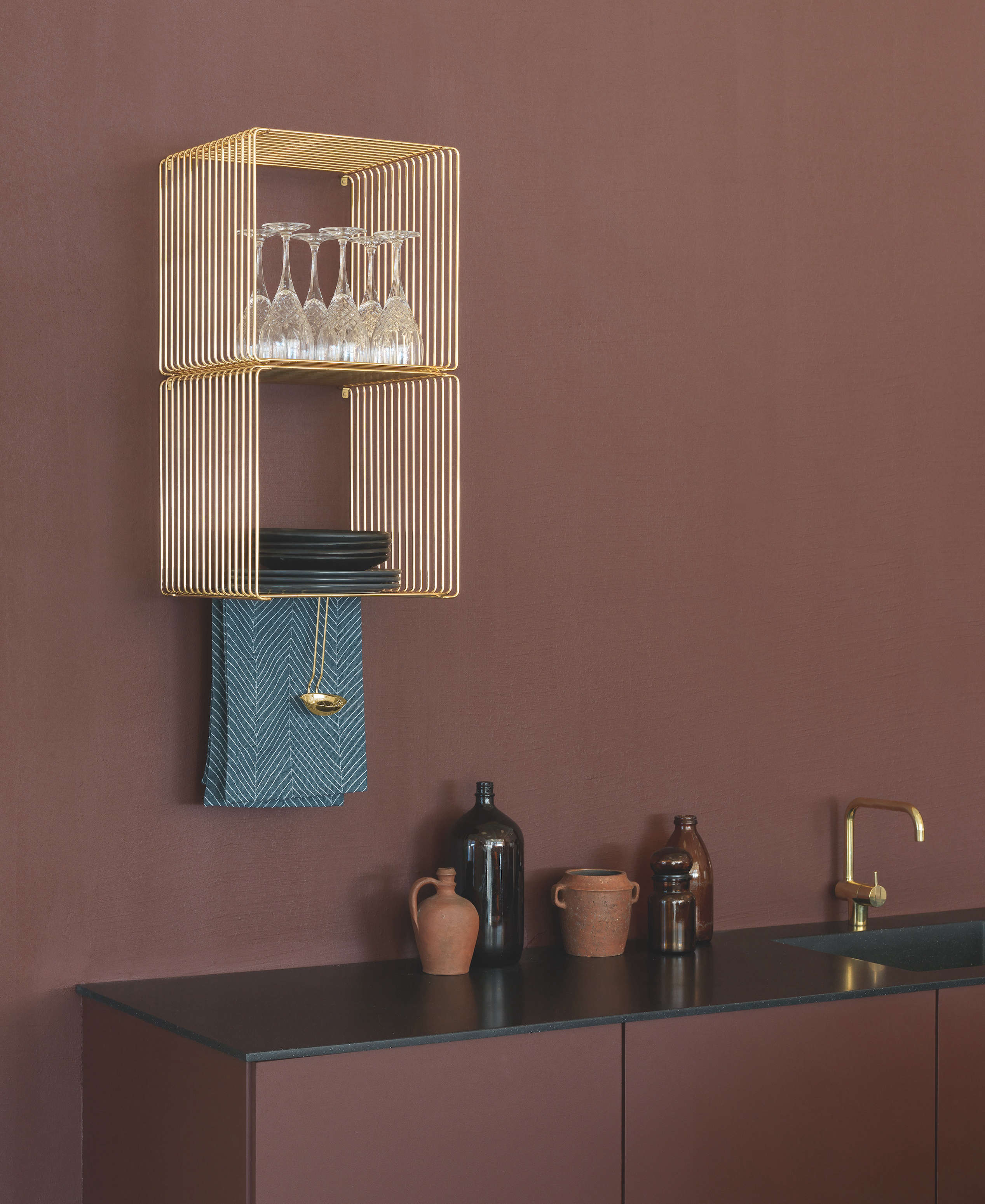
Because the modules can be combined, you can start with one or two cubes and add more over time. That makes the system practical for renters, first apartments, studios, and anyone whose storage needs change every season. A low row of cubes can sit under a window. A taller stack can use vertical wall space. A wall-mounted cube can become a compact shelf in a hallway or kitchen. It is storage that adapts instead of demanding a permanent lifestyle commitment.
4. A Plant Stand With Airy Structure
Plants love good light, and rooms love not being swallowed by giant plant stands. The wire cube helps both sides negotiate. Its open structure allows light to pass through, making it a smart base for trailing plants, sculptural succulents, or a small indoor herb setup. Place one cube near a bright window, add a tray or top panel, and you have an instant plant stand with design pedigree.
For a more layered look, stack two cubes and place plants at different heights. Trailing pothos, string of hearts, or ivy can soften the grid, while upright plants like snake plants or small rubber plants add height. The contrast between organic leaves and strict geometry is what makes the look work. The plant says, “I grow where I please.” The cube says, “Excellent, but let’s keep the floor tidy.”
5. A Room Divider That Does Not Block the Room
One of the most clever uses for the Panton Wire cube is as a room divider. In open-plan spaces, studios, and lofts, people often need separation without building a wall. A cluster of wire cubes can define a reading nook, separate a bed from a living area, or create a soft boundary between dining and lounging zones.
Unlike a solid bookcase, the wire cube divider allows light to pass through. That means the room keeps its openness while gaining structure. You can fill some cubes with books or storage baskets and leave others empty for a more architectural effect. The result feels intentional and airy, not like you panicked and built a wall out of furniture on a Tuesday night.
How to Style a Panton Wire Cube Without Overdoing It
The secret to styling the Panton Wire cube is restraint. Because the structure is open, everything inside becomes part of the visual composition. That does not mean you need to live like a museum curator who alphabetizes dust. It simply means the cube looks best when objects have breathing room.
Try grouping items in odd numbers: three books, one vase, one small framed print. Mix textures, such as ceramic, paper, glass, metal, and woven baskets. If the cube is chrome, warm it up with wood, fabric, or plants. If it is black or colored, use lighter accessories to create contrast. A top panel can make the cube more functional as a table, while an inlay shelf can divide the interior for smaller objects.
Best Rooms for a Verner Panton Wire Cube
Bedroom
Use it as a nightstand, shoe shelf, blanket holder, or small display unit. It works especially well in bedrooms where bulky furniture would feel too heavy.
Living Room
Use a single cube as a side table or combine multiple modules into a media unit, bookcase, or display wall. It pairs beautifully with low sofas, lounge chairs, and midcentury lighting.
Kitchen
Wall-mount a cube for cookbooks, mugs, small bowls, or decorative kitchen objects. Because the design is open, it works best for items you do not mind seeing every day.
Bathroom
A wire cube can hold towels, baskets, toiletries, or a plant. In bathrooms, use common sense with moisture and finishes, and avoid overloading wall-mounted units.
Home Office
Use it for notebooks, design books, printer paper, storage boxes, or equipment you want nearby but not buried in a drawer. It adds order without turning your office into a cubicle tribute band.
Buying Tips: Vintage vs. New Production
If you are shopping for a Panton Wire cube, you may encounter both vintage examples and newer production pieces. Vintage pieces can have collector appeal, especially if they are in good condition and have clear provenance. However, newer versions may offer more finish options, modular accessories, and easier availability.
Before buying, check the dimensions, finish, condition, included clips, wall-mounting hardware, and load recommendations. If you plan to mount the cube on a wall, make sure your wall type and anchors can handle the weight of both the module and whatever you place inside it. Books are charming, but they are also little bricks wearing paper jackets.
For everyday use, consider how you want the cube to function. If it will be a bedside table, a top plate is useful. If it will be display shelving, open wire may be perfect. If it will store small items, baskets or inlay shelves can help. If you want a flexible system, buy with future expansion in mind so your cubes can connect cleanly later.
Why Designers Love Modular Wire Storage
Modular wire storage works because it solves several problems at once. It creates structure without visual heaviness. It offers storage without hiding everything. It can be expanded, rearranged, stacked, and reinterpreted. In a world where many homes must function as office, gym, lounge, dining room, and package-receiving center, flexible furniture is not just nice. It is survival with better lines.
The Panton Wire cube also has a rare quality: it looks designed even when it is empty. Many storage pieces only look good when perfectly styled. The wire cube has enough form to stand alone. Its grid is graphic, architectural, and simple. Whether used as a single accent or repeated across a wall, it brings rhythm to a space.
Experience Notes: What It Feels Like to Live With a Wire Cube
Living with a Verner Panton wire cube is different from living with a closed cabinet. A cabinet says, “Hide the evidence.” A wire cube says, “Let’s make the evidence look chic.” That changes how you use it. You become more intentional about what you store, because every object remains part of the room’s visual story.
In a bedroom, the experience is refreshingly simple. A wire cube beside the bed keeps the essentials close without creating a dumping ground. A lamp on top, two books inside, a small tray for glasses or jewelry, and the setup feels finished. There is no drawer where old receipts go to become fossils. That openness can actually help reduce clutter because it gently shames you in the most stylish way possible.
In a living room, the cube becomes a flexible stage. One month it may hold coffee-table books and a small sculpture. The next month it may become a plant stand or a side table for guests. When used in multiples, the cubes create a rhythm that feels architectural. They are especially helpful in apartments where one piece of furniture may need to change jobs depending on the season, the guest list, or the number of packages waiting by the door.
The Panton Wire cube is also surprisingly friendly to renters. Since it can stand on the floor, it does not always require wall mounting. That matters when your lease treats nail holes like international incidents. You can place one cube under a window, beside a sofa, near an entry, or at the end of a bed. If you move, it moves with you. No dramatic disassembly. No mysterious bag of hardware labeled “important?” Just a cube that remains a cube.
Another everyday advantage is visual lightness. In small spaces, solid furniture can make corners feel blocked. The wire cube keeps the eye moving. You can see the wall behind it, the floor beneath it, and the objects inside it. That transparency makes rooms feel larger and calmer. It is a small design decision with a big psychological payoff.
Of course, open storage requires editing. If you toss tangled cords, loose papers, mismatched socks, and three expired hand creams into a wire cube, it will not magically become a design moment. It will become a very honest basket. The best approach is to use smaller containers inside the cube when storing less attractive items. A woven bin, canvas box, or simple tray can keep practical things contained while preserving the clean grid effect.
The most enjoyable part of using a Panton Wire cube is how easily it changes personality. Add plants and it feels relaxed. Add books and ceramics and it feels cultured. Add a top panel and it becomes a practical table. Stack several and it becomes a storage wall. Leave one empty and it still looks like a deliberate design object. That is why this 1970s modular wire cube continues to feel current: it does not force one lifestyle. It adapts to real life, including the slightly messy, coffee-cup-heavy parts.
Conclusion
The 1970s Verner Panton wire cube proves that versatile storage does not have to be boring, bulky, or banished to the closet. With its steel-wire grid, modular form, and airy presence, it works as a bedside table, living room shelf, apartment storage system, plant stand, or room divider. It has design history, but it does not behave like a fragile museum piece. It is useful, flexible, and good-looking enough to make ordinary objects feel curated.
For anyone searching for modular storage with character, the Panton Wire cube remains a smart choice. It brings together vintage appeal, modern function, and small-space practicality in a form that still feels fresh more than five decades after its debut. Not bad for a cube. Most cubes just sit there. This one organizes your books and improves the room’s bone structure.

